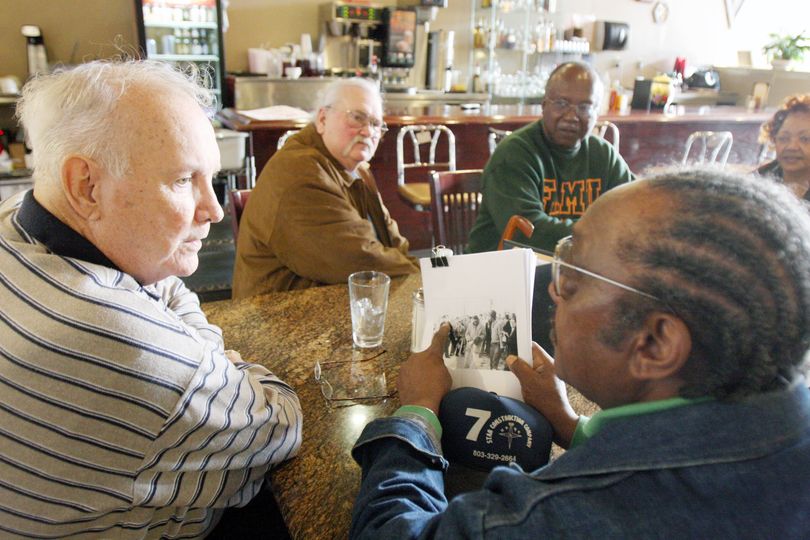
Elwin Wilson, left, and Friendship 9 member Willie McCleod, right, look over pictures from civil rights incidents in Rock Hill, S.C., in the 1960s. in downtown Rock Hill recently. Wilson, a former segregationist who jeered and assaulted civil rights leader John Lewis at a South Carolina bus station in 1961 is apologizing to the Atlanta congressman, saying he regrets his past hatred and fears he might go to hell for it. (AP Photo/Herald, Andy Burriss)
Question: What lesson do you take from this story — that there’s hope for even the most hateful people? Or that the fear of the afterlife can cause contrition in even hard cases?

Transplanted_Texan on February 05 at 10:26 a.m.
Life is so long and the truth so powerful that there is always hope for such change. If one can’t see it, that only means they are not the one called to bring about that particular change. But, forgiveness is important for a reason - doors don’t shut themselves, and we shouldn’t force them shut. If Christ could forgive the Roman soldiers at the foot of His cross, and if Saul could become Paul, then we are not so far removed from forgiveness and change either.
Elwin Wilson has done a lot of harm to his country, but in the end, you can’t help but admire him. What demons he has overcome. It takes a big (wo)man to forgive and a bigger (wo)man still to ask for forgiveness.
HonestGeorge on February 05 at 8:24 p.m.
Asking forgiveness based upon contrition is very much different from asking for forgiveness based on fear. For Wilson’s sake I hope that real contrition is there.