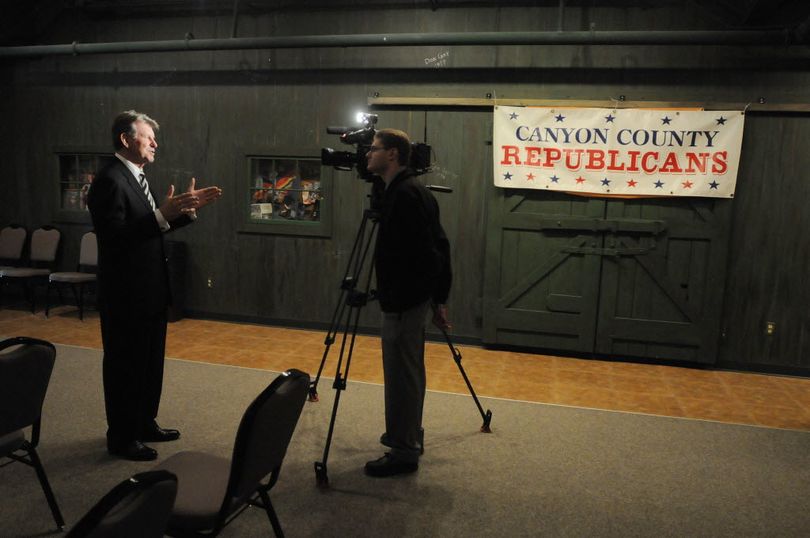
Idaho Governor C.L. “Butch” Otter answers questions for a television reporter during a news conference earlier today at the Idaho Center in Nampa. On March 6 Idaho will take part in their first ever Republican Presidential Caucus as part of “Super Tuesday”. (AP Photo/Idaho Press-Tribune, Charlie Litchfield)

lovetohateme on March 01 at 3:40 p.m.
I don’t think this new system will work quite as well as the Republicans were hoping. As many of you might guess, I tend to lean towards conservative-libertarian candidates when I vote, but I do not have a party affiliation—the Republican party in Idaho absolutely does not represent me. Nor does the Democrat party, nor any other political group. I study each candidate carefully and vote by my own standards. By locking voters like me out of voting (or caucusing) in the primaries, the Republicans may find that they are getting only “establishment” types into elections, candidates who are weaker politically than those who have been opened up to a primary in which any registered voter can have a say. Yes, this system supposedly prevents Liberals and Democrats from having a say in Republican primaries (although a motivated Liberal could still go through the process of declaring as Republican and then switching back), but this system also prevents those who generally agree with Republican ideals, but not fully from voting unless they also go through the bureaucratic process.
The new system is ridiculously bureaucratic and ultimately the best possible result is that it will waste election office time and money (constantly switching voters’ party affiliation). At worst, it will put more unqualified, unvetted candidates on the ballot. It is beyond ridiculous.