April 3, 2009 in City

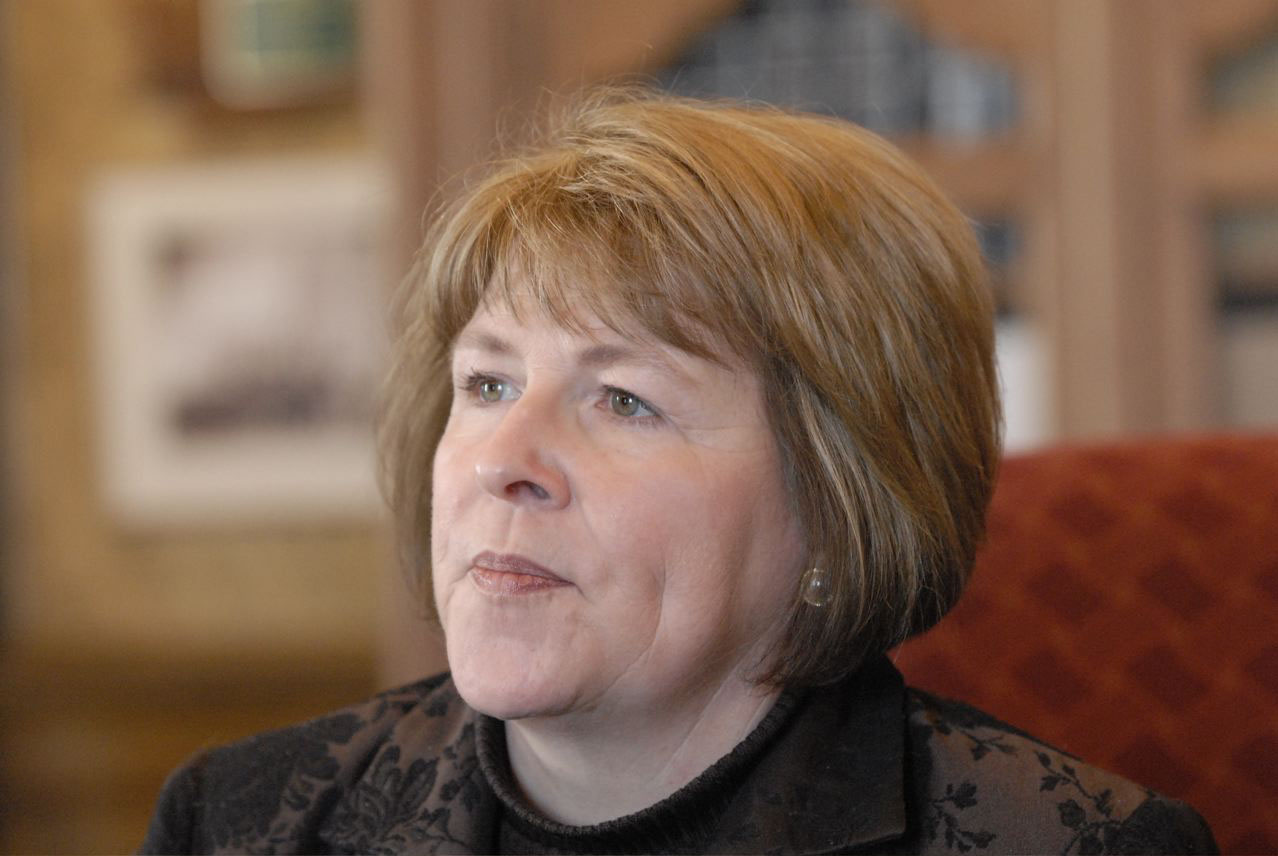
Brown, Chopp weighing state income tax
Richard Roesler Staff writer
 
Richard Roesler photo

Brown
(Full-size photo)

ADVERTISEMENT
Advertise Here

OLYMPIA – For years in Washington’s capital, state income tax proposals have been viewed much like those periodic bills to declare Eastern Washington a 51st state. They’re attention-getters aimed at spurring a discussion. No one expects them to actually pass.

This year’s different.

The state’s two top lawmakers confirmed Thursday that in the face of ongoing budget worries, they are seriously considering asking voters in November to approve a state income tax on the wealthy.

One proposal, taxing only those earning $500,000 or more a year, “would mean that 19 out of 20 people in Washington State would not be affected at all,” said Senate Majority Leader Lisa Brown, D-Spokane.

The percentage of such a tax or even whether lawmakers will push ahead with it has yet to be determined, Brown said. But she seemed supportive.

Many Democrats, she said, feel that proposed budget cuts go too deep. The state faces the prospect of thousands of layoffs at colleges, schools and state agencies and deep cuts in health care and the social safety net.

“We are really reeling from the recognition of what this means,” Brown said.

And with lower-income and middle-class families already struggling, she said, it seems only fair to look at raising taxes on the wealthy.

House Speaker Frank Chopp said House Democrats are considering the idea. But he said it’s one of several proposals. Another one: raising taxes to pay for construction bonds to build schools and other public buildings.

“The key is: what would the public support?” said Chopp, D-Seattle.

Voters generally don’t like a broad income tax, he said. But he also pointed to 2006, when voters overwhelmingly decided to keep the state’s $2-million-or-more estate tax.

A Senate bill proposing a 1 percent income tax on high earners has been introduced in the Senate. A state report in 2007 on an identical bill said it would raise $54 million a year from just under 1,900 people statewide. But Brown said the 1 percent bill was “coincidental” to broader discussions, which would presumably raise more money.

The measure would go to voters in November at the earliest. And given the lag time between the vote, expected court challenges, and the money, Brown said, such a tax would not be much short-term help for looming state budget cuts. But she also said sales taxes – the state’s main source of cash – are likely to lag behind the recovery. A state income tax would help rebuild key services and programs faster, she said.

Brown also said the income tax would not be part of a broader overhaul of the state’s tax system. Brown and others have criticized the state’s unique business-and-occupation tax and Washington’s high reliance on sales tax. But lawmakers aren’t anywhere near consensus on broader reforms, she said.

Republicans argue that an income tax would be akin to political suicide for Democrats, who hold a solid majority in both the House and Senate.

“I hope they do a food tax along with it,” joked Senate Minority Leader Mike Hewitt, R-Walla Walla, citing an unpopular tax that voters quickly vetoed years ago.

Hewitt thinks voters “absolutely” would oppose a state income tax. And he argues that it’s a mistake to aim it at the wealthy.

“The people that they’re going after are the people that put money back into the economy, that create jobs,” he said. “That’s exactly what we need.”

He also predicts that any high-income tax would soon be lowered to collect more money from more people.

Brown said she has no illusions that it would be difficult to get voters to approve a new tax. But she said it’s a simple matter of fairness: people who earn more should contribute more. A millionaire in Idaho would pay a 7.8 percent state tax and deduct it from federal taxes she said. In Oregon, it would be 9 percent.

“If they live in Washington state, they don’t pay anything,” Brown said. “I think that’s unfair.”

Chopp also said the public doesn’t yet understand how bad the state budget cuts will be.

“I think the vast majority of our people in this state are focusing on their own family and their own job,” he said. But as cuts kick in, he said, people will see teachers laid off, more kids in classrooms, people unable to get state help with health care.

“I think over a period of months they’ll begin to understand that this is a very serious situation, and it will hit them,” he said.

Gov. Chris Gregoire has repeatedly said this week that she doesn’t support the idea of a state income tax. She said it would face likely court challenges and probably wouldn’t bring in money to help with the state’s two-year budget woes.

Brown said polling suggests “there is some openness” to the idea of a high-incomes tax among voters.

“I believe an honest conversation about what’s fair, what’s a fair amount for people to pay for a good quality of life in Washington state. … I think that’s a conversation that nobody should shy away from having,” she said.

Richard Roesler can be reached at (360) 664-2598 or by e-mail at richr@spokesman.com.

21 comments on this story so far. Add yours!
  • dukkandpooh on April 03 at 5:41 a.m.

    “A millionaire in Idaho would pay a 7.8 percent state tax and deduct it from federal taxes she said. In Oregon, it would be 9 percent. If they live in Washington state, they don’t pay anything,” Brown said. “I think that’s unfair.”

    While this may be true, our property taxes and sales tax rates in Idaho are significantly lower than in Washington. It all balances out when you consider the disparity between the state sales tax charged by Idaho and the higher taxes in Washington. Trust me, that’s the only reason I continue to get the checkbook out each year and write a check to the state of Idaho. Anyone who voted for this would regret it, because it would eventually become a ful-fledged state income tax at all income levels. Saying it’s just on the wealthy is just a way to get it on the books.

  • karl2002 on April 03 at 6:46 a.m.

    Just say no! Can we recall Brown? She really seems to want to do nothing but take more money from us.

  • idazagone on April 03 at 7:20 a.m.

    you cannot tax yourself out of a recession…more taxes less money going into the economy…when will these dems figure that out….maybe christine could cut more of the gov. jobs she created when she took office…more gov. jobs equal more votes…for her..when the people show up in front of home depot to have you sign a petition to place this on the nov. ballot…DONT SIGN IT

  • Zippiwilson on April 03 at 7:24 a.m.

    Voting for this dubious tax would just be the beginning of a full fledged state income tax that Democrats have been aching to impose for decades. I don’t know why Lisa Brown and liberals like her think they are the determiners of what is “fair.” The redistribution of wealth by taxation is the death knell of any productive, innovative, and resilient society. I’m sick to death of hearing them spew their “fairness” rubbish.

  • Riteaidbob on April 03 at 7:54 a.m.

    WHAHHHHHH!!! (Stamps feet and cries fake hard tears) Fair! It’s fair that we tax the rich! (sob…sniffle).

    “Oh but trust me…we will NEVER raise the tax on more people by lowering the earnings threshold!”

  • Megan_B on April 03 at 8:19 a.m.

    Instead of taxing hard-earned income and invested property (that often times doesn’t offer a return for the owner), why not tax vices that could curb Washington’s addictions? AKA: tobacco, alcohol, fast food. A small tax, say, $0.001 for every dollar could yield valuable revenue, while being merely a few cents a week to the responsible people of the community. If there was any chance that this could have in altering people’s behavior, then we would also have lower health care costs to deal with. Either way, it’s a win-win situation.

    What do we have to do to bring this up to the political administrators? Writing letters to local representatives doesn’t seem to be enough anymore. We need the whole community to recognize the need to change our habits, or at least try to get something good out of them.

  • IHike4Fun on April 03 at 9:47 a.m.

    Megan_B,
    And if we decided to tax vices instead of income I say we tax the biggest vice of all - state legislators.

  • mdouthitt on April 03 at 10:44 a.m.

    Our current tax system places the greatest burden on low and middle income families. Yet the words “income tax” send everyone running in fear. Several years ago, a study, led by Bill Gates, Sr, showed that Washington would have more stable income by instituting an income tax and lowering sales and property taxes. The report is here: http://dor.wa.gov/content/aboutus/statisticsandreports/wataxstudy/final_report.htm
    Cutting salaries and taxing tobacco isn’t going to provide adequate income for the services the state needs. An income tax is logical and imminently more fair. I applaud these senators for having the political courage to bring this into the conversation. I hope citizens will study the issue carefully.

  • cryssT on April 03 at 11:24 a.m.

    Unless it changed recently, if you bought and paid for a case of soda pop, you pay tax on it. If you use food stamps to buy the soda pop, you don’t pay tax. Candy is not taxed and should be. I think there should be a 1 cent tax per item of fast food ordered. Neat, simple and fair to all.

  • wyoboy on April 03 at 12:05 p.m.

    Taxes and statistics can give one all kinds of results.

    As a property owner in Wyoming, Washington and California, I get to see a lot of variation.

    When California and Colorado imposed tax limit legislation, the number and amount of special fees for everything mushroomed. I don’t think this is what anybody wants. Texas is another misleader when it comes to taxes. They get you through a number of fee and special district assessments.

    Here are some sites to do some comparisons.

    Income tax rates

    Http://www.taxadmin.org/fta/rate/ind_inc.html

    Sales tax rates

    Http://www.taxadmin.org/fta/rate/sales.html

    Property tax rates

    http://articles.moneycentral.msn.com/Taxes/Advice/PropertyTaxesWhereDoesYourStateRank.aspx

    Tax rate comparisons

    Http://www.taxadmin.org/fta/rate/07taxbur.html

    http://www.retirementliving.com/tax_burden_2008.pdf

    You can see why I have a residence in Wyoming where coal, oil and gas production taxes carry the majority of the tax load.

    Drill some wells in Washington.

  • nolosoft on April 11 at 10:23 p.m.

    Do you know TradeMax? a tax software designed for active investors or traders to manage their trade data maximize their

    gain/loss strategy, prepare their Schedule D. More detailed by google.

    May be you can have a try.

    Hope can help you.

You must be logged in to post comments.
Please create a profile or log in here.