
Phosphate detergent ban seems to be working
The storyline of the near-ban on phosphorus in dish detergent in Spokane County has focused on scofflaws sneaking Cascade across the state line in a dogged attempt to keep their dishes sparkling.
The headline in the Los Angeles Times: “The dirty truth: They’re smuggling soap in Spokane.”
But a year after Spokane County became the only place in the country to ban dishwasher detergents made up of more than 0.5 percent phosphorus, there’s a new storyline:
It’s working.
Data show that water coming into Spokane’s sewage plant in the first 12 months after the ban began had 10.7 percent less phosphorus than the annual average the previous three years. That amounts to 181 pounds of phosphorus each day and is better than expected.
What flows into the river from the plant likely isn’t affected much by the new law because treatment pulls out much of the phosphorus, said Mike Coster, plant operations superintendent. The biggest impact is for homes on septic or drain field systems, in which water – and phosphorus – filter back into the groundwater.
“Any phosphorus reduction you can see there is going to have benefit to the river,” Coster said. “It’s not the total answer, but it’s one step.”
In the next few years, however, plant officials say the ban could help meet what is expected to be the most stringent phosphorus standard in the nation.
“It could have huge effects later on,” Coster said, adding that with less coming into the plant, fewer chemicals will be needed to extract it.
Grand experiment
Phosphorus isn’t dangerous to humans, but in rivers and lakes, it spurs algae growth that can pull oxygen from the water, killing fish. The problem has been intense in Long Lake, where treated wastewater along the Spokane River ultimately flows.
On average, Spokane discharges 38 million gallons of treated water daily. By 2014, an addition to the plant, expected to cost about $130 million, will cut phosphorus emissions by 10 times or more, according to the city.
J.B. Neethling, senior vice president of engineering firm HDR Inc., said the new detergent rules benefit wastewater plants and the environment.
“The best strategy is to keep it out of the water in the first place,” said Neethling, who is leading an investigation into removing nutrients such as phosphorus from sewage for the Water Environment Research Foundation.
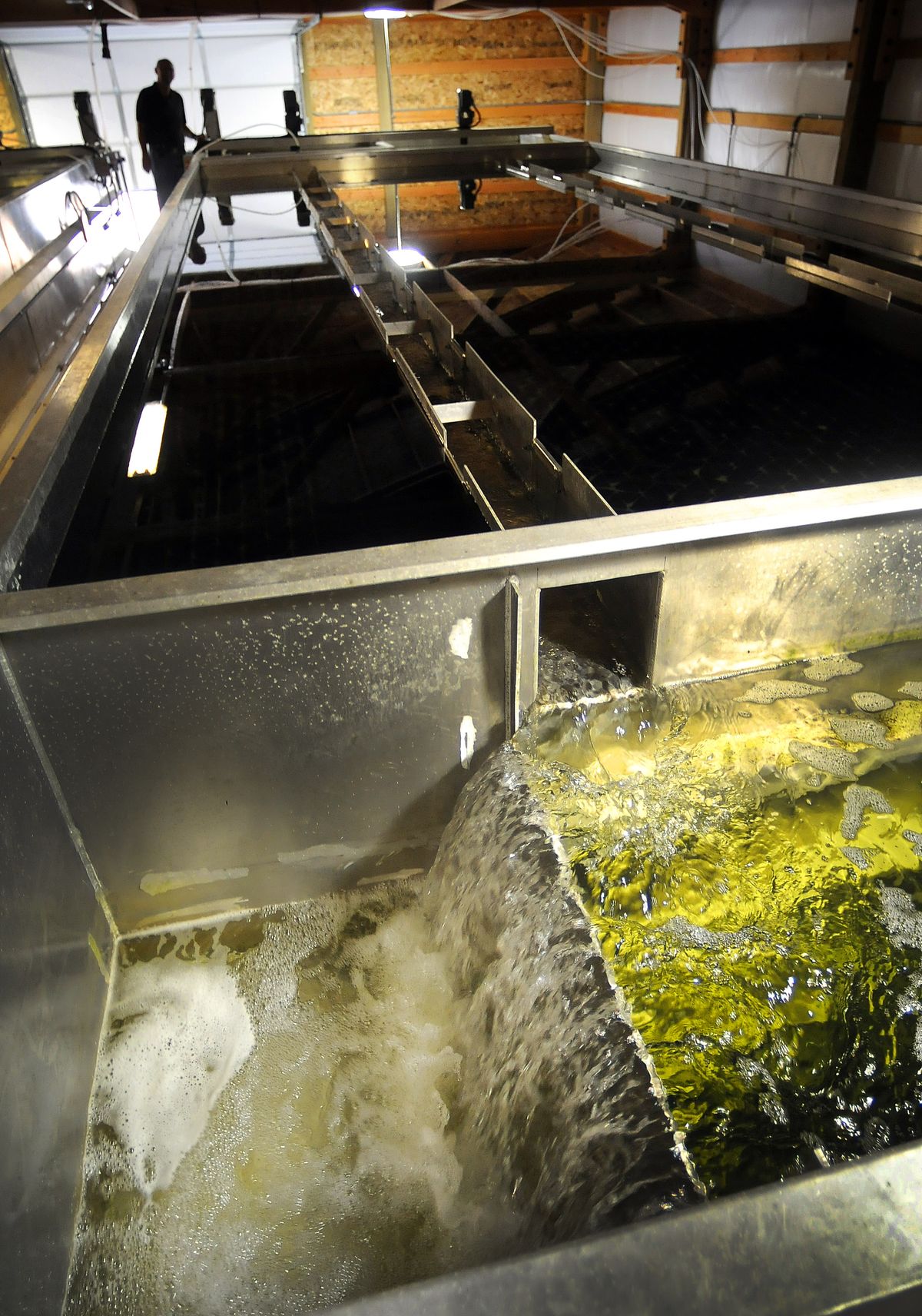
Spokane’s plant, which borders Riverside State Park and treats all wastewater from Spokane, Spokane Valley and Spokane County sewers, diverts a million gallons of sewage a day to six experimental treatment systems designed by five different companies to determine how best to meet the new standards.
The experiment, expected to last through next year, is likely the largest-scale trial in the country examining how best to reduce phosphorus, plant officials say.
Final rules for phosphorus are still being debated by local, state and federal officials. Wastewater dischargers have expressed unease with earlier proposed standards that said treated water should have no more phosphorus than what’s naturally in the river, about 10 parts of phosphorus for every billion parts of water. Environmental groups, however, have argued that federal water law requires those tough standards and that dischargers may underestimate the ability of new technology.
“That’s what the plant will teach us,” Neethling said while touring the experimental stations last week with a group of wastewater experts. “Is there a fraction that is just not responding to treatment? That fraction could be higher than the 8 to 10 (parts per billion).”
Plant officials say they’re comfortable saying the new process will release between 50 and 75 parts of phosphorus per billion parts of water. The plant currently discharges about 750 ppb.
“We get some (readings from experimental stations) down in the 20s, but we get a lot of them up in the 100s too,” said Lars Hendron, the plant’s principal engineer. “We have to be careful that we don’t look for that real great number and figure we can hit it all the time, because it really does bounce around a lot.”
The extra treatment should help pull more than phosphorus from the sewage. Wastewater Director Dale Arnold said officials will consider effects on metals and other pollutants, costs and other factors before selecting a new treatment process.
Crossing the border
There’s little doubt that some Spokane residents buy their dish detergent in Idaho, a practice that is perfectly legal. (It’s illegal to sell in Spokane County, not to use.)
One of those using so-called “smuggled” detergent is Spokane resident Melissa Barnett.
She and other residents in her apartment building gave up on the phosphorus-free detergent after trying several brands, Barnett said Friday afternoon at Safeway at Mission and Hamilton.
“All my dishes turned white,” she said, adding that she often had to hand-wash her dishes after pulling them from the dishwasher. “We like to save the earth, but come on, we like clean dishes.”
Colleen Phillips, of Spokane, however, prefers the new detergents. When the ban first pulled her preferred brand off the shelf last year, she questioned the law.
“I was kind of a little upset because I didn’t know what to pick,” she said after shopping at Albertsons at Northwest Boulevard and Ash Street on Friday.
But now Phillips says the new version has worked so well on her dishes that she’s taken to dabbing it on a sponge and using it to cut grease on her stove and to clean her tub.
A study released in the August issue of Consumer Reports appears to confirm the tales of the smugglers: “Detergents without phosphates … tended to perform worst overall,” the study said. The examination is somewhat of a reversal from the magazine’s 2005 study that ranked phosphorus-free Trader Joe’s powder the second-best detergent of 20 tested. (The Trader Joe’s brand wasn’t part of the new study.)
Of the 18 tested detergents, none of seven phosphorus-free brands was ranked in the top five. Two phosphorus-free choices, however, broke into the top 10. The best rated, Method Smarty Dish tablets, earned an “excellent” ranking for dish cleaning and “fair” for cleaning pots. The report ranked Simplicity 2 in 1 as the second-best phosphorus-free option. Jon Roman, manager of grocery procurement for URM Stores, said grocery stores in Spokane are expanding detergent offerings as companies introduce phosphorus-free versions. URM distributes to Rosauers, Yoke’s and other stores.
In recent months, top-selling Cascade re-entered the Spokane market with a new gel. Later this month, Western Family also will be back on the shelves, Roman said.
Rachael Paschal Osborn, Spokane River coordinator for the Sierra Club, said the results from the detergent law show consumers can make a significant impact on the phosphorus problem in Long Lake.
“That’s a huge percentage to just be able to knock out of the plant like that,” she said. “We’re literally leading the nation here in Spokane County, which is pretty amazing if you think about it.”