
Housing for poor gets cash infusion
Money will help complete projects
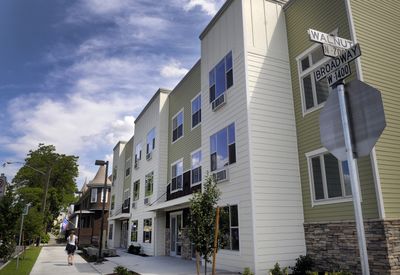

Nearly $20 million in federal help will be coming into Washington and Idaho to prop up low-income housing projects stalled by the recession.
The money – $11 million in Washington and nearly $8.8 million in Idaho – is intended to fill the gap left when the economy soured and investments in low-income housing by banks and large corporations dried up.
That left some 30 projects stalled at various stages of completion in Washington. The infusion of federal cash, as part of the massive stimulus bill signed into law in February, is intended to kick-start those projects. More stimulus money will be available to states later, for new housing projects.
“It’s sort of a three-fer,” said Steve Walker, director of the tax credit program for the Washington State Housing Finance Commission. “It’s jobs. It’s … all the tangible spinoffs of the jobs. And it’s affordable housing.”
Among the projects expected to get help is Walnut Corners in West Central Spokane, a nearly complete project intended to provide 47 low-income apartments at two locations. Walnut Corners is a project of Spokane Urban Ministries, a collaboration of four Lutheran churches, and the nonprofit Salem Arms.
Attempts to reach officials involved with Walnut Corners were unsuccessful Wednesday.
The release of the stimulus money is intended to make up for the collapse of the market for tax credits.
The federal government essentially sells tax credits for such projects as an investment. Banks and large companies would purchase the tax credits at a discount – around 85 cents on the dollar – to lower their tax bills, with the money going to finance the development of affordable housing.
In good times, it was a stable, popular investment, Walker said.
“Over time, the Low Income Housing Tax Credit Program has become the primary vehicle for helping to finance the development of low-income housing,” Walker said.
But investment in the program dried up in the past two years, as the banks and large companies ran into hard times – reducing their need for tax credits and desire to invest. Walker said the market for the credits is 40 percent to 60 percent what it was two years ago.
Walker said this is the first phase of funding help for the tax-credit program, and the state will likely seek more in the future.