
For young sufferers, staying vigilant is key to diabetes
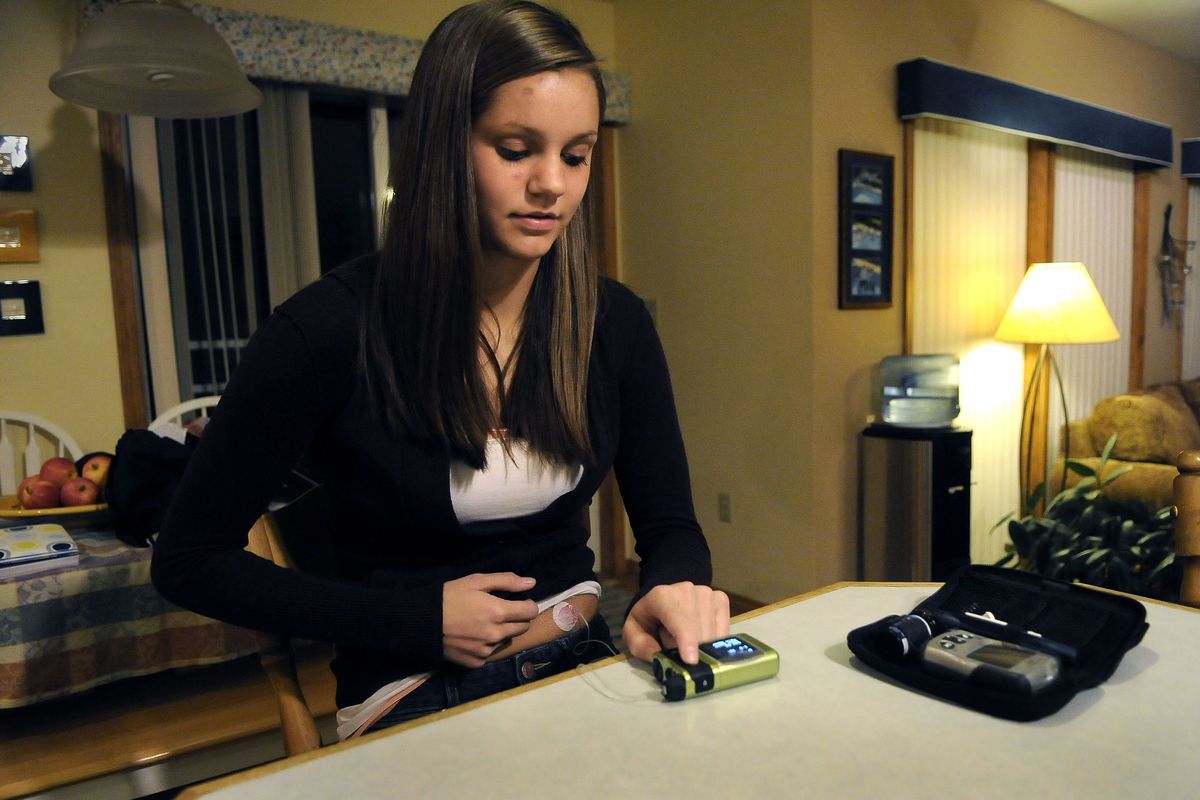
At least eight times a day, 15-year-old Megan Davis pricks her finger to check her blood sugar level.
Each meal or even a snack becomes a math exercise as she scrutinizes the amount of carbohydrates she consumes, especially in light of school, sports, piano and other daily activities.
Almost 24 hours a day, the Ferris High School sophomore is attached to a small pump that infuses insulin – the hormone that converts sugar, starches and other foods into energy and ensures Davis’ survival.
Six years ago, she was diagnosed with Type 1 diabetes, an autoimmune disease that attacks and destroys insulin-producing cells in the pancreas.
Unlike the more commonly known Type 2 diabetes, Type 1 cannot be prevented by diet or exercise. Although it can strike anyone at any age, Type 1 is generally diagnosed in children, teens or young adults, which is why the disease is also known as juvenile diabetes.
As someone living with this disease, Davis has to play the roles of mathematician, dietician and scientist each day just to stay alive.
“It’s definitely a balancing act,” she said, describing the routines of keeping track of her food intake, counting carbohydrates, monitoring her blood glucose levels, changing the infusion site to her pump and other duties in order to avoid seizures and other life-threatening reactions.
Nearly 24 million children and adults in the United States have diabetes, according to 2007 statistics from the American Diabetes Association. Another 57 million have pre-diabetes, which means they are at risk of getting Type 2 diabetes.
Every year, 1.6 million new cases are diagnosed in people ages 20 and older. The total national cost of diagnosed diabetes in the United States is $174 billion.
In Spokane County, about 7.6 percent of adults – roughly 25,000 people – are living with the disease, according to statistics from the Spokane Regional Health District.
The local statistics do not distinguish between Type 1 and Type 2 diabetes. According to the ADA, about 5 to 10 percent of people with diabetes have the Type 1 form.
“It’s the more severe form of the disease,” said Kay C. England, manager of the Inland Northwest branch of the Juvenile Diabetes Research Foundation. “Type 1 is happening to kids as young as two months old in Spokane.”
Davis was 9 years old when she started displaying symptoms of the disease.
She was getting up in the middle of the night multiple times to go to the bathroom, recalled her mother, Illa Davis. She also had become lethargic and had lost about seven pounds in a short time period.
It didn’t make sense since Megan, the youngest of three kids, had always been an active and healthy child.
When the doctor told them it was Type 1 diabetes, her parents were shocked. Neither one had a family history of the disease. At the time, they also knew very little about this illness that would take over their family’s life.
When Megan was first diagnosed, Illa Davis would drive to Moran Prairie Elementary School to give her a shot of insulin at lunchtime. After some time, a school nurse would help administer the shot, but the nurse couldn’t always be available since she had duties at other schools throughout the district.
During Megan’s soccer games and many of her practices, Illa Davis or her husband, Kevin Davis, had to be there in case she suffered from extremely low or high blood sugar levels.
Megan’s diagnosis also changed her family’s lifestyle. Although the Davises had always been relative healthy eaters, they made a point to abstain from processed fare, limit visits to fast-food joints and stick to a diet of whole grains, fresh fruits and vegetables and mostly whole foods.
“It takes away from spontaneity,” said Illa Davis. “You can’t just pick up and go. You can’t leave the house and be caught without the (blood glucose) meter, snacks and insulin. That would have devastating consequences.”
Once, Megan couldn’t play the second half of a soccer game because she couldn’t get her blood sugar level to go down. As a child, there were many times when she had to get an extra shot of insulin just to attend a birthday party and eat a slice of cake, her mom recalled.
“It’s frustrating for children,” Illa Davis said. “It cheats them out of their childhood a little bit.”
After a few months, Megan was able to give herself the shot. She also switched to using an insulin pump within a year of being diagnosed.
Now that she’s a teen, Megan is able to manage the disease 99 percent of the time. She and her family have also reached out to other area youth and children who have Type 1 diabetes through the Juvenile Diabetes Research Foundation.
Four years ago, Megan traveled to Washington, D.C., on behalf of the foundation to lobby for more funding to find a cure. She also has regularly attended Camp STIX, an independent, community-based summer camp in northeastern Washington for youth with diabetes.
“They look like normal, healthy kids – and they are,” said Illa Davis. “Megan is the epitome of health. However, if she is not vigilant 24 hours a day, she can get sick really fast …
“But Megan has taken on the responsibility of taking care of herself and taking charge of her diabetes. She owns it and does not let it own her.”