
Conference to look at smarter ways to help Africa
There came a point in Bill Roe’s life when he wanted to do more for humanity. He looked wistfully at those engaged in charitable missions to Africa and thought about what he could do to help.
“I always felt a pull to that kind of work,” Roe said, “but I don’t have construction skills” to build a school or sink a well.
But the Washington Trust Bank official had other skills at least as useful. Roe, now retired, arranges microloans to Ethiopians who need not just a handout, but a way to become self-sufficient.
On Saturday, Roe will attend the Whitworth University Missions in Africa Conference, bringing together nearly 100 Spokane-area charitable organizations with a common interest: helping Africans.
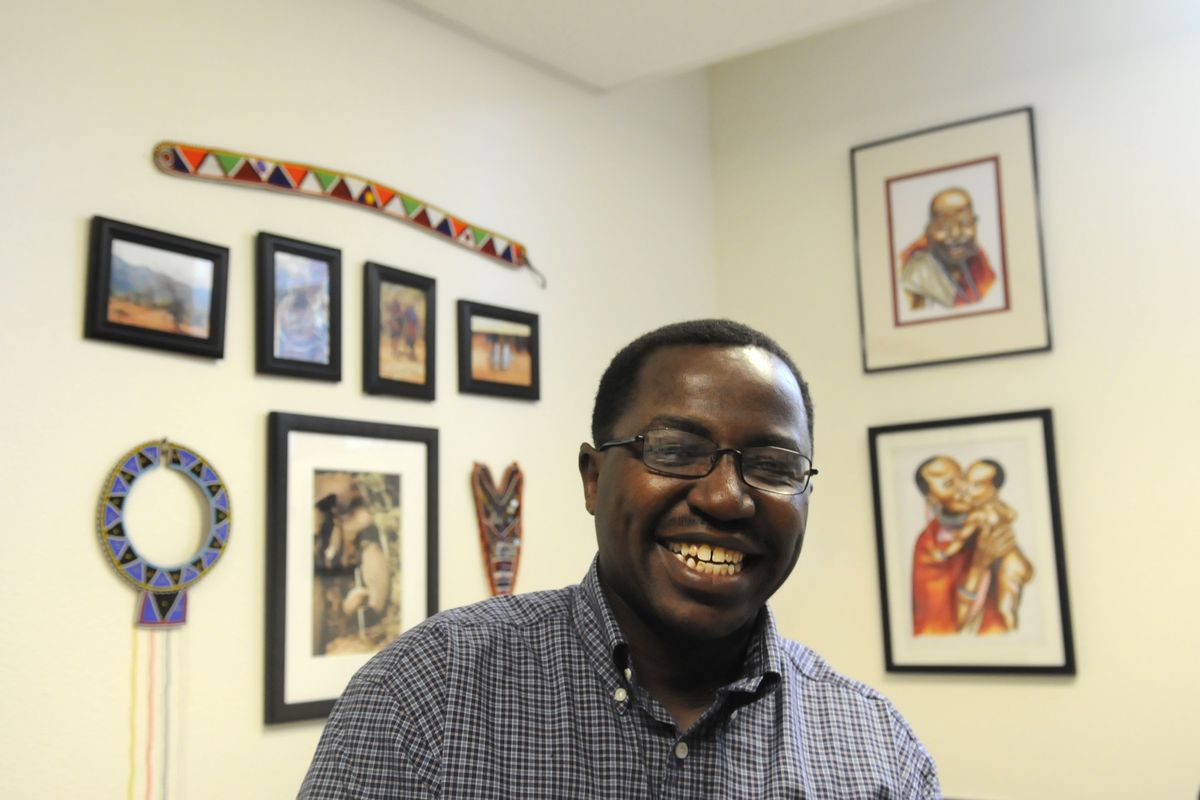
“It’s amazing how many are engaged in Africa right now,” said Moses Pulei, a Whitworth theology professor who is organizing the event.
Pulei, a Masai who grew up in southern Kenya, said he often gets calls from community groups looking for advice about missions to Africa.
“I kept getting all these questions so we thought maybe we should do a symposium,” Pulei said. “What is the best way to engage Africa?”
The conference will include workshops on cross-cultural communications and whether philanthropy to Africa is creating dependence or self-sufficiency.
Pulei said Africa received more than $300 billion in aid between 1970 and the mid-1990s.
“The question is, what is your few thousands going to do that the billions didn’t do,” Pulei said. “We have sometimes hurt Africa because we wanted to do so much good we didn’t help the poor become self-reliant.”
Pulei would not go so far as to say people shouldn’t give money to a nation that has 16 million children orphaned by AIDS. But he is saying, “Let’s give money in a responsible way.”
He pointed to Roe, and his work with the Spokane-based International Assistance Program, or IAP, as an example of an organization bringing sustainable change to an impoverished people.
“Microenterprise is not just a charity, it’s teaching a skill,” Pulei said.
The concept of microcredit was developed by Bangladeshi economist Muhammad Yunus, who in 2006 won the Nobel Prize for his work on extending small loans to entrepreneurs too poor to qualify for traditional loans.
“Before Yunus came along, bankers and financers said you can’t loan to poor people,” Roe said.
IAP began microfinancing in 2001 with 43 loans of $120 through the Ethiopian Kale Heywet Church. Now the organization has 525 clients with loans worth $150,000.
More than 90 percent of the loans are to women, whom the faith-based IAP considers more likely to use modest resources for the benefit of their families.
Roe said $120 may not sound like much, but in a country with an average annual per capita income of less than $200, it is enough to make a real difference in people’s lives.
It is enough to purchase raw coffee that can be sold to a processing plant, or a calf that can be fattened for market, or barley that can be resold to a mill for a profit.
The capital raised by IAP through charitable donations is transferred to the Ethiopian-owned and operated Letta Micro-Finance Institute, which after a two-and-a-half-year effort is finally licensed by the Ethiopian government.
Letta loans the money to women in communities south of the capital of Addis Ababa. The women, organized into small groups of five or six, support one another and co-guarantee each other’s loans.
The default rate for Letta loans is less than 1 percent.
“This is really rewarding work,” said Roe, who has visited Ethiopia 11 times since beginning his charitable work in 2001. “One of the beauties of it is that it not only enhances life in Ethiopia, but it enhances life here as people (involved in the project) get a new global perspective.”
Roe said IAP’s investment goal for Ethiopia is $350,000 to $400,000, which would make Letta self-sustaining.
“Many U.S. and Western European donors have poured a lot of aid into Africa, and I’m not sure it’s well-managed,” Roe said. “As a businessman, I see the importance of developing sustainable businesses as a long-term solution.”
An IAP fundraising event at the Service Station in north Spokane on March 27 raised pledges of more than $50,000, which would increase the number of Ethiopian clients to 625, Roe said.
Pulei cited Roe as an example to anyone wishing to begin a mission to Africa.
“This man really does want Africa to be a better continent,” Pulei said.