
February 11, 2010 in City, Idaho

Benewah Co. sheriff’s office, tribe tangled in policing rift
By The Spokesman-Review
 
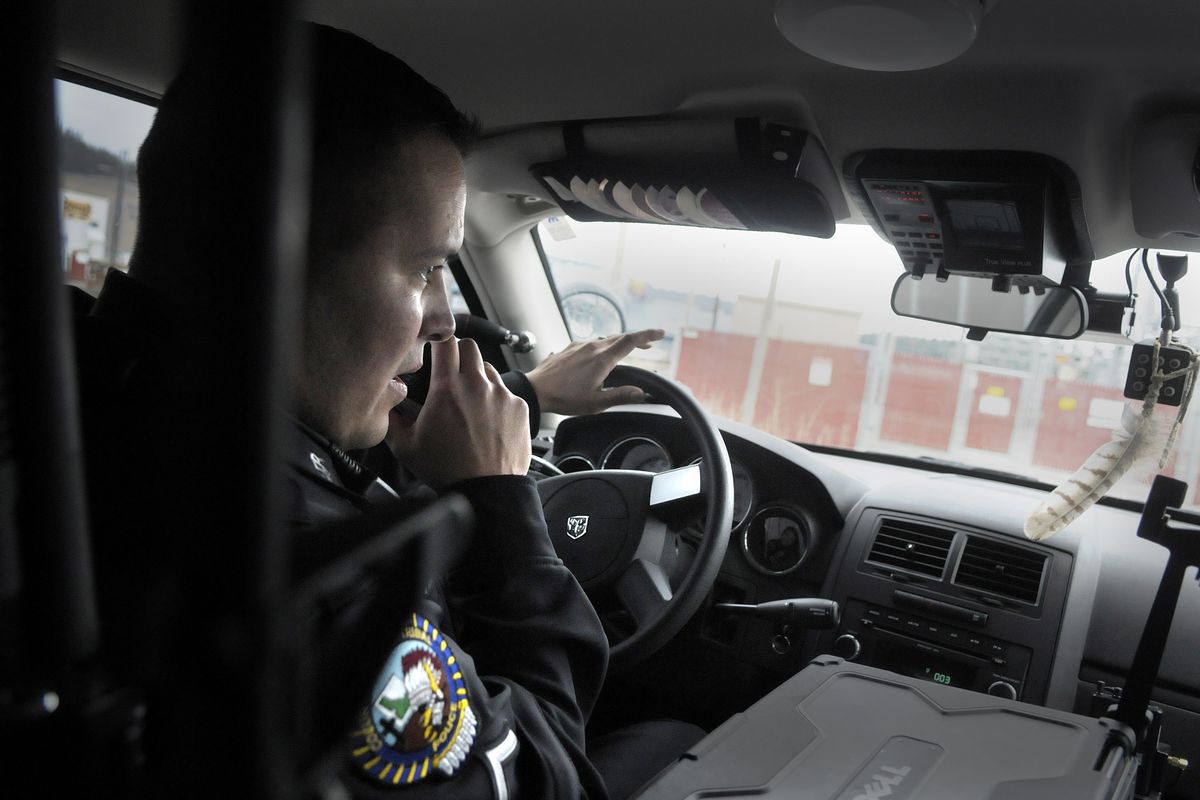
Christopher Anderson photo

Detective Sam Abrahamson pulls out of Tribal Police Headquarters in Plummer as he patrols the Coeur d’Alene Reservation on Tuesday, Feb. 9, 2010.
(Full-size photo)(All photos)

Map of this story's location

The call came in Tuesday at 12:36 p.m. Some men had been yelling and screaming for about an hour across from the Tensed post office.

Four Coeur d’Alene Tribe police officers responded and detained a 57-year-old man for marijuana possession. The man was not a tribal member, so the officers had no authority to book him into the Benewah County Jail. They held him until 1:15 p.m., when a county deputy arrived from St. Maries.

That is the Coeur d’Alene Tribe’s account of the incident.

This is Benewah County Prosecutor Doug Payne’s version:

A member of the Coeur d’Alene Tribe called tribal police regarding three tribal members who were harassing an elderly man. Four tribal police cars responded, but the people creating the disturbance were gone. The tribal police officers rightfully detained the man who was the victim of the suspected harassment for possession of marijuana but “never followed up with the people who were the cause of the call.”

The divergent views illustrate a growing conflict between the Benewah County Sheriff’s Office and the tribe, spurring the tribe to push for a new state law this year. The proposed legislation calls for tribes and county sheriffs to reach cooperative agreements for law enforcement on reservations. If they can’t agree within six months, tribal officers could begin enforcing state law on reservations, as long as officers are state-certified and send all cases to state courts. The tribes also must carry liability insurance and waive their sovereign immunity in the event they are sued in the case of officer wrongdoing.

Payne said tribal police had the right to arrest the man for possession of marijuana on Tuesday and could have saved the Benewah County deputy an hourlong round-trip drive. He said the tribe has had that right for years under Idaho code that allows citizens to arrest others when they see crimes committed.

But Marc Stewart, a tribal spokesman, said the tribe hasn’t been able to arrest nontribal members since Benewah County in 2007 revoked an agreement that cross-deputized officers. Now tribal officers encountering nontribal criminals must rely on Benewah County and other agencies for arrests. Stewart said tribal police officers have told him they regularly release people who should be arrested because Benewah County is either unwilling or unable to show up.

“If there was an agreement and people were cooperating, all this would be moot,” Stewart said. “These kinds of problems and confusing situations wouldn’t be necessary. Since the agreement was revoked, the tribe has been working for three years to get it back.”

In an interview last week, Sheriff Bob Kirts said he revoked the agreement because tribal police officers were booking nontribal members into tribal court. The legislation would require tribal officers to book nontribal members into state courts. Kirts said no criminals have been released as a result of his department not responding to calls.

A handful of tribal police reports provided by Stewart show Benewah County stating it had no deputies available to respond or show the Idaho State Police responding to calls for assistance when Benewah County did not. One report, from earlier this month, shows that a nontribal member with a suspended license and multiple driving violations was released.

“When the other agencies come, it’s because Benewah County is not,” Stewart said. “Officers have said, ‘I had to let these people go.’ ”

Kirts said the tribe wants complete authority over the reservation. He said the county’s average response time is 19 minutes and that there have only been five times that his deputies have not responded to calls for assistance from the tribe. Likewise, he said, there’s “at least five times when we requested their assistance and they failed to show up.”

Stewart said he’d like to see documentation of those calls. He said Benewah County calls the tribal police every day and they try to respond in a timely manner. “This really demonstrates the need for cooperative law enforcement,” Stewart said. “Sheriff Kirts is making the argument for it by saying there are problems.”

Kirts said he granted the tribe three years ago the right to arrest nontribal members in emergencies and in drunken driving incidents. But he said tribal officers have done neither. Stewart said Kirts never informed the tribe of that until a few months ago, when Kirts hand-delivered a letter backdated to Feb. 6, 2007, stating that it granted those privileges.

Payne, the prosecutor, said Kirts gave him a copy of that letter back in 2007. “I do not accept the tribe’s denial that they got that letter,” said Payne, who also acted as Kirts’ spokesman on Wednesday.

Payne said among his concerns about the legislation are that it would create a unilateral agreement that would not be fair to county sheriffs, because they still would not be able to arrest tribal members on reservations. In addition, he said, no system is in place to hold tribal police accountable.

“No elected official would have any authority over these officers,” he said.

Helo Hancock, the tribe’s legislative director, said the cross-deputization pact provided reciprocity. The tribe’s agreement with Kootenai County allows sheriff’s deputies to arrest tribal members on reservations and tribal officers to arrest nontribal members. Although the proposed legislation does not include that, it’s something that could be negotiated, Hancock said.

“We certainly wouldn’t be opposed to offering that because we’ve done it in the past,” Hancock said.

In addition, Hancock said, accountability for tribal officers is built into every part of the legislation. In the case of wrongdoing by tribal officers, their state certification could be revoked, tribes would be open to state or federal lawsuits and the Legislature would have the ability to repeal the law if it didn’t work, he said.

“You have a state-certified officer arresting you by state law and taking you to state court,” Hancock said. “It’s not as if these guys can run rogue. They’re subject to the same standards and the same discipline.”

10 comments on this story so far. Add yours!
  • SugarShane on February 11 at 8:28 a.m.

    Wow a guy is being harassed and they show up and arrest the victim for pot, sounds like racial profiling to me. Kinda odd seeing injuns arresting people for smoking the ol peace pipe. Cowboy and Indian politics, Ive never heard of these agencies working together in harmony, there is too much contempt from both sides. They even made a movie about it called “Thunderheart”.

  • greyhound2 on February 11 at 8:35 a.m.

    The “soveregn immunity” would be a major issue. The Tribe’s formost business is illegal outside of the reservation and the Casino would be shut down. It is also the major draw for visitors to the reservation area. By granting jurisdiction, the way would be open for other revenue enhancing projects, like “speed traps” and others, with no recourse for the unlucky victims. Not a good idea.

  • Liberty_Bell on February 11 at 8:39 a.m.

    Sounds like a more intellegent County Prosecutor is needeed!

    Payne said among his concerns about the legislation are that it would create a unilateral agreement that would not be fair to county sheriffs, because they still would not be able to arrest tribal members on reservations. In addition, he said, no system is in place to hold tribal police accountable.

    “No elected official would have any authority over these officers,” he said.

    Article I, Sec. 8 with elected members?

    To regulate Commerce with foreign Nations, and among the several States, and with the Indian Tribes;

    Article II, Sec 2 also an elected member?
    The President shall be Commander…He shall have Power, by and with the Advice and Consent of the Senate, to make Treaties…”

  • Liberty_Bell on February 11 at 8:56 a.m.

    “Commerce is the great engine by which we are to coerce them, & not by war.”
    Jefferson to Lewis

    “The first white men of your people who came to our country were named Lewis and Clark. They brought many things which our people had never seen. They talked straight and our people gave them a great feast as proof that their hearts were friendly. They made presents to our chiefs and our people made presents to them. We had a great many horses of which we gave them what they needed, and they gave us guns and tobacco in return. All the Nez Perce made friends with Lewis and Clark and agreed to let them pass through their country and never to make war on white men. This promise the Nez Perce have never broken.”
    Chief Joseph

  • twobit on February 11 at 10:00 a.m.

    I think the Indians want a soveregn nation but do not want to pay for any of it. They won’t even keep up the school in Worley that they let go to the point kids can’t use it. They build new casinos instead. I don’t think Benewah county needs to deal with them at all. They have hired most of the deputies from Benewah after the tax payers(none tribe members) train and put them thru school. What will they cry about next. They sure could have stepped up to the plate and help that school but they want the state to pay but remember SOVEREGN NATION with USA hand outs. Ya right

  • Marc_Stewart on February 11 at 10:50 a.m.

    Lakeside Elementary School in the Plummer-Worley School district is a public school. The Tribe tried to help voters approve a bond to replace it four different times. On the third try, the Tribe even committed a $1 million and it still failed to reach the supermajority required by Idaho law.

    The Tribe has given milions of dollars to schools across the state.

    The proposed law would not cost taxpayers one dime. The tribes would carry all of the financial burden.

  • idaho_resident on February 11 at 6:04 p.m.

    Cross deputization is something that has been talked about for over 20 years. It is something that is advantageous to all parties, being the citizens of the State of Idaho, the citizens of the county and the residents, both tribal and non-tribal members, of the Indian Reservations.

    For those who say that the county shouldn’t work with the Tribe, then maybe its them that should consider moving to one of the other counties that don’t have a reservation around it. The Reservations were established far before the state of Idaho was given statehood. So who was here first? Pretty petty argument but some of the comments are like that… petty.

    Also, a comment made about the Tribe hiring officers out from under the County or State after getting their training?, well that same argument could be made the other way around. I know of several officers who began their training with a tribal organization, on the Tribe’s dollar, attending the Federal Law Enforcement Training Center in Arizona as well as many state trainings, only to leave after a few years to a city or county department at a higher pay due to the training that they received. Tribal organizations were used as the stepping stone into a city or county agency, with no consideration of the money that was put out for that person.

    I live in an area where the four counties cross into the reservation. There are disagreements and such, but the number one priority is to protect and serve. The safety of the public, Tribal or non-tribal, takes backseat to the protection of all the people. Officers of both Tribal police agencies and those of the county, state and city agencies all understand that and for the most part, work together. Its the higher ups in charge that have the most problem in working together.

    with cross deputization, it would probably be easier to enforce not only tribal law but state law on tribal members. If the county attorney thinks otherwise, then he needs to learn more about tribal and federal law… Also, most tribal agencies keep their own criminal and civil history to themselves.. with this step, it would be forwarded to the state and included as part of a person’s state record. That means, all the speeding tickets will be reported and it can affect a person’s insurance rating. it may be a small thing, but I don’t like to pay higher insurance so I guess I won’t be speeding on the reservation anymore…

  • Equalitylaw on February 12 at 9:51 a.m.

    Do tribal officers take an oath of office to uphold the U. S. Constitution protecting all citizens from governmental abuses or violation of their rights?

    Do tribal officers take an oath of office to uphold the Constitution and laws of the state of Idaho and County Ordinances?

    Can a non-Indian be detained or arrested while on the reservation for anything that is not a violation of law off of the reservation?

    How would any non-Indian citizens or patron of a tribal business know what other “tribal laws” might be in effect?

    If a tribal officer is unfit or engages in improper conduct can they be disciplined by the County Sheriff?

    Can citizens of Benewah County attend tribal meetings dealing with issues affecting their safety and their property within reservation boundaries?

    Tribal politics is notoriously infected with nepotism, favoritism and even corrupution. What rights do the people of Benewah County have in electing tribal government or enacting tribal ordinances that a non-Indian citizen may be subject to?

    Tribal members vote in federal, state and local elections, can non-tribal members do likewise in tribal elections?

    What mechanism do the people of Benewah County have in electing officials responsible to supervise tribal police activities?

    Assuming the same certification requirements are in place, and have been independently verified by Idaho and Benewah County, what control does the County have in hiring, setting of qualifications and backrounding of tribal officers.

    If a tribal officer engages in misconduct or negligence can they be disciplined or fired by the Benewah County Sheriff?

    If they are de-certified for misconduct, does that mean they no longer work or make arrests, detentions, etc under the cross-deputization agreement?

    Who determines if the “waiver” of the court created doctrine of tribal “legal immunity” from laws and lawsuits, is adequate, binding and enforceable in the State Courts of Idaho.

    What mechanism exists to guarantee adequate insurance is in place to indemnify Benewah county? How can the county be sure premiums are timely paid, etc.?

    Do the provisions for a tribal “waiver” of legal immunity create rights for non-Indians to sue the tribe and it’s officers directly in Idaho state courts for any wrongdoing occuring, or is the waiver limited to parties to the agreement. ( Benewah County and the tribe)?

    Once hired on, what in-service ongoing training and education are tribal officers required to participate in? Are they required to take all of the same classes and training as the County deputy Sheriffs? Who evaluates tribal officers regularly and their continuing job performance?

    What taxes does the tribe pay to fund law enforcement services and infrastructure, like police stations, jails, courts, District Atorneys, Public Defenders, bomb squad, rescue services, SWAT teams, juvenile facilities, mental health personnel and facilities, Emergency Medical Technicians, ambulances, helicopters, boats and other emergency first responders equipment?

    What input does Benewah County or the County Sheriff have in establishing speed limits, traffic signals and markings on reservation lands which may be the basis for detention and arrest of non-Indians while on reservation lands?

    These are just a few questions that must be answered before any valid and effective cross-deputization agreement should be entered into. The failure of some of these issues could result in non-Indian citizens suing the County of Benewah for waiving their legal rights, or negligenly failing to supervise or enforce any cross-deputization agreement resulting in non-Indian citizens being damaged, injured or subject to harassment, discrimination or a violation of civil rights and statutory rights!

    Most likely such a cross-deputization agreement should be voted upon by the citizens of Benewah county with full pre-election disclosure of all of these issues and questions!

  • Marc_Stewart on February 12 at 1:20 p.m.

    Here are answers to Equity Law’s questions. Most of the questions seem to focus on Benewah County’s authority over the tribe.

    Under the proposed law, the Tribe would be enforcing state law, which is no different than any city police force operating in a county in Idaho.

    Do these tribal officers swear an oath of office to uphold the Constitution of the United States including the Bill of Rights protecting all citizens from abuses of government and law enforcement officers? Yes. They do.

    Do these tribal officers swear and oath office to uphold the Constitution of the State of Idaho or Idaho state laws? Yes (see above).

    Besides being required to have P.O.S.T. certification do their qualifications, physical and mental fitness and backround checks, in order to be hired in the first place, meet the same screening requirements required by Benewah County Deputy Sheriffs who are hired by the County? The Tribe has hired many officers away from Kootenai and Benewah counties. Most of the tribal police officers are non-tribal members. I can’t compare the tribe’s hiring practices to Benewah County, but I can say that any time there is an opening — officers from across the state apply, including those from Benewah County.
    If they are hired or appointed by the tribe, do the non-Indian residents vote to elect the tribal government who hires them?

    This is a ridiculous question. Residents of St. Maries have no say in the city of Plummer’s police department, Non-tribal members cannot vote in tribal government elections. Say you live in St. Maries, Idaho, and you go to Spokane and get arrested, you can’t object to the state of Washington’s ability to prosecute you simply because you don’t live and vote in Washington.

    Are the non-Indian reservation residents entitled to vote for and participate in the tribal government election or in deciding tribal issues that could affect them and their property, law enforcement policies on the reservation and those involving their own safety and that of their property? See previous question above.

    If a tribal officer engages in misconduct while enforcing the law against non-Indian persons, can the Benewah County Sheriff discipline them? Can the Sheriff of Benewah freely investigate such an incident? Under the proposed law, a tribal officer who engages in misconduct would be subject to discipline from Idaho POST. Idaho POST council is comprised of elected officials around the state. If it is an alleged criminal act against a non-tribal member, the sheriff would be able to investigate and make an arrest.

    — to be continued.

  • Marc_Stewart on February 12 at 1:21 p.m.

    Can the Benewah County Sheriff evaluate the fitness of tribal officers and terminate tribal officers who are unfit no matter who they are in the tribe, or who they may be related to in the tribe and it’s government? Personnel decisions and evaluations are handled by the tribal police chief. Benewah County has no authority or ability to hire, fire or evaluate peace officers in St. Maries or Plummer.

    Can the Benewah County Sheriff at least remove any power such an unfit tribal officer may have under the “cross-deputization agreement”? If the law is passed, the tribe and
    Benewah County would have the ability to enter into a cross deputization agreement. The tribe and the county would have to agree on such a stipulation. If no agreement could be reached, Idaho Peace Officers and Standards Training would have the power to decertify tribal police officers. Benewah County would have no authority just like they have no authority over Idaho State Police.

    If it is up to the tribal government to discipline errant or unfit tribal officers, what say so or what input do the non-Indian residents of the reservation have, or what does the County of Benewah have to say about it? Non-Indian residents are able to file complaints against tribal officers at any time now. Complaints are evaluated on the merits and the police chief acts accordingly. Benewah County is free voice its opinions, but in the end those are just opinions.

    Does the tribe pay taxes to support law enforcement and emergency infrastructure that is part of and very necessary to, the law enforcement network? [e.g. courts, jails, hospitals, District attorneys, Public Defenders, communication networks, Emergencty Medical Services and equipment, mutual aid agreements, the type and location of traffic signs, signals and markings, etc.] Yes. The Tribe pays property taxes. It also has donated money to numerous public safety organizations on the reservation over the years.

    Who determines if the waiver of tribal immuntiy is legally binding, enforceable and adequate to allow lawsuits and legal relief and legal rights to the non-Indian third parties who are affected, whether they live on or off the fee owned lands inside of the reservation? The tribe’s insurance provider.

    Who determines if there is adequate liablility insurance and does the tribe consent to have such an insurance policy approved by Benewah County in advance and does the agreement require all notices from that insurance carrier to be provided to Benewah County? What does the County do if the policy lapses or is cancelled? The proposed bill outlines the amount of insurance required. Tribes would be required to have and maintain insurance. If they can’t, tribes couldn’t enforce state law. Benewah County would have no say in this process, just as it has no say in the city of St. Maries’ insurance coverage.

    What Idaho state laws, Benewah County Ordinances or policies and procedures of the Benewah County Sheriffs Department apply to the conduct of these tribal oifficers in the course of the enforcement of their duties? Idaho POST sets the policies and procedures for all officers who enforce state law. Under the law, tribal officers would be required to be POST certified. In terms of power, Benewah County is not higher than the state of Idaho.

    What ongoing inservice training and education, required by Benewah County for their deputies, must be taken or participated in by these “cross-deputized” tribal officers? I am not sure what Benewah County requires. The Tribe goes above and beyond what is required by the state already. Tribal officers are cross-deputized in Kootenai County. Idaho POST requirements are above Benewah County.

    If Equity Law as any additional questions or needs further explanation, feel free to call me at 686-2023.

You must be logged in to post comments.
Please create a profile or log in here.