
Nearly half of U.S. businesses have become anti-social
Increasing popularity of social networking Web sites drives policies
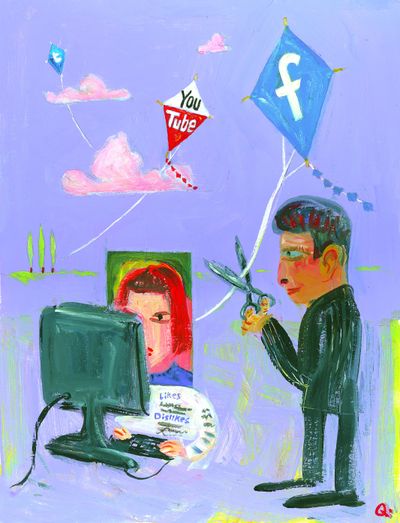
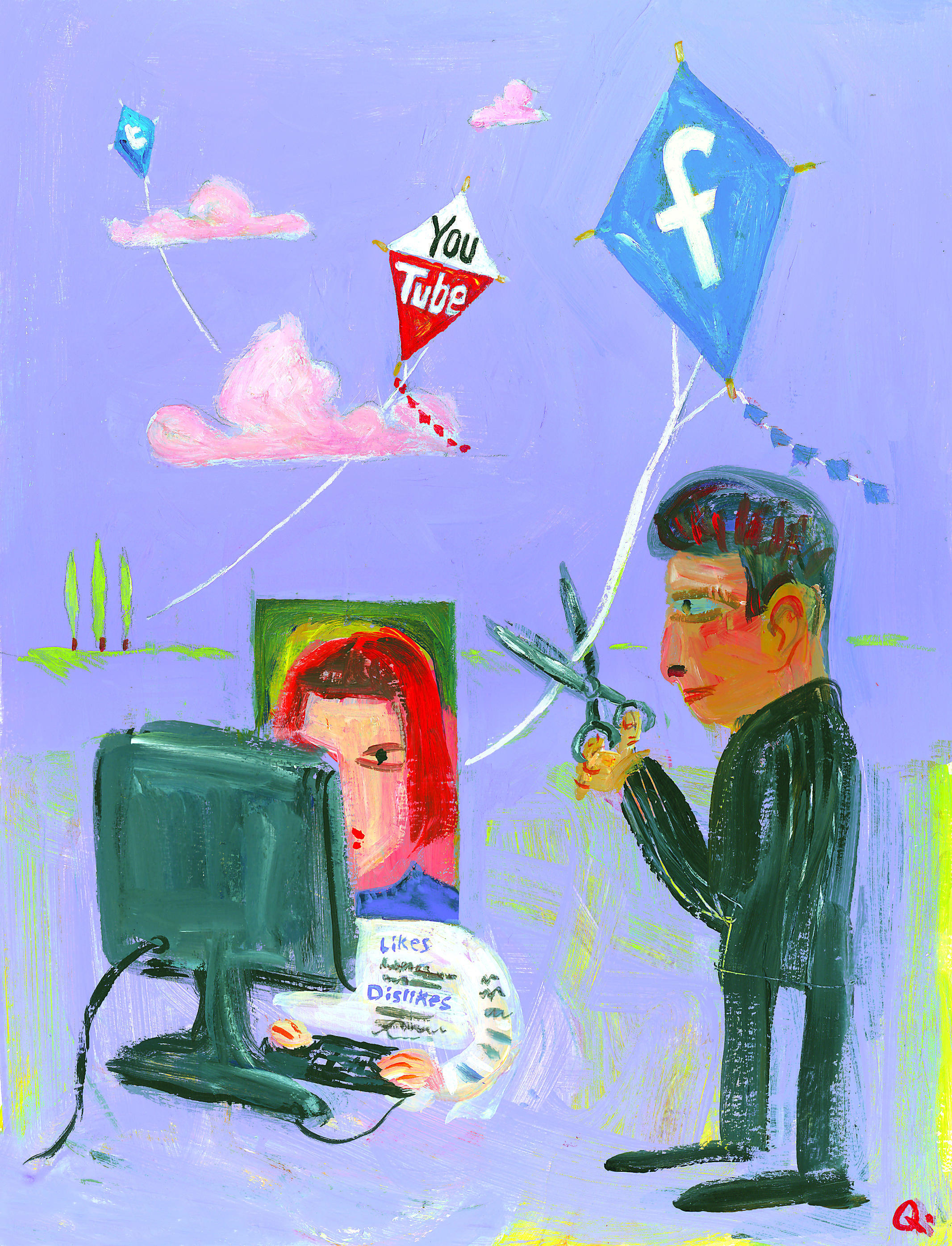
Larry Soehren says his company, Kiemle & Hagood, recently faced the choice whether to block employee access to popular social networking sites such as Facebook.
According to one survey, slightly more than half of U.S. businesses now block office access to Facebook, which this month was anointed the most popular Web site in North America. It just surpassed Google for most visits per week, according to site analysis company Hitwise.
Companies block Facebook, MySpace and in some cases, YouTube, because they can affect productivity. Nucleus Research concluded earlier this year that U.S. companies would see a productivity gain of 1.5 percent if Facebook were blocked on work computers. In addition, many computer-network administrators block access to those sites because workers can introduce viruses via links or spam messages sent to them.
Soehren, chief operating officer for Kiemle & Hagood, said he and his colleagues understand that the typical workday, for many, includes checking Facebook, Twitter or YouTube several times.
But Kiemle & Hagood decided that providing office access to Facebook and Twitter made sense – if only to reward, or at least not irritate, the company’s most tech-savvy workers, he said.
“The tech-smart people we have are also the ones who have Blackberrys and are dealing with work e-mails in the evening when out of the office,” he said. “If we clamp down on them and block Facebook at the office,” they might be less likely to do company work in the evening hours.
The debate about Facebook is raging in offices wherever Facebook is available, which currently is in more than 50 countries, with 400 million registered users.
Soehren is on the side of managers who embrace the use of popular social networking sites. Some salespeople regularly use Facebook to make sales and build contacts with potential customers, he said.
Just as YouTube once was blocked by some companies, only to become a platform for online training sessions, he predicts Facebook likewise will increasingly become a business tool.
Websense, a San Diego company that provides Web security and filtering services, has found many companies that once blocked social sites have moved to allowing sites like Facebook inside their networks.
“Their productivity concerns are decreasing as more companies realize the business benefits of Facebook and other Web 2.0 properties,” said Websense spokesman Matt Mors.
Spokane County Information Systems Director Bill Fiedler said Facebook and a few other sites have been blocked for all but a few county departments since 2002. No change is anticipated, he said.
Twitter, a popular networking site that allows people to send short text messages, is not blocked, but Spokane County’s information systems team monitors it to track excessive use, Fiedler said.
The reason has less to do with policy and more to do with technology, though – the network filter used by the county lumps Facebook into the category of dating sites, but doesn’t regard Twitter as a dangerous site, Fiedler said.
Spokane Teachers Credit Union also blocks Facebook for most workers but allows Twitter access.
STCU workers doing communications or marketing jobs can use Facebook, provided they use the site to connect with customers or other business professionals.
Laura Wood, STCU”s director of human resources, said the mood inside the credit union is moving toward changing the current restrictions. “We have recently had more discussion about allowing more access,” she said. Some marketing team members are urging the credit union to set up its own Facebook page, she said.
Robert Half Technology, the consulting firm that found more than half of U.S. firms block Facebook, also noted that one in five U.S. companies allow Facebook for strictly business use. It said about one in six allow occasional or minimal social networking at work.
Soehren and other business leaders suggest the numbers will soon start shifting to much wider access.
One business group that will make that transition more slowly is the medical sector. Karina Jennings, vice president of regional communications for Providence Health & Services, said the organization is looking seriously at removing blocks, but will do so carefully.
Providence is regulated stringently to ensure that patient information and hospital data are not compromised or misused.
Any shift by Providence to allow employee access to social-networking sites such as Facebook or LinkedIn first would have to assure that those safeguards are addressed, she said.
Providence operates hospitals and medical facilities in Washington and Montana, include Spokane’s Sacred Heart Medical Center. In Washington the operation involves about 20,000 employees.
Only a few pockets within the Providence team have access, for now, to social media, Jennings said. But she and other managers have identified several reasons for opening up access.
One Providence foundation is using Facebook for fundraising, for example. And some Providence hospitals have Facebook pages as well, to connect with their communities.
One business consultant and management professor, Sheizaf Rafaeli, contends that companies need to consider productivity but also keep in mind the bigger, long-range role of social media in the workplace.
Rafaeli is a teacher and researcher at the Center for the Study of the Information Society at the University of Haifa, in Israel.
Over time, nearly every business with a direct relationship with customers will begin to use social networking tools, he said in an interview.
“Today’s workplace has more communication already built into it. Tomorrow’s workplace will have even more,” he said. Company managers will have to build some workplace norms for that new system.
“But prohibition will not work, only backfire,” he said.