
November 28, 2010 in Outdoors
Recovery Act funds give huge boost to outdoor recreation
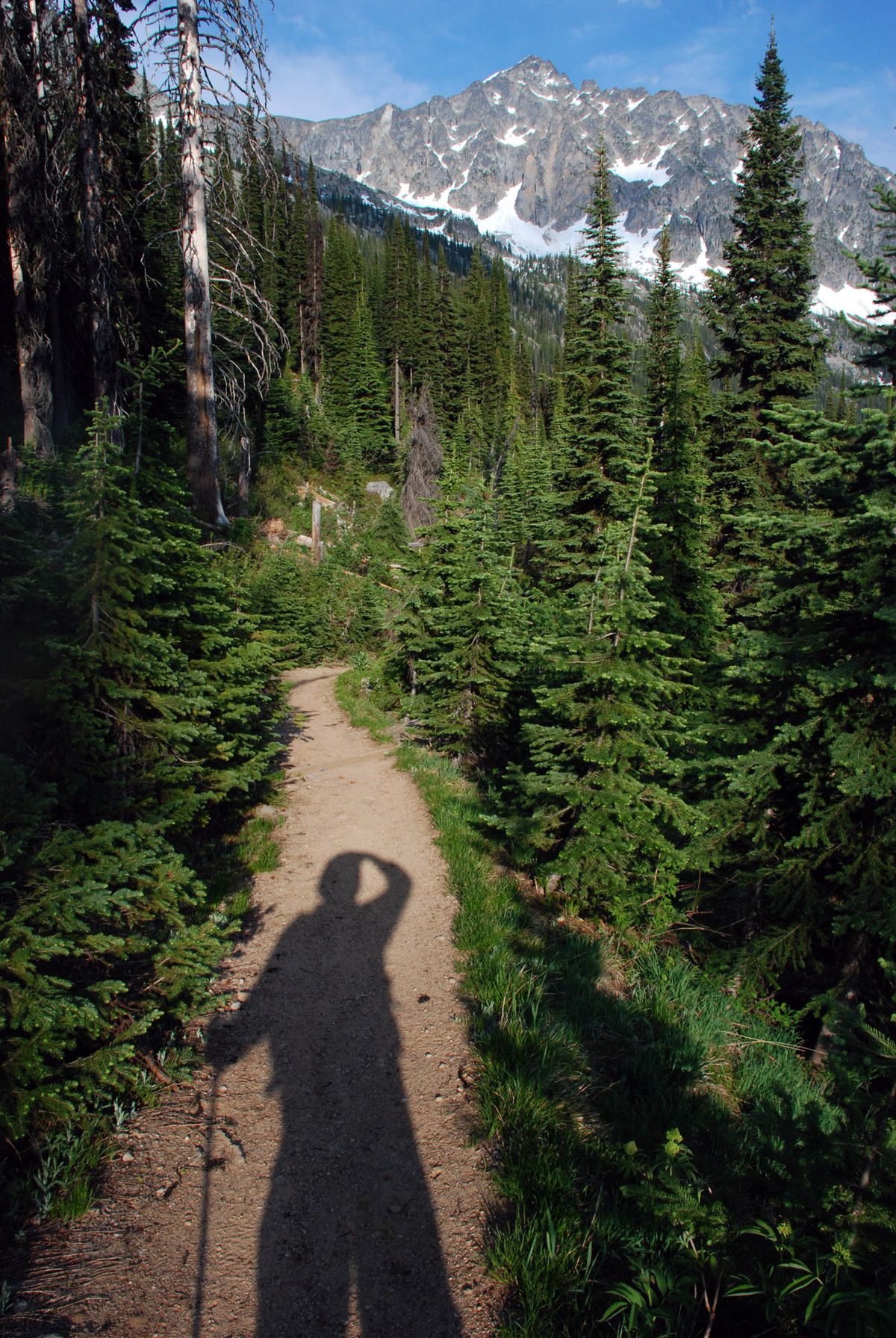
Trails, campgrounds and forest access have been major stimulus beneficiaries from the American Recovery and Reinvestment Act of 2009.
Hikers were seeing something as rare as Sasquatch in the backcountry of national forests this summer – workers. By fall, hunters were finding trails cleared, bridges replaced and campgrounds expanded and repaved in locations scattered throughout the Inland Northwest
Millions of the $275 billion in stimulus funding to create jobs were earmarked for contracts or grants to repair, maintain and improve recreational infrastructure.
Paving and completion of the Fish Lake rail trail out of Spokane was among the first stimulus-boosted projects completed in the northwest because it was “shovel ready” when funds were approved in the spring of 2009.
The Spokane Regional Transportation Council Board awarded $778,317 to the project, or nearly 8 percent of the $10.4 million in federal stimulus allocated to Spokane County government agencies. The parking areas have been occupied by recreationists virtually every day since the trail was ready to use that winter.
This summer, a new wave of contracts was enacted in a work spree that will continue through next year.
Idaho Panhandle National Forests received about $18 million in stimulus funding for immediate use this season, said spokesman Jay Kirchner.
“This is money going into communities and putting people to work,” he said.
Funding was funneled to 21 road projects, five trails projects and the rest to a list of needy projects including silviculture.
One of the biggest projects refurbished the Kalispell Bay boat launch at Priest Lake.
The Laverne ATV Trail stream crossing was improved to reduce impacts to water quality.
Route of the Hiawatha rail-trail improvements and parking expansion will continue into next summer.
Each district received about $50,000 for trail projects, mostly contracted out to maintain or replace bridges.
“We used some of that money for leaders to run three youth crews to support our maintenance program,” said Pat Hart of the Bonners Ferry District. Hart said that the district was able to stretch the stimulus money by hiring the 15 youths with funds from other sources.
The Bonners Ferry District also used stimulus funding to paint its buildings, install new docks at Brush, Sinclair and Smith lakes and for replacing deteriorating bridges on the trails to Beehive and Roman Nose lakes.
“Those are huge things for us,” Hart said, noting that funding for infrastructure projects is routinely elusive.
Kirchner said the Recovery Act funding “allows us to get lot of work done that’s been sitting on the shelf waiting to get done for a long time while getting money back into the North Idaho economy.”
Hells Canyon and the Eagle Cap Wilderness enjoyed the most vigorous trail-maintenance campaign in more than a decade fueled by $1.6 million in stimulus funding to the Wallowa-Whitman National Forest.
Forest officials hired contractors to remove logs, roll away boulders and rejuvenate tread while enough money was in the pot to more than double the trail crews for the next two summers, said Dan Ermovick, the forest’s recreation manager.
Colville National Forest officials hired local contractors with stimulus funds to resurface two miles of Sullivan Creek Road.
Umatilla National Forest received $3 million for trail maintenance and $1.7 million for facility improvements, said spokeswoman Joanie Bosworth.
Campgrounds were upgraded and 30 toilets across the forest were replaced with new accessible vault toilets.
The Pomeroy District partnered with several youth conservation organizations for trail maintenance, much of it in the Wenaha-Tucannon Wilderness.
Clearwater National Forest North Fork District officials received about $4 million for trails alone.
“That’s a large multiple of the annual trail budget we normally receive,” said Doug Gober, district ranger. “We’re doing everything from tread repairs to water bars and replacing structures and brushing, most of that work being contracted out.
“We’re making tremendous improvement in backlogged maintenance,” he said, noting the district has about 700 miles of trails.
Forest visitors planning outings to the Umatilla and Clearwater forests this summer were warned to check the status of their favorite destination before heading to the woods.
The Clearwater alone awarded $21.5 million in contracts, said Supervisor Rick Brazell. In a news release issued in June, he warned that “People will find situations ranging from inconveniences such as construction noise, to delays, to outright closures.”
Weitas Butte, Curvy and Eagle Point fire lookouts were repaired. Culverts were replaced on the Pierce-Superior Road 250, important to a wide range of forest recreation as well as logging.
Grading and ditch-cleaning crews were tending roads that have been ignored for years.
“In addition to accomplishing critical infrastructure and restoration work, these projects will provide a number of local employment opportunities,” Brazell said.
Mount St. Helens received much of the Gifford Pinchot National Forest’s $627,000 in federal economic stimulus money dedicated for trail work. The 30-mile Loowit Trail that circumnavigates the volcano – a popular route badly damaged by storms in 2006 – received a big reconstruction boost.
The Forest Service wasn’t the only federal recreation provider boosted by the stimulus.
The U.S. Army Corps of Engineers, for example, earmarked nearly $2 million from the Recovery Act to upgrading the Riley Creek Recreation Area, a popular North Idaho campground on the Pend Oreille River near Albeni Falls Dam.
Many of the upgrades were originally planned in 2001, but had been sitting on the back burner ever since, said Craig Brengle, Albeni Falls Dam natural resources manager.

Spokane7


ZagChuck on November 28 at 12:19 a.m.
Cheerleaders formally known as journalist continue to publish false numbers and facts
“Millions of the $275 billion in stimulus funding to create jobs”
The bill was over 3 times that amount, coming in at just over $892 Billion before financing fees.
So far the cost appears to be roughly $686,000 per job, but putting a positive spin on; it certainly helps.
Keep cheering Rich, the rest of the Cheerleaders formally known as journalists in “news” organizations across the country would be proud.
monkeyman on November 28 at 1:31 a.m.
Good to have some regional numbers.
@ ZagChuck on November 28 at 12:19 a.m.
“Cheerleaders formally known as journalist continue to publish false numbers and facts”
I don’t see a spin or cheerleading in the article. Just local projects and spending numbers. What false numbers are you referring to? The $275B refers to the “projects” spending - http://www.recovery.gov/pages/textview.aspx?List=%7BEB595CCA-D93F-48F4-AF96-11E2D41DE73D%7D&xsl=Charts/FundingOverviewChartTextView.xsl
Also @ ZagChuck: “So far the cost appears to be roughly $686,000 per job, but putting a positive spin on; it certainly helps.”
Sounds like it is not helping you! Source of your data for $/job? And what would be a good number for you? In any case, you may know it takes more than just the salary of the employee to create a job. Unless you can build roads and bridges with your bare hands…
ZagChuck on November 28 at 2:55 a.m.
@ Monkeyman
Propaganda begins with the discounted cost of the stimulus “275 billion in stimulus funding to create jobs…” Is this gross negligence or just a pure lack of journalistic integrity? Cheering for wasted spending and government growth continues in the attempt to convince readers that stimulus bill was a good thing, that accomplished, or is accomplishing its’ goals.
Seriously, even if we all agreed that spending nearly a trillion dollars was necessary, should it have only created 675k jobs? The answer is clearly NO!. Painting the stimulus act as anything other than a abysmal failure is pure propaganda, performed by cheerleaders who seem to lack the ability to provide an honest accounting of government functions.
Thanks for the correction request, though, I actually went back to double check my numbers.
According to http://www.recovery.gov/Pages/default.aspx , there have been 675179 temporary jobs created, or jobs temporarily saved, with the spending of our great grandchildren’s money. The numbers used on the govt website say it cost us $787 Billion, before finance charges and interest, which equates to $ 1,165,616.82 per TEMPORARY job.
Will you argue we have spent the money wisely?
According to the Obama Administration, this act was supposed to it would prevent un-employment from reaching 8%. We’ve been over 10% for several months now. Most of our state governments are now underwater with debt as well, because they had unwisely been using the stimulus money to keep government employees on the payroll, passing on a further tax burden.
Dazzeetrader11 on November 28 at 3:06 a.m.
<shaking head=”“> Handout to the unions. grumble…In LA, the figure was upwards of $900K per job created. When will people know that the government cannot manage money or, as it turns out, trust of the people.
Glad to hear about the great outdoors though. Government keep spending like this, many will be living in it.
Omaba…who never had a resume…continues to have a nil resume except for the job he’s got for another 24 months.
ZagChuck on November 28 at 3:51 a.m.
782 days and counting….
ZagChuck on November 28 at 4:31 a.m.
MonkeyMan
I know you’re a liberal, so the facts aren’t your friend, but lets take a look at the program and see what’s really inside, rather than what the propagandist cheerleaders formerly known as journalist give us as a portrayl.
Here are some of the highlights not mentioned in the propaganda piece.
—$554,763 spent for new windows at the Coldwater Ridge Visitor Center at Mount St. Helens. Built by the U.S. Forest Service in 1993 (at a cost of $11.5 million) to provide visitors with panoramic views of the scenic volcano. The visitors center has been CLOSED since 2007, and there are no immediate plans to reopen it.
—$141-thousand dollars to send students from Montana State University to China to study dinosaur eggs.
—$6.9 million dollars for repairs to an 1846 brick fort marooned on Dry Tortuga at the end the Florida Keys. Few people can visit this remote national park unless they hire a seaplane or take a four-hour round-trip boat ride.
—Creating a museum in an abandoned train station in Glasboro, NJ, at the cost of $1.2 million.
—$2 million dollars to send researchers from the California Academy of Sciences to islands in the Indian Ocean to study exotic ants.
—A study of dog domestication at Cornell University with a price tag of $296-thousand dollars.
—$762-thousand dollars to create interactive choreography programs at the University of North Carolina. Dancers would wear electronic monitors to analyze their movements.
—$89-thousand dollars to replace sidewalks in Boynton, Oklahoma that were just replaced five years ago. One of them goes nowhere near any houses or businesses and leads directly into a ditch.
—$71,623 to researchers at Wake Forest University to see how monkeys react under the effects of cocaine. Titled “Effect of Cocaine Self-Administration on Metabotropic Glutamate Systems,” the project calls for monkeys to self-administer drugs while researchers monitor and study their glutamate levels, the report said.
—$39.7 million plus … Upgraded Office Space and Indoor Parking for Kansas Politicians in Topeka.
I know these are just a few of the hundreds of wasteful projects, which his why am unafraid to call it like it really is, rather than like the cheerleaders formerly known as journalists attempt to portray it.
Go ahead and explain to me again how wonderful and necessary these expenditures were.
beakaye on November 28 at 5:23 a.m.
Really sick of the constant negativity and lack of cooperation of the republican people around here to do or say ANYTHING positive for the collective good. I suggest that the Fish Lake Trail be open only to Obama supporters period…..even though there are plenty of republicans using the trail. They certainly don’t seem to mind using trails or taking stimulus checks from the Obama people.
SpokaneLiberal on November 28 at 7:22 a.m.
So here is the economic rub. It doesn’t really matter how “wasteful” the projects are. 554K for windows still requires people to make the windows, someone to ship them, people to install them.
Perhaps most importantly it creates demand for labor and those people spend on things also creating demand. What this does in a macroeconomic sense is lessen the low or the downswing on the business cycle (also known as a recession or depression).
Do I wish things were spent on the most worthy projects? Of course, but in terms of keeping the business cycle from slipping even further on the demand side all that matters is money is spent.
opiemuyo on November 28 at 4:16 p.m.
I think that this money spent on the stimulus should have been returned to the taxpayers and then spent by them, which in turn would have stimulated the economy, made more business, and more business’ would hire more people, who would in turn pay taxes. Oh wait, the big giant head in DC is so much smarter than I. sorry….
colinski27 on November 28 at 5:28 p.m.
As a region we need to wake up and smell the stink of our own pig headedness. Here is a story of how Washington has actually made a sizable difference for us locally and just because Dems are the ones who made it happen everyones response is to poop on it. Wake up!! Maybe the stimulus was a mistake, or maybe the economy would be 10 x worse had it not been passed. We may never know, but the political sabotage of so many of our regions people will cost us in the future. It should not matter if you like the bill on a national level in this commentary. It is a good story that illustrates some great things that came from it on a local level. Why the need to be jerks and turn this into an spin issue the likes of Fixed News.
colinski27 on November 28 at 5:44 p.m.
By the way Zag Chuck obviously has some serious hate issues, and wants politial blood even if it cost our local region. I seriously question the numbers he is throwing around because he obviously is motivated by politics. Eveyone should consider the source and spin to his comments.
johnclarke on November 28 at 6:28 p.m.
Odd how the unfunded wars and over 200 agencies created to do ONE function never seems to get mentioned by our friends on the right.
Yes, we have stop all this out of control spending that started the day Obama got elected….right ? Hypocrites. Well, stay out the parks and public lands, I’ll be happy to not see you there, you angry elves.
spokanecommonsense on November 28 at 6:39 p.m.
@ZagChuck, its good that you went to the website to find out actual numbers, and its a great website set up by the government to help control fraud and abuse of the funds. But please look a little closer because the figure you sited…”According to http://www.recovery.gov/Pages/default… , there have been 675179 temporary jobs created, or jobs temporarily saved,” really refers to those jobs reported last quarter. So please add up all the quarter reports and get back to us.
Also the unemployment rate when the Reinvestment and Recovery Act was signed was already at 8.1% in February of 2009, so please just don’t spit out Republican talking points.
@Steve, I agree with you on one level that we should be able to keep more of our money and spend how we like it, and apparently so did the Obama Administration, that is why roughly a third of the stimulus went to tax cuts. The problem though, however, is that for too many of Americans a lot of that money went to pay off debt and not to increase demand for the overall American economy.
johnclarke on November 28 at 6:49 p.m.
Hi Steve;
We tried tax cuts for um…TEN YEARS and did that money create jobs or help the economy ? Negative.
mdriftmeyer on November 28 at 7:14 p.m.
ZagChuck: You are truly dense. One third of the stimulus was TAX CUTS.
Study the projects and learn to add.
mdriftmeyer on November 28 at 7:18 p.m.
“I think that this money spent on the stimulus should have been returned to the taxpayers and then spent by them, which in turn would have stimulated the economy, made more business, and more business’ would hire more people, who would in turn pay taxes. Oh wait, the big giant head in DC is so much smarter than I. sorry….”
On what? Disposable crap?
Infrastructure must be replaced. It is the first priority.
A New National Redundant, Modular Power Grid that is regionally zoned and connects current Power Sources [Gas, Coal, Hydro, Nuclear] with New Power Sources [Wind, Solar, Biofuels] alone will require a good 10 Million people to complete.
The scale of such a need impacts our entire Energy Grid.
Combine this along-side a entirely new heavy load, high speed Rail Grid and you’ve got employment for the next 25 years.
All those jobs will then spend on disposable crap, all they want.
The rest of the country gets a modern infrastructure that then cuts the cost for businesses to enter the market.
greenlibertarian on November 28 at 10:55 p.m.
“The rest of the country gets a modern infrastructure that then cuts the cost for businesses to enter the market.”
-mdriftmeyer
Well said, all of your post.
NWGuy on December 23 at 11:59 a.m.
Thanks Rick for the excellent summary of projects and results that were delivered as a part of ARRA. Those of us in the mountain west are blessed with a rich natural environment and a considerable legacy of public lands. Our northwest economy has benefitted enormously from this environment and legacy. There is no question that our stewardship of those lands has suffered in recent decades, do in part to lack of funding. We haven’t been keeping up on basic maintenance and reconstruction.
I’ve owned a successful small business for over 35 years that was very hard hit by the great recession. It’s the first time I’ve had to lay people off. My company recently completed an excellent ARRA project which helped us bring back key employees, buy significant local construction materials and supplies etc — which in turn helps create more jobs and economic activity in gravel pits, lumber yards, fuel suppliers, equipments dealers, repair shops, motels, grocery stores etc, etc. We even bought local newspapers when working in your area.
Investing in infrastructure including stewardship of public lands during recessions has been clearly shown to be an excellent strategy for limiting damage and accelerating recovery. Prices tend to be low, so the public gets a good deal. It’s downside is that it takes a while to ramp up and get good projects moving, but once it is, it provides an excellent means to make important investments in lands and facilities that we all own. The public land mangers in the inland northwest did an excellent job in engaging the services of small business by offering many ARRA projects through public competitive bidding. This has been the first year in my memory that we have made significant progress on addressing long standing maintenance, restoration and reconstruction needs on public land. Similar to the CCC’s, in the long run, I think it much more likely that this part of ARRA will be remembered for it’s long standing legacy of excellent results than the fact free tirades of ideologues.