
May 19, 2011 in City
Green schools getting mixed grades
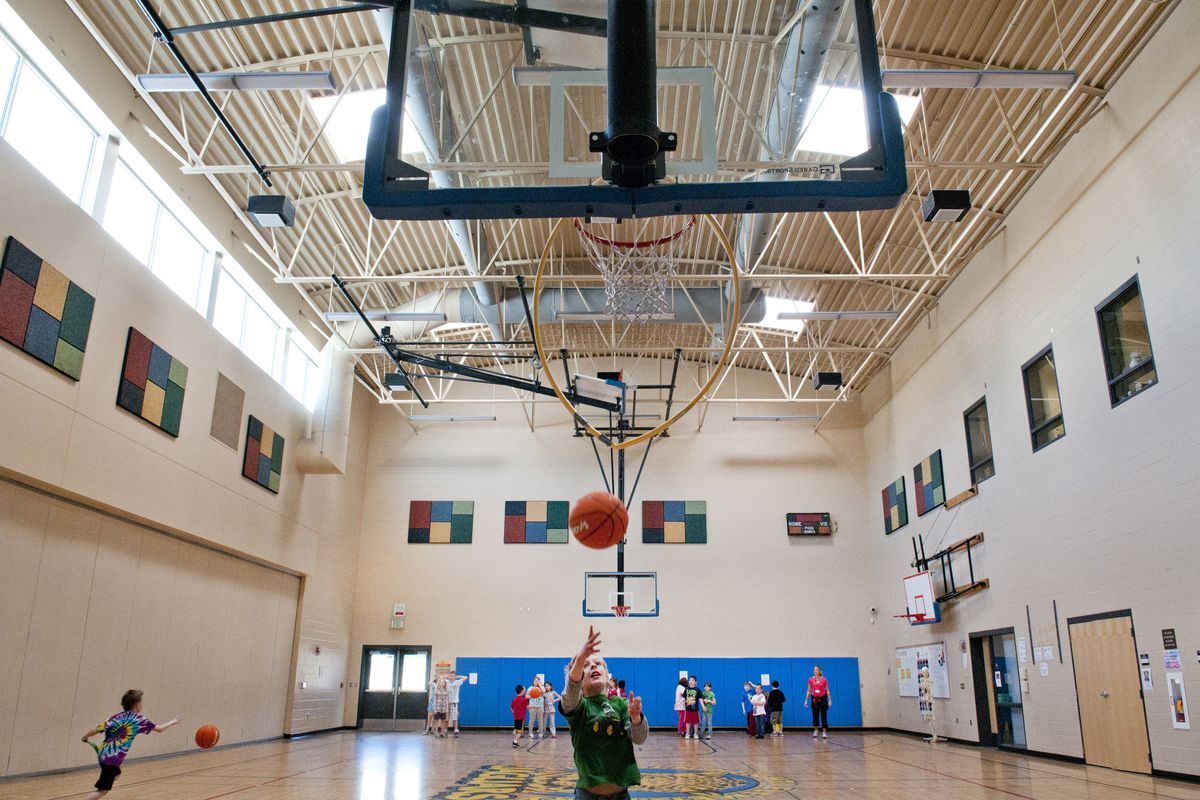
Lincoln Heights Elementary School has lights that turn off when rooms are empty, thermostats that automatically set temperatures back at night and carbon dioxide sensors in the gym to circulate air only when it’s occupied.
It was constructed to “green” building standards, which cost Spokane Public Schools nearly $460,000 extra for the South Hill facility.
But the energy savings aren’t what the district thought they would be, a discovery that other owners of green buildings are making all over the state, a new report from the Joint Legislative Audit and Review Committee says. Seven of nine public buildings built to green standards and studied by committee staff fell short of the energy goals they were designed to meet.
District officials say they’re happy with the building. The higher-than-expected energy consumption may result from something other than the green design. The new school is popular and has more requests for use after school and on weekends than the 53-year-old building it replaced. Last year, it was open for 3,700 after-school hours.
“Folks want to use it,” said Wayne Sealock, the district’s resource conservation specialist who monitors energy at 55 school sites.
That’s one factor researchers cited for possible reasons buildings don’t live up to projections. Some buildings also have design changes or equipment that wasn’t installed properly or that occupants don’t know how to use; sometimes school staffers plug in extra equipment that sucks up energy.
“Building design is only one factor in energy conservation,” researcher Mark Fleming said. In many school districts, older buildings are more energy efficient than the green buildings.
Some question whether the standards are appropriate.
Todd Myers, environmental director of the Washington Policy Center and a longtime critic of green standards, said environmental supporters over-promised the results of green construction when laws were passed in 2005. If legislators really care about costs and energy savings, they’d repeal the requirements, he contends.
“If, however, adopting green building legislation is primarily about adopting a green political image, little will be done because changing the rules will risk the political benefits candidates received by supporting the legislation,” Myers said in a prepared statement on the study.
State Rep. Gerry Alexander, R-Olympia, said the purpose of requiring green standards is to spend capital money up front to reap operating savings down the road. “If we’re not going to get operating savings, then there’s got to be a question of whether or not this is a good investment.”
State Rep. Kathy Haigh, D-Shelton, argued, however, that the study is preliminary and the data incomplete. “It’s a very good start,” she said, but is really just the “baseline” for further studies.
Lincoln Heights Elementary cost an extra $458,826 for all “high performance features” in its design. Spokane Public Schools got a $320,000 grant from the Office of the Superintendent of Public Instruction to cover part of that, plus $77,500 worth of incentives from local utilities. When the grant and incentives are subtracted from the cost, the district will cover the increased costs in 4.6 years, the study says; without that outside help, the savings on energy bills wouldn’t cover the extra construction costs for almost 30 years.
Lincoln Heights Elementary was planned before standards for schools were final, so it’s actually built to Leadership in Energy and Environmental Design, or LEED, gold standards, said Gregory Brown, the district’s capital projects director. The law now requires schools to be built to the slightly less stringent silver standard, and that’s what’s being used for the district’s latest project, Westview Elementary.
The OSPI grants are no longer available, but the amount of money the state contributes to school construction has increased significantly, Brown said.
Some Spokane schools that were built before Lincoln Heights use less energy, Brown and Sealock said. But that’s because the district was already using high standards for its buildings.
“We’ve been doing these things all along,” Brown said. “School districts need to build buildings with best practices.”

Spokane7


Ninch on May 19 at 7:05 a.m.
“High performance” technology is hit and miss and sometimes fleeting, whereas good solid building design (orientation, natural lighting and ventilation, shading, mass, etc.) is always a winner. Notably, with technology too many building operators do not understand or know how to use it, and many even increase energy usage by modifying the technology either intentionally or unintentionally.
jddavis on May 19 at 7:30 a.m.
3,700 “after school” hours? That means that the school is used on average over 10 hours a day, EVERY DAY last year outside of school hours. On school days if school gets out at say 3pm, the building is in use until 1 in the morning on average. I find this hard to believe.
westerly on May 19 at 8:27 a.m.
Bet every one in school feels warm,good and fuzzy with being ‘green’! lol
CougarGold on May 19 at 8:35 a.m.
As noted in the article, LHES was built to LEED Gold with newer projects being designed and built to Silver. That’s an important distinction in that, in my review of the cost differences between LEED levels, Silver costs very little, if any in additional upfront cost but Gold can add up to 10-20% depending on the particular project. It’s much more difficult to recover the initial investment for Gold whereas Silver often is much more efficient than old code applied buildings with very rapid ROI.
If you really want to state your ‘green-ness’ at great personal cost to yourself, try building to a Platinum standard. And hang on to your wallet.
eagleproducer on May 19 at 8:54 a.m.
I sure wish Al Gore would stop ruining my life!
ericdx on May 19 at 9:26 a.m.
What are you saying, that the enviro nuts LIED to us? That would never happen. Al Gore is the pillar of honesty, who created the internt, and Global Warming is a fact that is irrefutable. Our government would never lie to us, or mislead us…
OK, now for the serious thought…
The fact is, the “Green Standards” were created by people with an agenda, and they are FAILURES. In this day where we have budget shortfalls everywhere, and are having to cut important things, we have rule that will raise the cost of buildings by 10 percent by using ideas that are NOT fully proven, and building that are being used by UNTRAINED people (although frnakly, if you need to train people to use a building, then you should probably think about both the fact they need to be trained, and how smart they are.)
Get rid of the Green Standard that is apparently not working. As is pointed out in the article, placement of the building, orientation, and other things can have as much of an effect as this technology.
And I also like the magical math. I have NEVER seen an overstatement of useage like that before. There is NO WAY that building is used for 10.13698 hours per day beyond school. The reporter needs to fact check their article, and call out lies like that. Either the school district is lying (they would never do that…) or the reporter just anted some shock value to get readers by telling a blatent untruth (unethical), or the editors need to go back ad take 5th grade math again.
Check the numbers, 3700hrs. divided by 365 days = 10.13698630136986 hours per day and that is as far as mu calculator screen goes…
CougarGold on May 19 at 9:33 a.m.
Al Gore has probably done more harm than good when it comes to reducing carbon emissions. His carbon footprint is notoriously large with the vindication claimed through his purchase of carbon offsets…..through a carbon brokerage firm he helped found, essentially buying the credits from himself both for personal return and promotion of his business. Of course, these are voluntary carbon credit purchases at this point. However, with his vocal support for Cap and Trade, if ever passed, the business is set to explode potentially bringing Gore incredible profits through the brokerage house. He is selling snake oil and profiteering through scare tactics and political favoring. His is a flim-flam scheme and has caused more damage to what should be an intelligent debate. In the meantime, Democrats who support carbon reduction for whatever reason will be shadowed by his personal greed.
In the meantime, using LEED standards as a means to reduce the use of what is certainly finite resources, non-renewable coal, oil and natural gas for electricity and heating has another financial benefit to a certain degree. LEED Silver can generally be shown to have building operational gains that can be recovered within a reasonable timeframe or in some cases, immediately. However, beyond Silver, the financial benefits become questionable and meet a point of diminished returns. A study by building owners through their consultants should be employed to determine what makes the most sense for any new or remodel project.
CougarGold on May 19 at 9:37 a.m.
I should add, following some LEED guidelines for building design make sense, although actually going for any level of certification only serves to give the buyer or consultant a badge of honor of sorts. Financial common sense should drive the design, not some ‘feel good’ statement of environmental stewardship.
CougarGold on May 19 at 9:40 a.m.
Ericdx makes a very good point. Use of the building over 10 hours per day, every day? That’s not logical. Even his example is understated in that the building certainly is not used 365 days per year. The added load would more likely calculate out at around 15 or more added hours per day on days when the building is accessible. And that’s over and above what additional hours usage was with the old school. Sorry, but I don’t buy that statement.
Dazzeetrader11 on May 19 at 10:09 a.m.
As with most leftist liberal ideas, they rarely prove out in the real world but they cost a lot of tax money. I do think a very wellplanned building can save costs and energy. AMong the biggest probelms is who builds the school. Remember all this building of schools falls to prevailing wage and the unions..which cost an additional 30% or more.
It’s the trap the government has set. If the people escape union costs, things will fall in line. Troublesome though is that little energy was saved. This is common.
Nice ideas but they don’t seem helpful at this point. Why spend for little? What strikes me is the number the adminitrators/energy management people cited in this article.
Seems like there is a nice place to cut the budget. A whole management system (at more expense) has to be put in place to manage these lil green projects. Who pays? Scams can be expensive. What to do when “green” turns “red”. Public might be stuck with technology that’s not saving anything.
CougarGold on May 19 at 10:26 a.m.
Dazee - True on the prevailing wage comment; cost is added through the demand for higher scale. But that’s not the point of the article.
As for the administrators/energy management people, these are the same people that are there regardless of the design choices made relative to energy conservation and systems choices. Knowing the facilities group at 81 personally, I would attest that they are not overstaffed. In fact if anything, they’re already short handed due to past operations budget cuts and increased demand on their services for increased maintainence and upgrade demands on many older buildings coupled with oversight of new construction projects approved by voters through construction bonds.
hawken on May 19 at 10:27 a.m.
So apparently, these failed “green buildings” only became popular with after hour usage, after they became “green buildings?” Pretty shallow, failed attempt to spin.
Here’s another example of prematurely, forced and failed, liberal left, “green policies.” The state of Oregon:
CougarGold on May 19 at 10:41 a.m.
Hawken - The new school became more popular for use because it was new, not because it was ‘green’. It replaced a 53 year old building that wasn’t as desirable for after-hours use. And the ‘green’ of it isn’t failing but it’s not performing to the design expectations. None-the-less, the LEED Gold level is NOT in the taxpayers better interests but the design concepts for Silver in a public school structure does provide financial benefit and should be what designers strive for in order to gain acceptable ROI. LHES was the first of these schools to be designed to a LEED standard and lessons were learned that are now being employed, as the article states.
Bruce (aka thatoneguy) on May 19 at 10:48 a.m.
We do tend to over-use things that save energy. An example: Air conditioners used to be expensive to buy and expensive to run. People who had them didn’t use them much, and a lot of people did without. Now they are less expensive and “energy saving” so we run them 24/7 all summer long. It still costs less per hour than one built in 1975 would cost, but we don’t save any actual money (or energy) because we’re using it more. But it’s EnergyStar rated, so we feel like we’re not being irresponsible.
I’m guessing that, for example, this building’s “lights that turn off when rooms are empty” are connected to motion sensors, and probably stay on for 15 or 20 extra minutes; but people leaving the room might not bother to actually turn the lights off because – well, you don’t need to, right? They turn themselves off. Yes, it’s cheaper than leaving them on all night, but those 15-minute increments are sure to add up.
NTX on May 19 at 12:45 p.m.
One thing that the author of this article and the JLARC report does not make clear. The peformance of these buildings is not being measured agaist the antiquated buildings they replaced. They are measured against a “theoretical” estimated peformance that the building was designed to achieve. The reality is these buildings may not be the Lamborghini’s they were billed as but they still perform far better than similar buildings.
The reality is the legislature has never povided the funding needed to maintain the existing schools. So those buidlings are in a constant state of decay and disrepair to the degree that fixing them is in many cases not feasable. These new “Green Buildings” may not peform as well as the engineers projected. But the alternative is to keep using crumbling buildings until they collapse on our kids.
It should also be noted that the code sets a very high standard for energy perormance in new buildings to begin with. Exceeding these standards by a large margin is not small task.
Bruce (aka thatoneguy) on May 19 at 1:05 p.m.
^ lol… like the way car mileage is never quite as good as advertised
jimc on May 19 at 1:10 p.m.
A note on after school hours use figures:
The School District counts usage hours for each group using it at any time. So if youth basketball is in the gym for 2 hours while the garden club is in a classroom for 2 hours and a geneology group is in the cafeteria for 2 hours, all at the same day and time, that’s 6 after-use hours, even if they are all taking place at the same time because they are in different parts of the building.
For space reasons, the story didn’t get into the details of the calculation.
As for the comparisons, the JLARC report does make some comparisons with other buildings in various school districts. The green buildings, it says, aren’t necessarily the most energy saving buildings in their respective districts and sometimes don’t do as well as some that are much older. In one district, a building constructed in 1936 does better than a new green building. That building has, however, been remodeled and updated. And it may be an extremely well-constructed building to begin with (it’s been standing for 75 years, so that’s a reasonable assumption) and one that would have been very expensive to replicate at today’s prices.
Jim Camden/Staff writer
greenlibertarian on May 19 at 2:15 p.m.
Lot of ignorant Luddites around, I see.
Do you think large corporations in extremely competitive businesses would simply waste money going green for some vague PR value? No, they don’t.
http://newsroom.intel.com/community/intel_newsroom/blog/2011/04/21/intels-arizona-campus-takes-the-leed
CougarGold on May 19 at 9:13 p.m.
Greenlib - Thanks for supporting my point. Going LEED Silver has strong economic merits while being less environmentally impactful than old-school construction. Nearly all public buildings and a very large percentage of private construction is going that way. Ocassionally still, a Gold certification is requested but it’s primarily only in cases where it is requested as an alternate add or an owner is simply set to get the highest level possible from a practical perspective. I’ve never personally worked on a Platinum and they are very rare as they are an impossible investment to draw a return from. For a corporation like Intel, it’s a great thing to do at very little additional cost but with lower operations costs that go to the bottom line. Good PR never hurts either.
Something I caught while watching a Toyota ad a few years ago: They were touting their new factory somewhere in the States, built to support a manufacturing process that introduced zero materials into the waste stream. The PR angle was that they are environmentally friendly, even in their manufacturing process design. Coming from a manufacturing background though, it didn’t escape me that material scrap was around 7% of our manufacturing costs. If we reduced that to 0%, we made a lot more money. These decisions aren’t made solely for the environment, they are intended to be win-win with shareholder return as a serious consideration, as it should be.
greenlibertarian on May 19 at 9:26 p.m.
I was involved with a Platinum retrofit in DT Spokane, the former Saranac Hotel.
The Banner Bank building in Boise is an excellent example of Leed Platinum, I went to a presentation by the developer/builder, and the biggest issue was COMMUNICATION during the design and build, cost was similar to conventional construction.
One thing not mentioned is there is a real marketing value for a green building knowable by the premium companies will pay to locate there, as employee satisfaction (and perfornance) is enhanced.
http://www.envirocitizen.org/article/banner-bank-building:-leed-platinum-certified/6117.html