
A taste of the old country
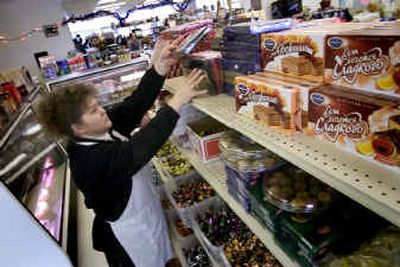
The scent of smoked fish and fresh-baked rye bread meet shoppers at the door of the Mariupol European Deli & Bakery.
The smells remind some shoppers of a home half a world away — bittersweet memories mingling family, fear and frustration, says owner Eric Miller.
He opened his small grocery several years ago, leaving behind teaching aspirations to run his own business. He began making and selling breads because American bakeries don’t make the sorts of breads immigrants from the former Soviet Union and Eastern Europe are accustomed to eating. He bakes more than 100 loaves a day.
His business soon expanded into a grocery catering to the ethnic needs of his community, more than 7,700 people in Spokane County who told census workers they were of Russian or Ukrainian ancestry. The number is likely much larger, Miller said.
Chocolates and pastries, pickled foods and smoked meats, headscarves, books and birthday cards written in Russian – it’s a store meant to offer familiar comforts to immigrants from countries like Russia, Ukraine, and nations that once were part of Yugoslavia.
Shoppers can find Pop Tarts and Wheaties on the shelves, but such American staples seem out of place in this store on East Sprague.
Miller immigrated to the United States 15 years ago as a religious refugee. Today his business affords him a living, though like many small business owners he regrets the 10-hour-a-day, six-day work week. As a member of the Pilgrim Slavic Baptist Church he won’t conduct business on Sundays. It wouldn’t matter if he did, he said, because his customers wouldn’t shop on the Sabbath anyway.
Many immigrants arriving in Spokane are eager to find work and alleviate what has often been a lifetime of financial stress. Many work in the construction trades as framers, finishers and flooring installers, Miller said.
Few go into business for themselves.
For immigrants, “it’s very difficult to even open a business,” said Ben Cabildo of AHANA, which supports minority business ventures.
“At home you talk to family and just set up a business. There’s few regulations or requirements,” he said. “But here? We have all those things plus all the permits.”
AHANA attempts to help. So does the U.S. Small Business Administration.
Miller said he received a loan from the Northwest Business Development Association to help him build his business.
The hurdles he faced in doing so, though, were unexpected and daunting.
For instance, Miller was scheduled to open Mariupol a month after the Sept. 11, 2001 terrorist attacks. It was a rough start, he said. Business has improved but not to the extent he once hoped.
Today he wonders why Spokane can’t seem to shake off the lingering business blues.
Spokane is considered a desirable destination for Russian immigrants. Affordable housing and the low cost of living couple with a thriving community to make this a reasonably easy place to land.
“So much promise here. Will it ever happen?” he asks of Spokane.
While waiting, he continues new sales strategies.
He occupies a small space now. It makes his store look busier and gives the perception he has more inventory and fuller shelves.
He sells milk at cost to get shoppers into the store. Maybe, he said, they will buy something else. He can’t compete with the big grocers such as Safeway and Albertson’s.
“If I tried to, I wouldn’t last. I must carry food you can’t find anywhere else,” he said.
Despite shelves stocked with specialty foods made overseas, Miller said his store’s annual revenue is far, far short of a million dollars.
It’s a business, he predicts, that will dwindle as immigrants embrace American culture and food.
“My children don’t eat what I sell here,” he sighed. “They aren’t interested. They like to eat American food … what their friends eat.”
No sooner had the words left his mouth when a customer piped up: “As long as I live in Spokane, you’ll stay open.”