
Emotion, speculation abound after Nichols verdict
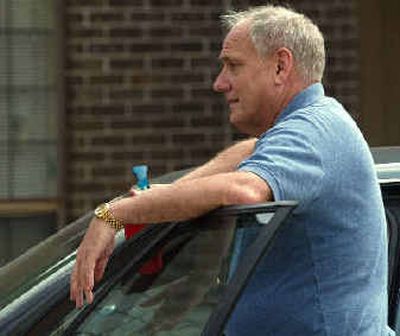
McALESTER, Okla. – A surge of complex and contradictory emotions coursed through Oklahoma on Saturday, a day after a jury weighing the fate of Terry Nichols announced that it could not agree on whether Nichols should die for his role in the Oklahoma City bombing.
There was anger among some people who had hoped for a death sentence. There was relief among those who wanted to see the end of nine years of motions, hearings and trials. There was a sense of victory among those who are pleased that Nichols was convicted of murder, even if the jury could not agree on a sentence.
Perhaps the most unanticipated response came from people who believe Nichols is the state’s best and last chance for unraveling what they see as an enduring and maddening mystery. The end of the trial – a quick conviction, but a division among jurors as to the sentence – rekindled the belief among some that the Oklahoma City bombing plot was more complex than government officials have allowed and that it involved other people who have not been identified or caught.
Nichols, 49, was convicted last month of arson, conspiracy to commit arson and 161 counts of first-degree murder, including one count for the death of a fetus. The jury’s choices were the death penalty, life in prison or life in prison without possibility of parole, but jurors said they were unable to reach unanimous agreement.
That spared the life of Nichols – who also escaped the death sentence during a separate federal trial seven years ago.
Prosecutors say Nichols and Timothy McVeigh, one-time Army friends who shared a hatred of the federal government, orchestrated the attack. The bombing, which killed 168 people, including 19 children, was meant to avenge the government’s 1993 raid on a religious compound near Waco, Texas, officials say.
McVeigh was executed in 2001. Nichols is serving a life prison term, without possibility of parole, following a separate federal conviction in the deaths of eight law-enforcement officers.
Jurors told reporters Saturday that they were deeply divided throughout their three days of deliberation, less over Nichols’ involvement than over whether he deserved their sympathy or mercy.
“It was a very, very difficult time,” juror Teresa Ann Zellmer said.
The McAlester resident declined to reveal whether she favored life in prison or death by lethal injection.
“We all did the best job we could,” she said.
With the jury’s inability to sentence Nichols in his state trial, a judge is scheduled in August to give him another life prison term.
A third man, Michael Fortier, was sentenced to 12 years in prison after prosecutors said he knew about the attack plans and helped McVeigh sell a cache of stolen guns to finance the bombing.
Oklahoma County District Attorney Wes Lane, who took over the state’s case against Nichols in 2001, said Saturday that the trial should be seen as a victory for people who wanted someone held accountable for most of the deaths that occurred that morning.
Because McVeigh was executed before he could be brought to trial on state charges, and because Nichols’ previous conviction was limited to the eight law-enforcement officers, technically no one had been found responsible for the remaining victims before Nichols’ conviction in state court last month.
“They had never had their day in court,” Lane said. “The biggest victory in this is that Terry Nichols has been forced to accept responsibility whether he likes it or not.”
No other suspects have ever been found, he said.
Prosecutors had hoped that Nichols’ state trial would put to rest concerns that others responsible for the bombing remain at large. That did not happen.
Wild theories abound – that the federal government blew up its own building, that Nichols was an associate of al Qaeda. Like prosecutors and defense lawyers, the majority of survivors and victims’ relatives call those theories rubbish. But some connected to the bombing remain certain that there is evidence to suggest a more mundane and likely conspiracy.
Nichols’ defense attorneys in the state case, for instance, alleged that a gang of white-supremacist bank robbers helped McVeigh plan the bombing.
One woman who worked at the Murrah building testified during Nichols’ state trial that she saw McVeigh with another man in an alley shortly after the explosion. She is among several witnesses who say they saw McVeigh with other people – not Nichols – either before or after the attack.
And while McVeigh is known to have driven a Ryder truck packed with explosives to the Murrah building that morning, other witnesses say there were two Ryder trucks parked at a Kansas motel where he stayed before the bombing, and that McVeigh was staying with at least two other men.
Prosecutors dispute those accounts. Many bombing survivors and relatives’ victims do, too.