
Company ranks Deaconess in top 100 for heart care
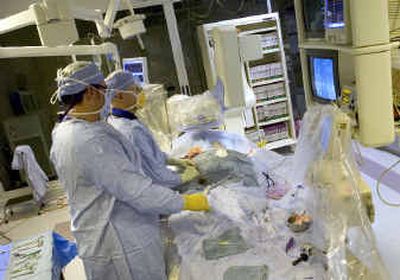
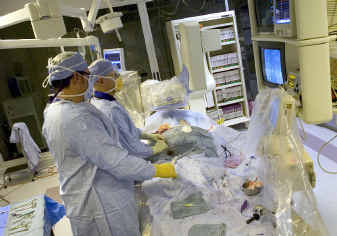
Deaconess Medical Center recently was named one of the nation’s top 100 hospitals for heart care by an Illinois research company that uses Medicare patient data for its reports.
The hospital also made the list in 1999 and 2002.
“I think it’s hardly a fluke that it’s the third time we received this recognition,” said Dee Dee Wood, cardiovascular outcomes manager at Deaconess. “I think it’s a reflection of how diligent we have been to crossing the t’s and dotting the i’s.”
The hospital’s chief competitor, Sacred Heart Medical Center, made the list in 1999, but has not pocketed the distinction since then.
“We still don’t fully understand all the criteria Solucient uses and how they weigh everything,” said Gerard Fischer, a Sacred Heart vice president. “We don’t know how close we were to being on that top 100 list.”
Sacred Heart is still the only place to get a heart transplant in the region. It also has been a site for research on artificial hearts.
But most heart patients won’t need a transplant or an artificial heart. Instead, they will have bypass surgery, a stent procedure or emergency treatment for a heart attack.
Those are the services analyzed by Solucient, a company based in Evanston, Ill. To benchmark 878 U.S. hospitals, Solucient used death rates, infection rates, post-surgery bleeding rates, cost data and days spent in the hospital.
To be fair, Solucient compares teaching hospitals with other teaching hospitals. Community hospitals are compared with other community hospitals. Patient data is adjusted for risk – that is, how sick the patients are when they enter treatment.
“Did you survive it? How much it did it cost? And how long did you stay?” Wood said. Deaconess’ heart patient survival rates outperformed 95 percent of other hospitals measured, Wood said.
Yakima Regional Medical Center was the only other Washington hospital to make the list. There were no Idaho hospitals on the list.
Solucient says that if all hospitals performed as well as the top hospitals, 4,200 lives would be saved and an additional 1,600 patients would have heart treatments free of complications.
The Solucient research confirmed a national trend toward fewer open heart bypass surgeries and more angioplasties, a less invasive fix for clogged arteries. The research also showed that patients are coming to hospitals sicker, but surviving more often.
Hospitals that didn’t make the list can buy a report of their data from Solucient for $1,095. Winning hospitals get their own report free and can buy “top 100” merchandise such as banners and coffee mugs.
Despite the marketing aspect, Solucient’s methodology is well regarded in the health care industry.
One doctor praised the teamwork he’s seen at Deaconess.
“There is a generalized commitment to excellence from nurses, technical staff and physicians reflected in the recognition given to Deaconess,” said Dr. Brad Batkoff, an interventional cardiologist and president of Spokane Cardiology.