
New name can remake business

NEW YORK – The Cure seemed like a good name for a business that helped clean up water damage, but it wasn’t the head-turner its owners hoped for. On the other hand, 1-800-Water Damage is pretty memorable.
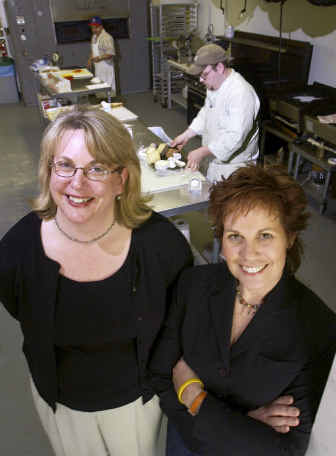
And Rita’s Catering struck some people as a small home-based business, not a corporate catering operation. So the company is in the process of becoming Limelight … Food Illuminated.
Changing a small company’s name can be expensive and time consuming, but many owners realize that their businesses need new identities – the old names just aren’t working anymore. They need names that reflect changes in the marketplace and the companies themselves.
After doing business for 15 years as Rita’s Catering, the owners of the Chicago-based company had several reasons for wanting a change.
“Everyone seemed to want to talk to Rita and there are many fine professionals here who certainly can do the job better than I can at times,” said Rita Gutekanst, who owns the firm with Marguerite Lytle.
Another problem with the name, Gutekanst said, is “it sounds like we’re cooking in my kitchen.”
Lytle said the partners started thinking about changing the company’s name about five years ago. “We were really trying to figure out where we wanted to move forward – who we wanted to be,” she said.
They’re now in the process of transforming Rita’s into Limelight. Besides telling everyone they come into contact with about the change, they’ve sent out teasers to clients and vendors. They’ll also send out a more formal announcement, explaining “why we’re doing it, and assuring them that Rita and Marguerite are going nowhere,” Lytle said.
Sometimes a new name is needed because the company’s fundamental business has changed – maybe even gone away. When Computer Doctor was started in 1992, there was a big consumer market for PC repairs. But founder Lonnie Helgerson saw over time that as high-tech equipment was becoming cheaper to replace than fix, his business, which included some 150 franchise operations, was shrinking.
Helgerson turned the company into a business-to-business enterprise offering information technology services such as firewall monitoring and named it Expetec Corp. – a hybrid of “expedited” and “technology.”
“Changing the name was equally important because we knew that to get the B2B clients, Computer Doctor wouldn’t work,” he said.
If a name is hurting rather than helping to build a business, it has to go. Clientelengence seemed like a good name when the Irvine, Calif.-based software company was started up four years ago, but “it was confusing,” CEO David Lee said. “Every time we talked to anybody, we had to spell it out.”
It also didn’t help that the Web address for that name was taken by another company in Europe.
Today the company, whose products help businesses build relationships with customers, is called Client Dynamics. Lee said it took six to nine months to make the transition; the company used press releases, visits to clients and transitional business cards – with both names – to get people used to the change.
Then there’s the experience of The Cure, a small business started in the Northwest in the 1980s. The company, whose business is repairing water damage in homes and businesses, did well in the Seattle area and had 14 franchises, but its name wasn’t strong enough to build a national reputation on. As director of franchise development Eric Little put it, “there was nothing wrong with The Cure name, but there was nothing remarkable about it.”
The company changed its name to 1-800-Water Damage, and discovered it indeed had a very franchise-friendly concept. Little said the company now has 70 franchises in 10 states.