
Napster reunion spotlights a giant leap in tech company rule-breaking
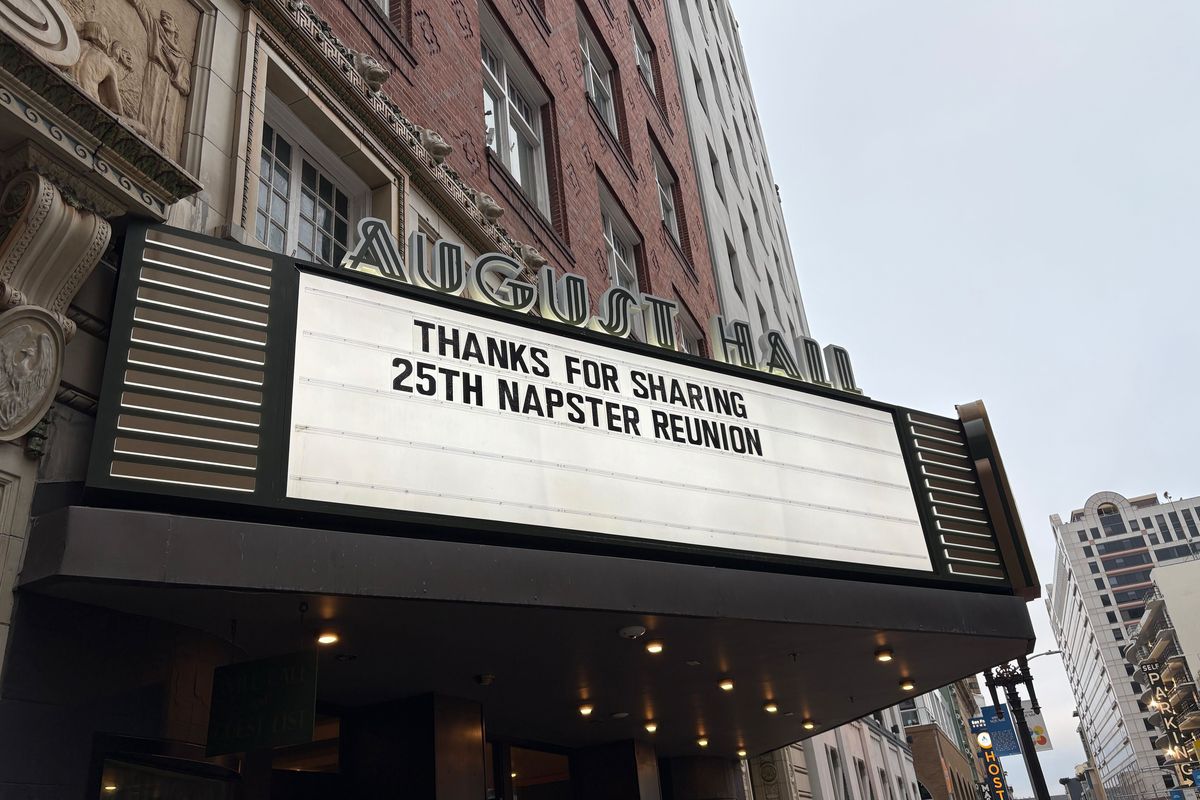
SAN FRANCISCO – Twenty-five years after Napster delighted music fans and terrified the entertainment industry by delivering millions of songs free to anyone, the people behind the short-lived but revolutionary start-up gathered last week to reminisce and consider the unexpected legacies of one of the dot-com boom’s signal ventures.
Its trajectory was brief but glorious. Napster was founded in 1999 and sued by the record industry that December. It grew explosively in 2000 during court proceedings and drew 85 million registered users before it was forced to shut down in mid-2001. By then, the music industry had been permanently changed, with the long-dominant record labels weakened and a new balance struck between content and technology.
Headlining last Saturday night’s reunion at a music venue a block from San Francisco’s tony Union Square was Shawn Fanning, who wrote most of Napster’s code. Even more than Steve Jobs, then just beginning his comeback as Apple CEO, Fanning made programming cool to the first generation with internet ubiquity. He graced the cover of Time magazine before he turned 20.
Napster connected consumers to one another’s music stored in the MP3 audio coding format. Record labels decried the approach as facilitating the greatest theft of copyrighted work in history. Yet Napster forced the entertainment industry to put its material online on reasonable terms. By 2003, Apple’s iTunes store was selling 99-cent singles, fueling the iPod sales that prefigured the iPhone. Spotify joined other music subscriptions services three years later.
While the venture-funded pioneer of peer-to-peer file sharing earned few people much money before it was knocked offline by the courts, Napster inspired successive generations of entrepreneurs to risk flouting the law so they could grow enough to get the laws changed to suit them, including Airbnb and Uber.
“Napster to me embodies the idea that it is better to seek forgiveness than permission,” said Mark Lemley, director of Stanford Law School’s Program in Law, Science & Technology. “It didn’t work out well for Napster or for many of the others who got sued, but it worked out very well for everyone else – users, and eventually the content industry, too, which is making record profits.”
And it presaged the epic battle of tech vs. content, as AI behemoths inhale all forms of written and other entertainment as uncompensated fodder for their products.
Some reunion-goers still seemed stunned by it all, especially those for whom Napster provided their first tech job.
Lawyer and venture capitalist Hank Barry, Napster’s former CEO, recalled famed music executive Quincy Jones asking him whether a particular Dizzy Gillespie track he had sought for years was available over Napster. Amazed that it was, Jones brokered peace talks with the industry, though they didn’t work out.
Few claimed they knew how it would play out. At the reunion, engineer Ali Aydar, Napster’s first non-founder employee, put up a slide with a text from Fanning saying he was writing software that lets “clients connect and specify mp3’s available on their computer…these are added to a searchable database…the same client can also be used to access the files shared.”
Aydar, who was seven years older and thought himself wiser than Fanning, responded: “Come on Shawn, nobody is going to share MP3s off their own hard drives!”
So many did, of course, that the mass swapping consumed more than 85% of the available bandwidth on some college campuses, leading to bans and angry protests.
“Napster changed the very idea of what the internet was capable of,” Aydar said. “Here we are 25 years later, still talking about it.”
Aydar and Fanning went on to start less dramatic tech companies. Napster co-founder Sean Parker, embarrassed by its collapse, became Facebook’s first president and urged a young Mark Zuckerberg to keep control of his company at all costs. Parker later advised Spotify, and Napster marketing chief Oliver Schusser is now Apple’s vice president for music.
Although many users saw Napster as an extension of rock-and-roll rebellion, that was not the company’s real plan. First Fanning’s majority-owning uncle, and then venture capital firm Hummer Winblad, wanted the start-up to leverage its knowledge of individual music consumers to make lucrative deals with the labels, according to internal documents this reporter found in researching a book on Napster. They warned that if no agreement were reached and Napster failed, more decentralized pirate services would take the audience and offer the labels nothing.
But settlement talks failed. The litigation blitz also took down a Napster competitor called Scour, which a young Travis Kalanick had joined shortly after its founding.
Kalanick later created Uber, dedicated to overthrowing taxi regulations. The ride-hailing service raised far more money than Napster and was more strategic. It rolled out in carefully chosen cities, drummed up local support with low initial fares and got many rules reversed.
Airbnb likewise flouted city rules on short-term rentals, but had money and political savvy, including that brought by former Clinton White House lawyer Chris Lehane. Lehane hired teams that knocked on doors and called thousands of Airbnb hosts, spending millions of dollars to beat a San Francisco ballot measure that would have imposed stricter regulation.
Lehane went on to advise Coinbase and lead an effort spending more than $100 million supporting or opposing 2024 federal candidates based on their views on cryptocurrency, playing a big role in reversing Washington’s drift toward regulation.
Although the personnel and regulatory landscapes were significantly different for such companies than they were for Napster, the biggest change has been the billions of dollars behind the newer entrants.
With large language models, that difference has compounded again. Now it is Microsoft, Meta, Apple and Google, among the largest companies in the world, bankrolling the consumption of all media.
They, too, have absorbed Napster’s lessons in realpolitik, namely to build it first and hope the regulators will either yield or catch up.
Onetime Napster business development executive Chris Phenner, who organized last week’s reunion, predicted AI companies will lose some pending lawsuits, such as the New York Times’ case against OpenAI and Microsoft, but will ultimately secure saving legislation in a Congress receptive to big spenders. (The Washington Post has a content partnership with OpenAI.)
Carey Ramos, an attorney who represented music publishers in lawsuits against Napster, agreed.
“Generally, technology prevails,” said Ramos, now a partner at law firm Quinn Emanuel. “Whether it’s through litigation, legislation, whatever, ultimately copyright is not able to stand in the way of progress. There is a certain logic to that.”