
A ‘miscarriage of justice’: Locals fight for recognition of forgotten sailors who perished outside Vietnam warzone
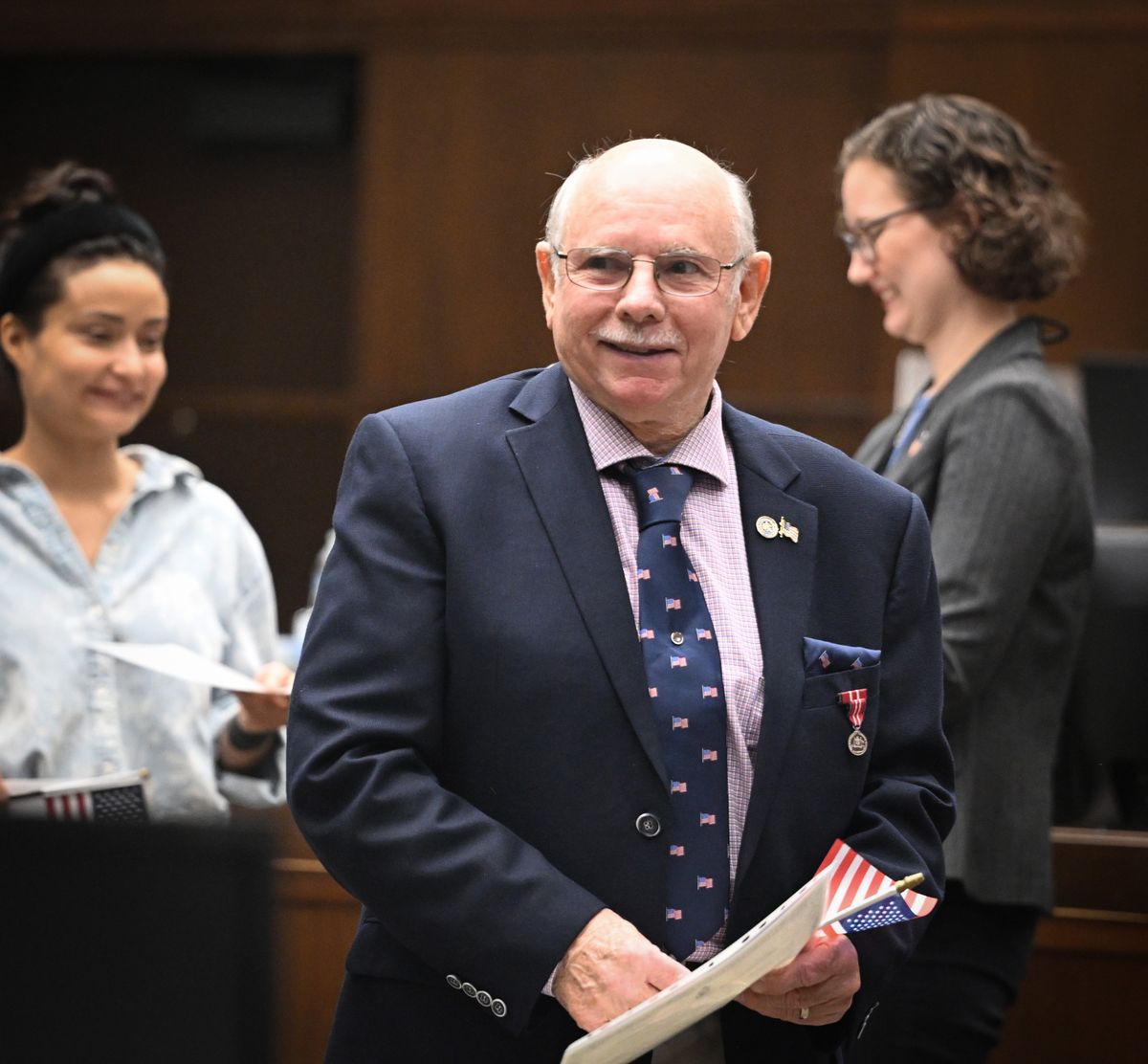
Eric Lee was one of 23 candidates for U.S. citizenship who took the oath last August in a ceremony at Spokane’s federal courthouse. The group represented 14 countries and each candidate was supported by families and friends.
Sponsored by wife Mary Manley, Lee had long been anticipating the official start of his American life after growing up in Australia.
One reason was that he could finally join a nation whose military personnel have impacted his life for years.
Lee, now 77, was born in Brighton, England. When he was young, he relocated to Australia. There, he bounced between Melbourne, Sydney and Brisbane, among other cities.
He joined the Royal Australian Navy during the height of the Vietnam War, and, while aboard the HMAS Melbourne, an aircraft carrier working in the South China Sea, he experienced a life-altering tragedy.
On June 3, 1969, his ship collided with the USS Frank E. Evans, a destroyer vessel, in a nighttime naval exercise involving multiple countries. The Evans fractured in two ; its front portion sank within three minutes, according to its eponymous association. With it, 74 American sailors drowned – only one body was recovered.
Lee’s memory consists of being suddenly awoken by “the bang and the vibration.”
While dozens made the ultimate sacrifice that day, Lee said the U.S. government won’t memorialize the “Lost 74” along with the 58,318 names listed on the Vietnam Veterans Memorial in Washington, D.C.
“(The government) refused to put them on the wall because they died outside the war zone. They still reckon they’re not eligible,” Lee noted. “Well, we reckon they should be on the wall.”
He said there are books, films and local plaques about their deaths. But congressional advancements on official recognition are always “vetoed.”
That’s something Lee and a group of like-minded advocates are hoping will change.
The complexity of the eligibility to show up on the memorial lies with a financial discrepancy, said former USS Frank E. Evans Association historian and author Frank Jablonski.
“There’s a line established called the combat zone,” he said. “This was set up for income tax purposes, because if you’re in a war zone, you don’t have to pay any federal tax; that was the main reason for this line.”
It took decades for Lee’s advocacy to begin.
At first, Lee recalls choosing to not let the tragedy at sea “bother” him. Then, “all of a sudden,” he said, “back in 1990, it hit me. I wanted to find out more about it, so I did some research.”
His research led him to discover the USS Frank E. Evans Association, which holds annual memorials and reunions.
In 2016, he attended his first reunion in Buffalo, New York. There, he met Manley, a widow whose husband had also survived the collision. Lee and Manly married in 2019. Now, they regularly attend the association’s events.
Most recently, the reunion – 55 years after the fatal incident – was held in Spokane Valley.
The September 2024 event at the Mirabeau Hotel drew a crowd of 135, Manley, also 77, wrote in an email. On one night, the group held a Lost 74 Memorial.
“Liberty Lake City Council member Dan Dunne attended,” she said. Dunne’s uncle was a survivor of the collision. Another survivor relived the fatal event. Manley rang a bell after each of the 74 names was read.
“It (was) quite moving, and I still get chills hearing the story,” she recalls.
Engaging with former shipmates is one goal of the reunions. Maybe more importantly, Lee knows they serve as opportunities to keep the Lost 74’s legacy alive.
Though Lee was not an American sailor, he feels it is his duty to fight alongside the victims’ families and fellow survivors.
“They’re still losses,” he said. “All 1,000 people on the (Australian) aircraft carrier are affected in one way or another. Some manage to come to reunions, and they feel guilty because it happened.”
A military investigation dated November 1969 suggested that “ primary responsibility for the collision rests upon EVANS,” according to the declassified report. The captain of the Melbourne, however, was court -martialed but acquitted. Still, he was demoted in the Australian navy, which later apologized to him for treating him unfairly.
The Vietnam Wall Memorial can be credited to Jan Scruggs, Jablonski said. Scruggs turned to the Department of Defense to establish a list of veterans. But not all those featured on the wall “died with valor,” according to Jablonski.
Many individuals are memorialized solely because “they were in the right spot at the right time,” he said. “It was just location, location, location.”
Unfortunately for the Lost 74, “they died on the wrong side of the line,” Jablonski concluded.
Manley, whose first husband sailed the Evans, said “(the American shipmen) never felt any kind of hatred towards the Melbourne.” Rather, “they really gave her credit for turning when it could” to stop the impact from becoming even worse.
For Lee and his wife, th e fight is emotional but worth it.
“We’ve been fighting for 50 years,” he said. “We have grandchildren, nieces and nephews that are standing behind us, and they’re never going to let it go.”
For Evans experts like Jablonski, the lack of recognition is “a miscarriage of justice,” he once wrote in a book.
“On the positive side,” he said, “if the names had been placed on the wall, they would have been forgotten a long time ago.”