
Then and Now: Indian Canyon
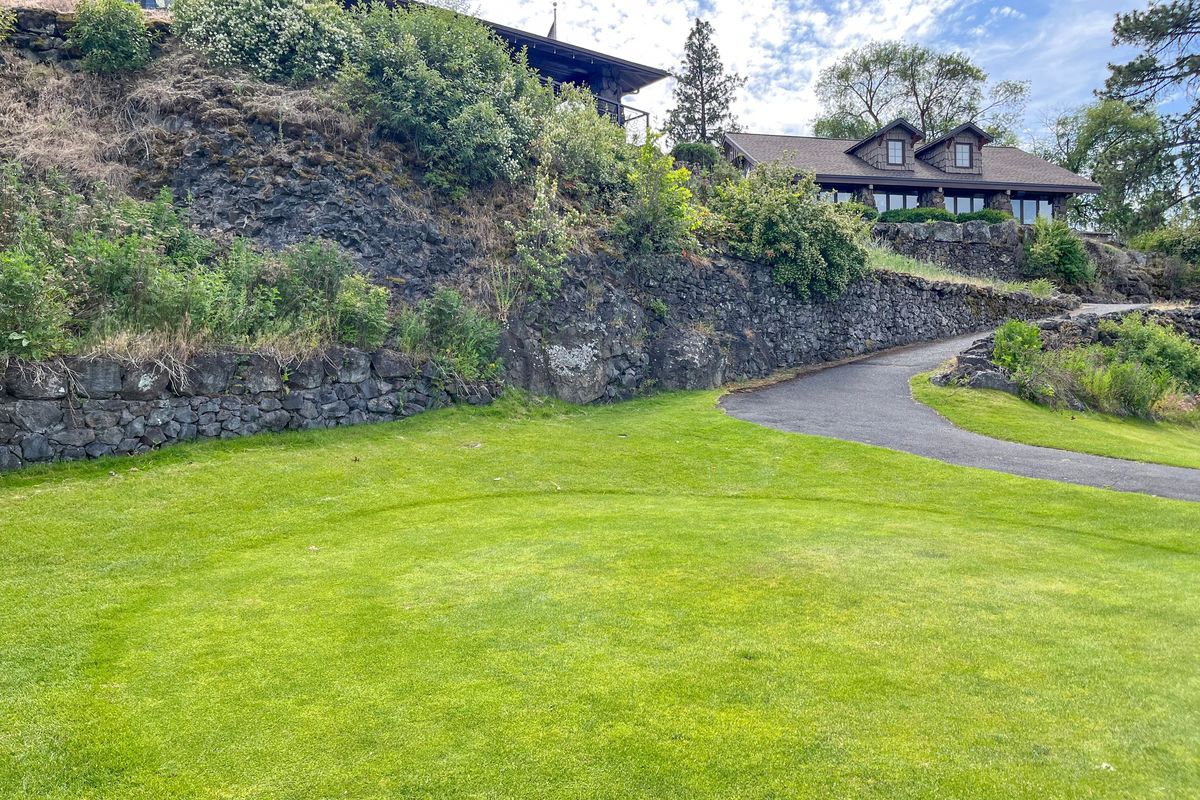
In the sluggish economy of 1936, the Spokane Chamber of Commerce announced an event that was sure to draw a crowd and showcase Spokane’s newest golf course at Indian Canyon: a golf match between Native golfers and officers of the U.S. Army at Fort Wright in Spokane. The Nespelem Commercial Club, which promoted business and infrastructure in central Washington, joined in the planning.
News stories about the event were filled with tongue-in-cheek comparisons between the golf match and the wars between white settlers and the region’s Native people. The chamber’s tourism bureau promised to “do everything it its power to give the Indians a chance at winning back their tribal land,” according to O.C. Pratt of the chamber’s tourism committee.
George M. Nanamkin, of Nespelem, Washington, formed a team of 10 men and two women representing many of the region’s tribes for the match on April 25 and 26, 1936. This was two years before the Confederated Tribes of the Colville Reservation was formally recognized.
Nanamkin helped lay out the Evergreen Golf Course in Nespelem in 1923, which brought many new players to the game. Over the years, Nanamkin brought Nespelem golfers, dancers in powwow regalia and tepees to golf events to share Native culture.
While news stories about the event said little of the dark history of war between the Army and Natives, Nanamkin was the grandnephew of the Yakama subchief Qualchan, who was hanged by the Army in 1858. His great-grandfather was Chief Owhi, Qualchan’s father, who the Army also killed when he tried to escape custody.
On a Saturday morning, Native Americans presented song and dance. Some 2,000 spectators came to watch the match.
Two crews filmed the event, producing news reel films that were shown in theaters.
The competition was cordial and friendly and the Native and Army golfers were evenly matched, just a few strokes apart after each round. The men’s team scores were tied when play ended on Sunday afternoon. The Army’s women’s team of Mrs. T.O. Hoagland and Mrs. A.C. Brown, however, beat the team of Ernestine Nanamkin and Louise Arcassa by three strokes and the team totals gave the overall victory to the Army.
Nanamkin, who served as interpreter and historian for his people for 46 years, died in 1968.