
Supreme Court won’t hear Wyoming corner crossing case
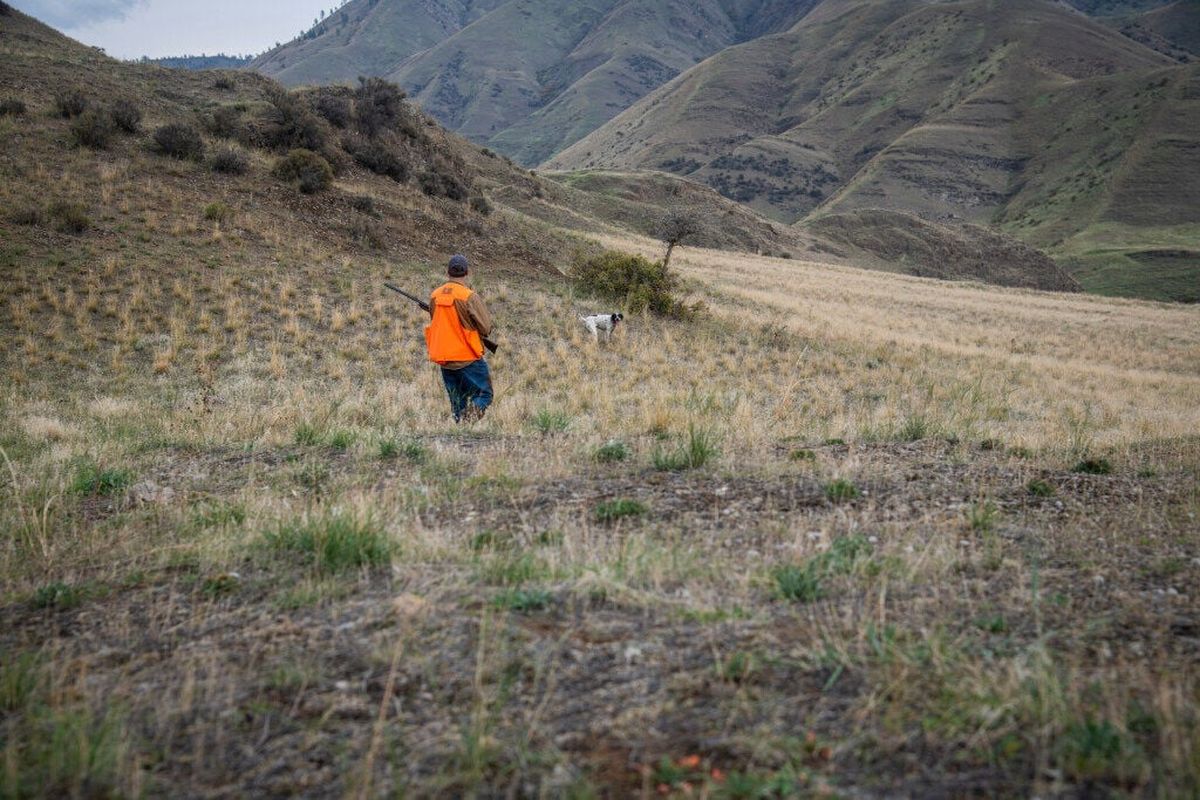
There will be no word from the nation’s high court on corner crossing.
The U.S. Supreme Court announced Monday that it will not hear a Wyoming ranch owner’s case against four hunters who crossed diagonally between parcels of public land surrounded by the private ranch.
The case was dismissed earlier this year by the 10th Circuit Court of Appeals in a ruling widely seen as declaring corner crossing to be legal in the six states covered by the 10th Circuit.
Iron Bar Holdings, the landowner, appealed the case to the Supreme Court in July. On Monday, the Supreme Court listed the case alongside dozens of others that it will not take up. No reasoning was given.
That means the ruling from the 10th Circuit stands, and that crossing diagonally between landlocked sections of public land that touch at their corners is legal in six states: Wyoming, Colorado, Kansas, New Mexico, Oklahoma and Utah.
Elsewhere – including in Washington and Idaho – corner crossing remains a legal gray area.
Devin O’Dea, the Western policy and conservation manager for Backcountry Hunters and Anglers, said that the 10th Circuit court’s ruling is “persuasive precedent” for the rest of the country, but not legally binding.
But the big question is what comes next – will a similar case crop up in a state outside the 10th Circuit? Or will state legislatures draft laws to deal with the issue?
“This is really like the opening of Pandora’s box,” O’Dea said.
The conflict over corner crossing is rooted in the 1800s, when the federal government granted land to railroad companies to aid the construction of a transcontinental route. Land was divided into square sections, and the government gave some sections to railroad companies and retained others.
That led to a checkerboard pattern that still persists in parts of the West, with a complex mix of public and private ownership.
Often those areas include public parcels that are conjoined at the corner but otherwise surrounded by private land. Corner crossing refers to the practice of moving between those two parcels at the point where they meet without setting foot on the adjacent private land.
The question of whether that is legal has vexed public land access advocates for years. At issue is whether a person stepping across the corner trespasses by entering the airspace over the private land on either side of the adjoining corners.
Access advocates argue that it is not trespassing if someone does not actually set foot on the adjacent private land. They also argue that it is the only way some lands are accessible, and that prohibiting corner crossing would lock people out of vast swaths of public property. A 2022 report from the digital mapping company onX Maps found that more than 8 million acres across the West are accessible only by corner crossing.
The Wyoming case took this fight to the courts.
It centers on four hunters from Missouri who were hunting BLM land west of Cheyenne. In 2020 and 2021, they crossed a corner surrounded by the Elk Mountain Ranch, a property covering some 50 square miles owned by pharmaceutical executive Fred Eshelman’s Iron Bar Holdings. About 11,000 acres of public land is interspersed throughout the ranch.
A U.S. Geological Survey stake marked the corner where the hunters crossed. Staff at the Elk Mountain Ranch had put up “No Trespassing” signs over the stake, according to court documents.
The hunters swung around the corner the first year, ensuring their feet never touched private property. The next year, they brought a specially designed ladder. Ranch staff confronted them and urged a local prosecutor to bring trespassing charges against them.
A jury acquitted the hunters, but Iron Bar Holdings filed a civil trespassing suit after the verdict. A lower court dismissed the case, which Eshelman then appealed to the 10th Circuit.
A three-judge panel rejected the case in March. In their ruling, the judges cited the Unlawful Inclosures Act, an 1885 law that prohibits landowners from putting up barriers to block access to otherwise accessible public property.
Eshelman’s attorneys had argued that the law should only be applied to physical fences. The judges rejected that argument, pointing out that part of the law refers to threats and intimidation as a method of blocking access to public land.
The Supreme Court was the only place Eshelman could go after the 10th Circuit ruling. His attorneys filed a petition for the high court to hear the case in July. The rejection announced Monday means the 10th Circuit’s ruling stands.
Backcountry Hunters and Anglers, which helped raise money for the hunters’ defense, said in a news release that the court’s decision preserved access to 3.5 million acres of public land in the 10th Circuit states.
Washington is part of the Ninth Circuit, along with Idaho, Montana and Oregon. In those states, there’s no law or legal precedent on corner crossing, and the 10th Circuit case is not binding.
Jeff Abrams, of the Idaho Conservation League, said what happens next in those states and others will depend heavily on local law enforcement officials and county prosecutors.
They would be the ones to bring criminal trespassing charges against someone who is corner crossing. While the 10th Circuit opinion might not be binding in other circuits, officials are likely at least aware of it.
“It does create some ambiguity,” Abrams said.
Staci Lehman, a spokesperson for the Washington Department of Fish and Wildlife, said wardens typically see one or two cases a year that involve corner crossing in Eastern Washington, and that they are treated like any other trespassing case.
She added that the agency has no plans to change its guidance for law enforcement officers in the wake of the Supreme Court’s decision.
O’Dea said he expects state lawmakers might see the decision as a reason to bring the corner crossing debate to state capitols.
Until then, it will be up to individuals to decide whether they are willing to risk a conversation with a landowner or law enforcement by corner crossing. It will also be up to them to ensure they do it correctly.
O’Dea said the hunters in the Wyoming case were extremely careful not to set foot on the private land. They also relied on a physical survey marker, not digital land ownership maps.
By doing so – and then winning in court – they affirmed that it is possible to cross at a corner without trespassing.
“It’s our opinion that corner crossing is not a crime,” O’Dea said.