Minneapolis law prof: ‘No guarantee’ bill is constitutional, but she sees basis
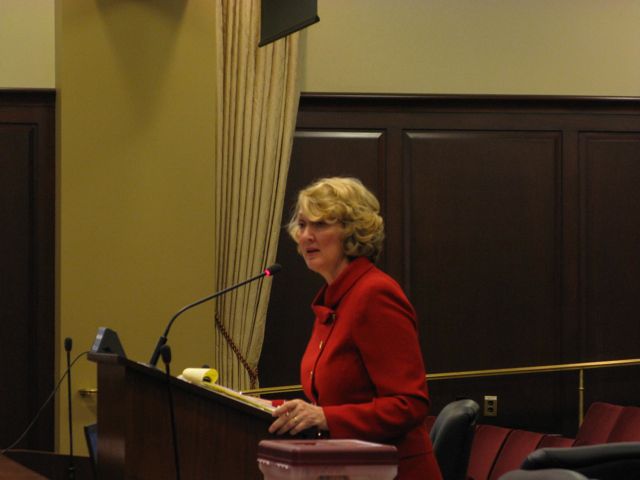
Teresa Collett, a law professor at the University of St. Thomas School of Law in Minneapolis, told the Senate State Affairs Committee that she believes “there is a substantial basis to believe that this law is constitutional and that it will recognize the humanity of the unborn in their capacity to feel pain.” She said, “Can I guarantee you that fetal pain will be recognized as a constitutional basis” to uphold the law? “No lawyer can, not if they’re being honest,” she said, “no more than I can guarantee that you won’t be sued.” She said, “Anybody with the filing fee” can file a lawsuit.
Collett said she bases her reasoning on Supreme Court decisions since 1989 that departed from the “rigid trimester system” of addressing state regulations on abortion that the high court adopted in the 1973 Roe vs. Wade decision, and began to recognize some state regulations within the first trimester. She said, “This bill does not include a fetal anomaly exception. Such an exception is not required in Supreme Court jurisprudence.” Its only exception is for the life of the mother, or for her physical health as defined as “substantial impairment of a major bodily function.” She said, “The simple fact is that human pain has always been legally relevant. It’s the basis of enhanced penalties in various crimes.”
* This story was originally published as a post from the blog "Eye On Boise." Read all stories from this blog