Why ‘Pulp Fiction’? Why any great art?
In a post below , I talk about “Pulp Fiction” being the perfect must-see film. One of the respondents admitted to not having seen the film and then asked me to give “an idea of the storyline.”
Following is my reaction:
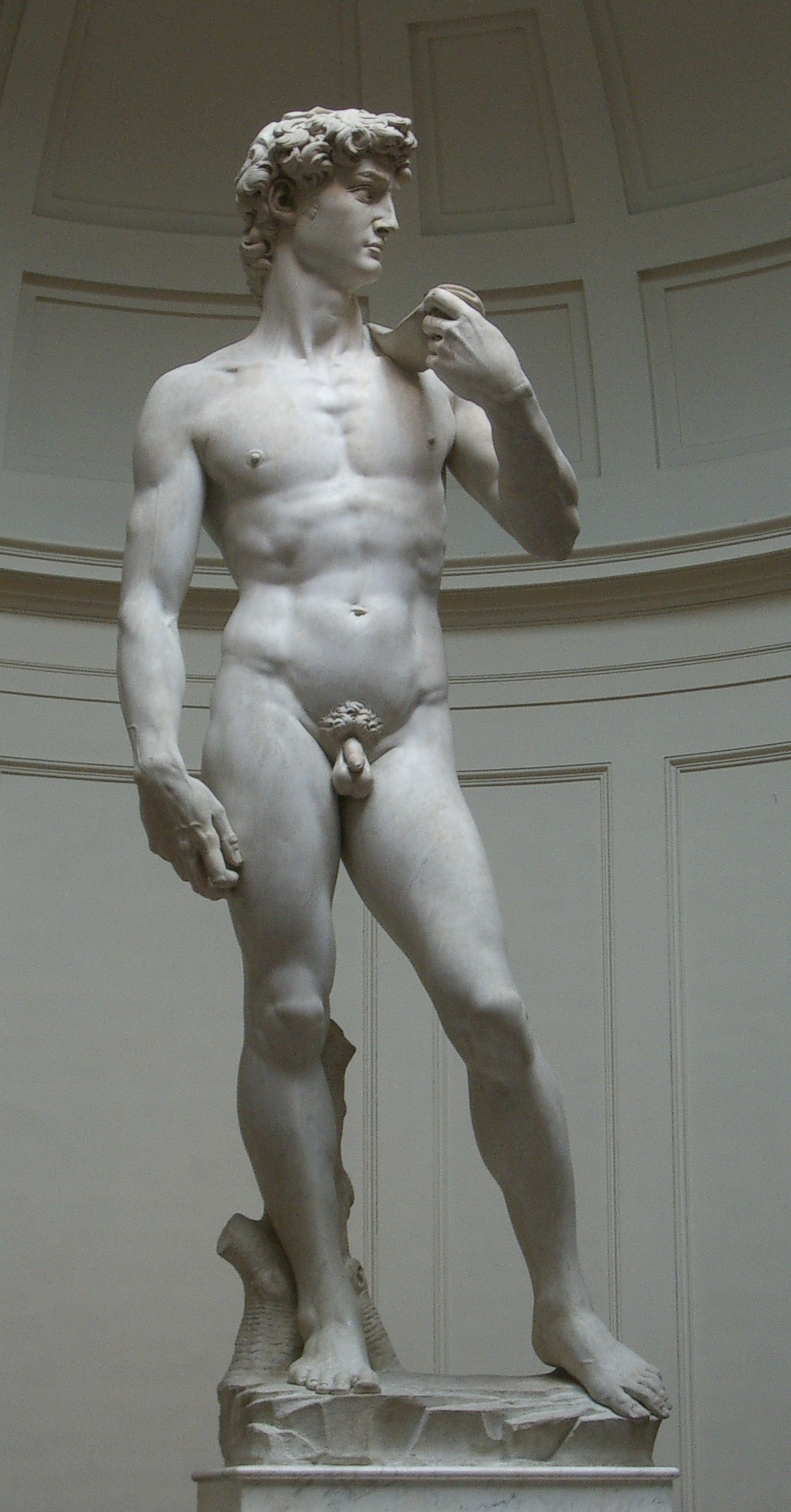
Radbooks, I don’t mean to sound like an opinionated jerk, but trying to explain “Pulp Fiction” is like trying to explain Michelangelo’s David . If you can’t see the greatness, I don’t think I see how anything I could say would make any difference.
But … I’ll give it a try.
“Pulp Fiction” is a movie about moviemaking. Concentrating on the plot is like trying to count the dots in a Seurat landscape . It just doesn’t make any sense.

Not that there isn’t a story. There are several of them, all filled with characters who aren’t realistic so much as symbolic. Or archetypal. Or both. Or neither. Really, it doesn’t matter because Tarantino is using them for effect, to let us dance with language, with classic movie forms, with attitudes that have come from cinema itself.
So we have Butch, the over-the-hill boxer who is banking everything on one last fight, a bout that, because he is going to double-cross the mobster Marsellus Wallace, stands to make him rich.
And we have Marsellus, the bad man with the trophy wife who isn’t above having a friend tossed out a window just for giving said wife a foot massage.
We have that wife, Mia, who in one of the film’s most affecting sequences, wins a dance contest with one of her husband’s hitmen employees, Vincent, Vega, and then has a further adventure with a bag of potentially lethal heroin.
Then there’s Vince, the fan of primo heroin fresh back from The Netherlands, taking care of Mia Wallace and backing up his buddy, Jules, in a bit of business with guys who, unwisely, tried to rip off Marsellus.
And there’s Jules, the smack-talking killer who, when he survives what he sees as a miraculous experience, decides to chuck it all and roam the world. “Like Caine from ‘Kung Fu.’ ”

But also there’s The Geek, the watch sequence, the restaurant holdup, Butch making nice with Fabienne … and on and on.
The reason I don’t do a typical plot synopsis is because Tarantino doesn’t reveal his film in any typical way. He mixes and matches sequences, playing with time and space so much that it’s hard to keep anything straight. I’ve watched the film all the way through at least four times, and I’m always surprised at how it unfolds.
But that’s OK because, as I say, the movie is about moviemaking. Better yet, it’s a celebration of moviemaking. It’s all about snappy patter, about Jules quoting (or misquoting, actually) the Bible, about Vince and Mia dancing the twist, about Ringo and Yolanda talking themselves into robbing a restaurant, about Butch committing the ultimate screwup by returning for his father’s watch, about Mia telling her Fox Force Five joke … it’s all about whatever Tarantino chooses to put up on the screen.
Many other people have tried to copy what Tarantino pulled off with “Pulp Fiction,” a fact that explains the film’s significance. All the copycats, including Tarantino himself , have fallen short. “Pulp Fiction” did what it did first, which is something that all great cinema has in common.

You haven’t seen it? That, of course, is your choice. But it is a great American film. Violent and profane, yes. But it’s also funny, suspenseful, touching, action-filled, poignant and filled with perfect ’90s-era irony.
When we’re talking about a must-see film, the list begins with “Pulp Fiction.”
* This story was originally published as a post from the blog "Movies & More." Read all stories from this blog