UNESCO Site: Antigua, Guatemala (2)
Stepping off the plane in Guatemala City, I started to think my friend had been right. Maybe it wasn’t such a good idea to have come here. The airport was filthy, some of the people seemed a bid shady, and as we walked outside to meet our ride, we were accosted on all sides by people (presumably taxi drivers) shouting at us asking if we needed a ride. Clamping my backpack between my elbow and my side to better protect my valuables, my friend and I frantically started searching for some sign of our trip leader (she had flown down a few days before to make sure everything was in order).
Spotting her, we gratefully pushed through the mob (of cabmen?) surrounding us and rushed over to her. She saw us to the bus station, and then we were on the bus and out of the capital. Once we passed the city limits, my concerns about the trip started to vanish. The countryside was beautiful. Small towns and random tin-roofed settlements dotted the landscape, but most of it was as nature had intended. The pace of life, even from the bus window, seemed calmer, more peaceful. More welcoming. I breathed a deep sigh of relief and settled back for the duration of the ride.
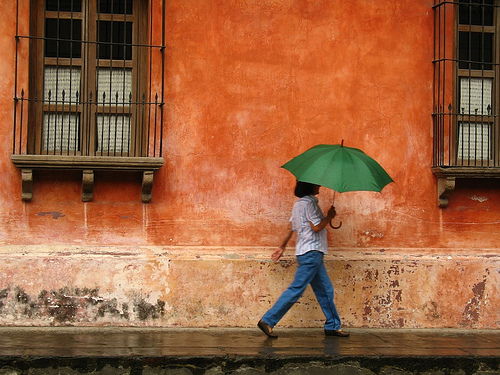
Arriving in Antigua, I was shocked again at the state of the town. But this was the opposite sort of shock than I had experienced in the Guatemalan airport. It was pleasant surprise. Antigua seemed the antithesis to Guatemala City. It was neat, orderly, wildly colorful, relaxing and most definitely peaceful. It gave the impression of an old colonial town with houses and shops lining the streets, made of one long stucco wall, each separated by an inner wall, and each building painted a distinctly different color than its neighbor. There was no question where one house ended and the next began, and yet one city block was essentially one long building. Flowers were everywhere, the city center held an immaculately kept public park, and not a single corner could be called drab. The city was vibrant, and that wasn’t even referring to the people.
We found our way to the school, a small door in one of the long city blocks. It wasn’t too difficult as the city is built on a grid, and our map gave excellent directions. And the purple coating of paint demarcating the school didn’t hurt, either. We made our way inside, checked in at the front desk to let them know we had made it safely, then set out to find a cheap but cute hotel. As my friend and I had arrived a few days before everyone else, we decided to spend our first couple of days at the beach. Rather than meet our family and then immediately ditch them, we thought it better to take a hotel for the first night, then do proper introductions upon our return when we would have time to spend with them.
Taking advice from the helpful and friendly school staff, we checked in to a quaint place a few blocks away (everywhere in Antigua is a few blocks away- it’s not a large town). Throwing our bags on the beds, we headed back out to test our Spanish. We had both taken two terms at the university, and neither of us were confident we could make ourselves understood to native speakers. This was to be our first real test of proficiency.
* This story was originally published as a post from the marketing blog "The Eco-Traveler." Read all stories from this blog