Looking back, moving forward
A century ago, it was the most efficient way to travel the streets of Spokane. Walking near Manito you can see the tracks embedded in brick where the pavement is open, the final remaining physical evidence of an electric trolley car system. Although it began with horses in 1888, the Spokane Street Railway was our first mass transit and it paid for itself in eight months, converting to electric power in 1891. The electric trolleys even logged 24 million rides in 1910. However, popularity declined with automobiles and by 1936 the streetcars were
literally burned
and replaced with buses. What were we thinking?
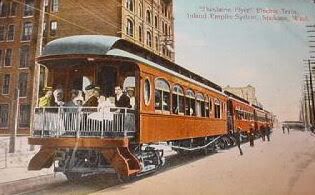
Postcard of The Shoshone Flyer in 1909
.
We were prompted to look at our own history after reading a
Crosscut essay
calling on the City Of Seattle to maximize their historic electronic trolley system, practically re-launching the zero emission fleet. Matt Fikse wrote, “this is one of those times that an old familiar thing (our aged electric trolley system) morphs into something completely different — and better — if you squint at it just so and try looking at it from a slightly different angle.” He envisions the ignored system as a new Green Line route. Also, in Seattle, Fikse said the standard streetcar mile is nearly five times more expensive to build than a mile of electric trolley service.
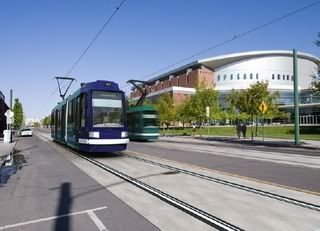
Back home, there was
an effort from the Spokane Regional Transportation Council
three years ago to establish an innovative alternative. They released a comprehensive study (109 pages) of an electric fixed-rail streetcar line for circulation within downtown Spokane that went largely unnoticed. In our view, Spokane has become more accepting of environmentally friendly transportation since, evidenced by the
popularity of light rail
. And let’s not forget the impact of green
federal stimulus funds
. Perhaps now’s the time for SRTC to push the idea back on the table again. How about it Spokane? An electronic trolley from Browne’s Addition to Gonzaga has a nice ring to it.
* This story was originally published as a post from the marketing blog "Down To Earth." Read all stories from this blog