New ‘Arthur’ equals aging ‘Peter Pan’
I make the point in a post below that Hollywood repackages things in ways that they think — or they want US to think — is original. Sometimes, though, the repackaging comes in a way that reflects a change in societal mores. I wrote as much in a review that I recorded for
Spokane Public Radio
, the text of which begins … now:
British comic actor
Dudley Moore
had enjoyed a full career long before he starred as the alcoholic rich boy Arthur Bach in the 1981 hit comedy
“Arthur.
” Buoyed by the dual presences of John Gielgud as the every-faithful butler Hobson and Liza Minnelli as the woman who ultimately would teach our protagonist the error of his ways, writer-director Steve Gordon’s film hit with the American public as few movies ever do.

It grossed more than
$88 million
in less than a year, an astronomical sum at the time, and it garnered two Oscars – one for Gielgud as Best Supporting Actor. Now let’s skip ahead three decades, to just last week when
a new version
of Gordon’s same story – this one directed by Jason Winer and updated by screenwriter Peter Baynham – hit the big screen. And what a difference 30 years makes.
Oh, we have basically the same story. Arthur, played now by another British comic,
wild man Russell Brand
, is living the good life. Fueled both by vodka and a certain joie de vivre, augmented by 900-and-some-million dollars in the bank, Arthur moves through life as if it were one long Spring Break celebration in Cancun. If he’s not sleeping with some beauty, sparring with Evander Holyfield, or having a music lesson with Kanye West, he’s driving somewhere in a perfect Batmobile replica, complete with flames that flow out the backside like superhero tiki-torches.
His attending companion now is a nanny, still named Hobson but played by Helen Mirren. And, as in 1981, Arthur’s joy-boy train ride is disrupted when he is told by a parent, good old mum this time, that he must grow up … and marry. Trouble is, he is ordered to marry Susan, a harridan played convincingly by
Jennifer Garner
. If he doesn’t, he will be cut off. To complicate matters, that’s the moment he meets – in the cutest way possible – Naomi (Greta Gerwig), a woman whose love just might be what Arthur needs finally to change.
And so on. You know how the story goes, even if you’ve never seen the original. We’re not talking overly complicated or challenging plots here. How much you enjoy this tame-to-the-core comedy is likely to depend on your reaction to Brand, the wild-maned comic who, like Ricky Gervais, masks a rapier-like wit under an almost child-like glee at being alive, not to mention the center of everyone’s attention.
But if you’ve been following American culture over the past couple of decades, you’re likely to notice – despite the ways that these two versions of the same movie story are similar – one big difference in how they play out. That difference has to do with a creeping kind of contemporary morality. See, the original Arthur – Moore’s Arthur – was a confirmed drunk. What he did from morning till lights out was imbibe liquor in a way that likely would earn him a nomination to the rock-star hall of fame. Brand’s updated Arthur drinks, too, which gets him into all sorts of trouble. But that’s hardly his major problem: Fact is, our new version is less of a drunk than he is merely a boy-child who has never matured.
And there it is, one major difference between how we lived life in that brief period that stretched from the mid-1960s through the early 1980s: It was possible, then, actually to make movies that featured a character with serious flaws, whether said flaws involved drink or drugs, and still make him worthy of our empathy without, say, killing him off at the end or sending him to a support group.
Not that I have a problem with support groups. Or people being pushed toward confrontation with addictions that are ruining their lives. I do, though, resent the particular brand of hypocrisy rampant in Hollywood where it’s always been OK to bash gays, relegate women largely to roles where they support the male hero or are exploited by him, and to fill the screen with blood and dismembered body parts. Nothing much has changed on that front. In addition, though, these days what we CAN’T do is portray – with humor, and sympathy – a character whose weakness is more for the bottle than for a never-ending impersonation of
Peter Pan
.
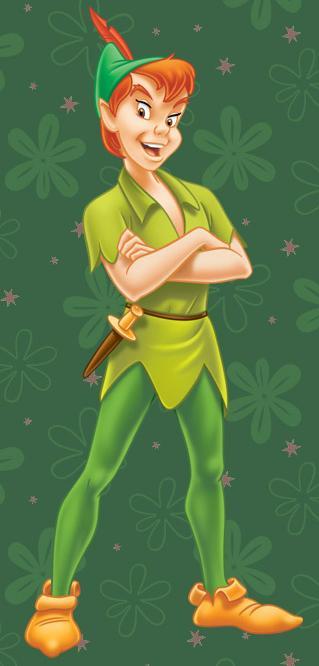
Second star to the right and straight on til morning. But hold the vodka chaser, please.
* This story was originally published as a post from the blog "Movies & More." Read all stories from this blog