Single hair spills beans on bear’s diet
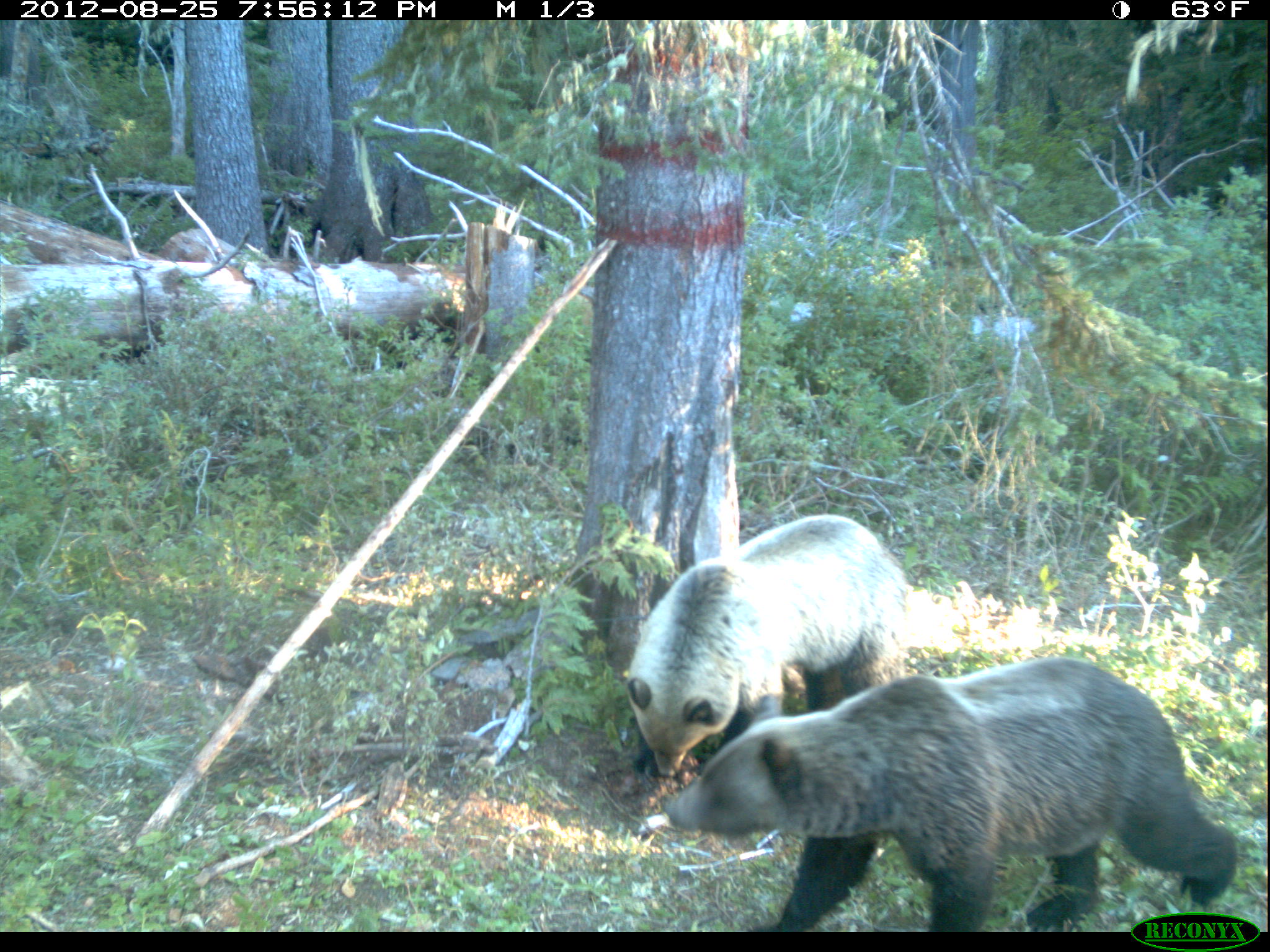
WILDLIFE RESEARCH — U.S. and Canadian researchers have found they can get a good idea of a grizzly bear’s diet over several months by looking at a single hair. The technique, which measures residues of trace metals, can be a major tool in determining if the threatened animals are getting enough of the right foods to eat, according to a release from Washington State University.
The technique can also help determine how much mercury bears are ingesting.
“You can use the technology for both applications,” said Marie Noël, lead author of a mercury study on polar bears and a more recent study, published in Science of the Total Environment, on how the technique works. “You can see how much mercury they’re getting but also estimate how much salmon they’re eating.”
Charles Robbins, a Washington State University wildlife biologist and director of the WSU Bear Research, Education and Conservation Center, said the technique helps determine how bears are recovering and if they have enough habitat to meet their food needs.
Grizzly bears are listed as threatened under the Endangered Species Act in the continental United States and endangered in parts of Canada.
“You can see bears chasing down salmon, but other than saying, ‘bears eat salmon,’ that really doesn’t give you much information,” Robbins said in the release. “So we’d like to know where the energy and protein is coming from to create either large bears or small bears or cubs and help them with their reproduction. We’d like something that integrates all that information over a 24-hour period, a week, a month, a year.”
Hair grows throughout a bear’s active season, and because it is almost entirely protein, “it’s a good indicator of the protein sources to the bears,” he said.
The new technique has a laser run down the length of a single hair. As it vaporizes one location, said Noël, the gases are analyzed by a mass spectrometer.
The researchers analyzed the hairs of 20 wild bears from British Columbia and five captive grizzlies at the WSU bear center. The captive bears were fed a diet of commercial bear chow and apples while grazing 12 hours a day on white clover.
For about a month, they were fed Yellowstone Lake cutthroat trout, which have high levels of mercury from nearby thermal features. Almost to the day, the researchers saw mercury levels rise in the captive bears, as well as levels of copper and zinc. The scientists then correlated those levels with levels seen in the wild bears to see what they had been eating.
“Taken together,” the researchers write, “the pattern obtained from these three elements can provide information on salmon consumption… as well as the amount of salmon consumed… by wild grizzly bears.”
* This story was originally published as a post from the blog "Outdoors Blog." Read all stories from this blog