Man’s taste for salmon goes back eons, researchers say
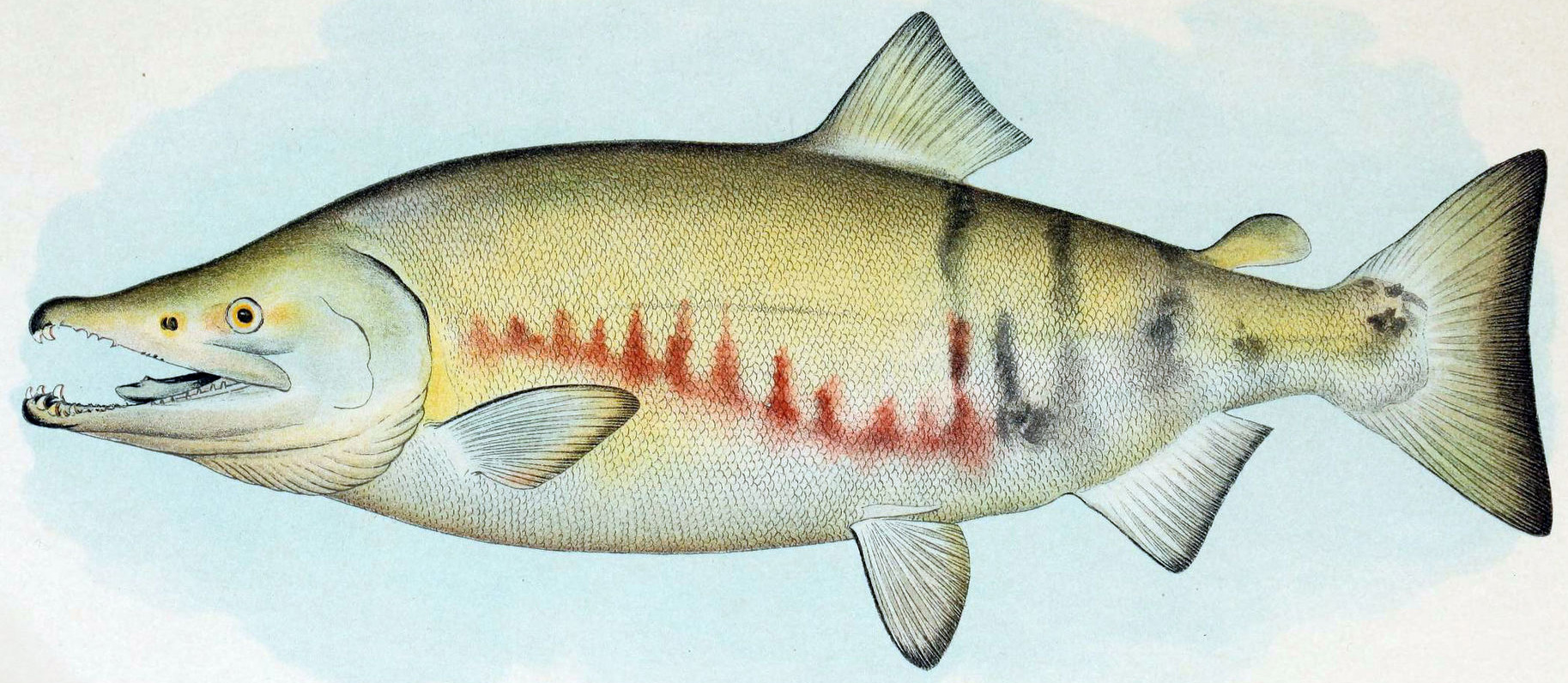
FISHERIES — This week, salmon are attracting anglers to the Hanford Reach of the Columbia River. But more than 11,000 years ago, salmon fishing may have played a role in the early human colonization of North America, scientists say based on new documentation.
Researchers from Alaska and Washington state have found the earliest known evidence that Ice Age humans in North America used salmon as a food source, according to a paper published this week in the Proceedings of the National Academy of Sciences.
According to a news release at WSU News online, the findings counter traditionally held beliefs that Ice Age Paleoindians were primarily big-game hunters. The findings are based on an analysis of 11,500-year-old chum salmon bones found by University of Alaska Fairbanks anthropologist Ben Potter and colleagues at the Upward Sun River site. Excavation has revealed human dwellings, tools and human remains, as well as the salmon bones.
“Salmon fishing has deep roots and we now know that salmon have been consumed by North American humans at least 11,500 years ago,” said lead author Carrin Halffman, a UAF anthropologist who helped analyze the fish bones with co-authors Brian Kemp of Washington State University, Potter and others.
Here are some other highlights for anglers from the research:
- Salmon spawning runs appear to have been established much earlier and much farther north than previously thought - at the end of the Pleistocene epoch, also known as the last Ice Age.
- The ancient DNA and stable isotope analyses verified the fish remains as sea-run chum salmon that migrated upriver nearly 900 miles from where the mouth of the Yukon River now exists. These analyses indicate that modern salmon migrations may have ancient roots, dating back to at least the end of the last Ice Age.
- Fish remains pose a challenge to archaeologists because their bones are small, fragile and typically do not preserve well. Because of these challenges, their remains likely are underrepresented in global archaeological studies and findings.
* This story was originally published as a post from the blog "Outdoors Blog." Read all stories from this blog