Predator control banned on Alaska federal refuges
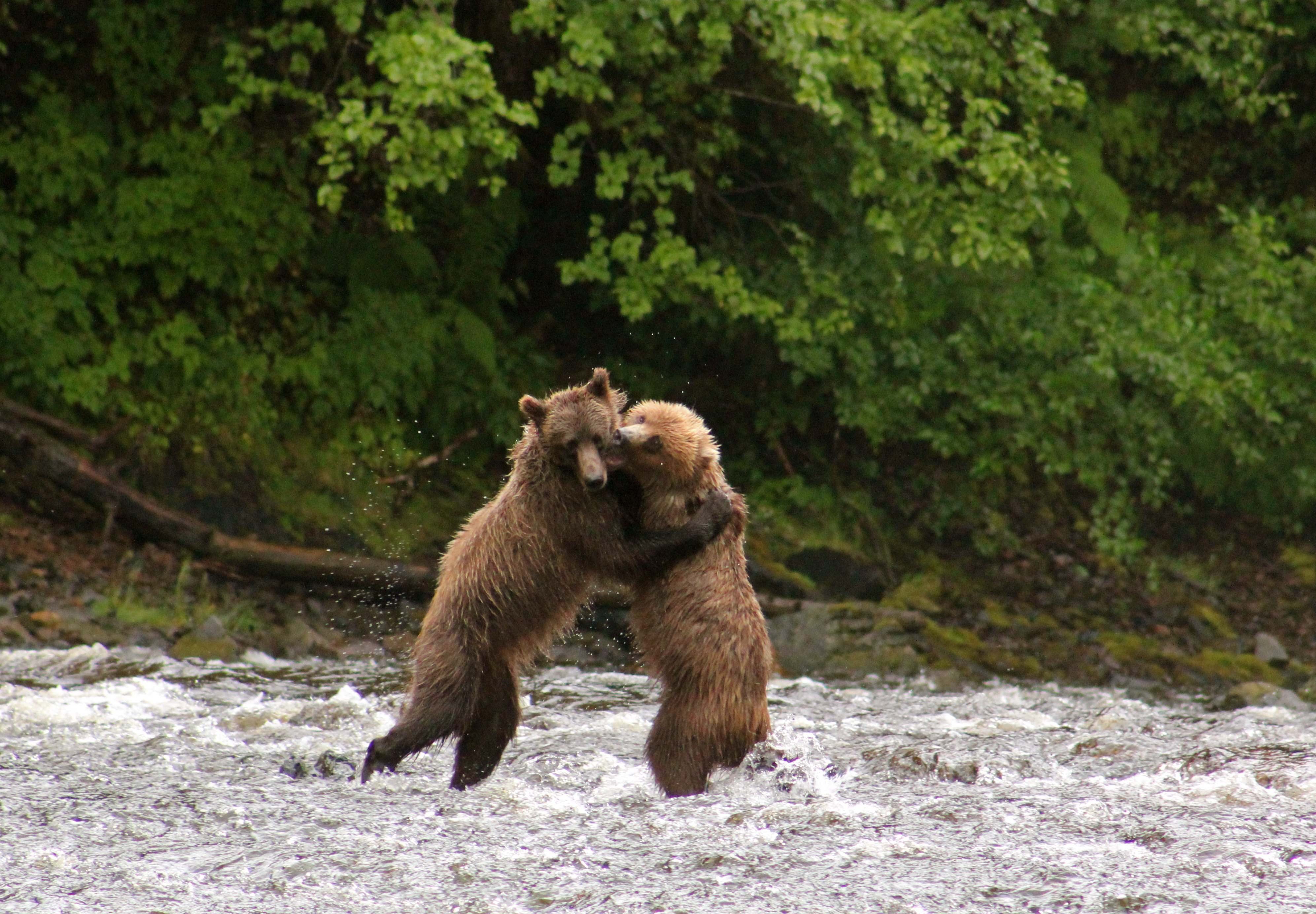
WILDLIFE — Along with a strong rebuke to local wildlife managers, the U.S. Fish and Wildlife Service is banning brown bear baiting and other Alaska-legal predator hunting techniques in national wildlife refuges within the state.
“Over the past several years, the Alaska Board of Game has unleashed a withering attack on bears and wolves that is wholly at odds with America’s long tradition of ethical, sportsmanlike, fair-chase hunting, in something they call ‘intensive predator management,’” wrote U.S. Fish and Wildlife Service Director Dan Ashe in a Huffington Post column defending the final rule on Wednesday.
“There comes a time when the U.S. Fish and Wildlife Service must stand up for the authorities and principles that underpin our work and say ‘no,’” he said.
Here are details from Sam Friedman, Outdoors editor for the Fairbanks Daily News-Miner:
The rules are aimed to stop state-authorized bear-, wolf- and coyote-control policies on federal land. The Fish and Wildlife Service manages 73 million acres of land in Alaska, a New Mexico-sized area. The agency proposed the rule in January, arguing predator control violates the agency’s mission to “conserve species and preserve biodiversity.”
The final rule keeps most of the provisions the federal agency first proposed. It includes prohibitions on shooting brown bears at bait stations, trapping black bears and shooting wolves or coyotes during the denning season.
The final rule does not include a proposal that would have added new criteria for emergency hunting closures, including “conservation of natural diversity” and “environmental health.” Existing closure criteria include public health and safety, endangered species conservation and resource protection.
The rule has drawn strong opposition from Alaska’s state government, the state’s congressional delegation and Alaska organizations such as the Alaska Federation of Natives and the Alaska Outdoor Council.
“Make no mistake — the size, scope and impact of this rule is enormous,” U.S. Rep. Don Young wrote in a statement Wednesday. “This unilateral power grab fundamentally alters Alaska’s authority to manage wildlife across all areas of our state.”
Last month, Young inserted a rider into the Fish and Wildlife Service’s budget that would prohibit the agency from implementing its proposed Alaska rule. The House approved the budget with Young’s rider, but the budget has not been signed into law.
The agency’s final rule is scheduled to take effect Sept. 6 if Congress doesn’t block it.
The Fish and Wildlife Service rule has major national supporters, including the Humane Society of the United States and Defenders of Wildlife. The rule generated 3,554 official written comments, many of them form letters in support of the Fish and Wildlife Service’s intentions.
* This story was originally published as a post from the blog "Outdoors Blog." Read all stories from this blog