Heider says he thought holding hearing was ‘the right thing to do’
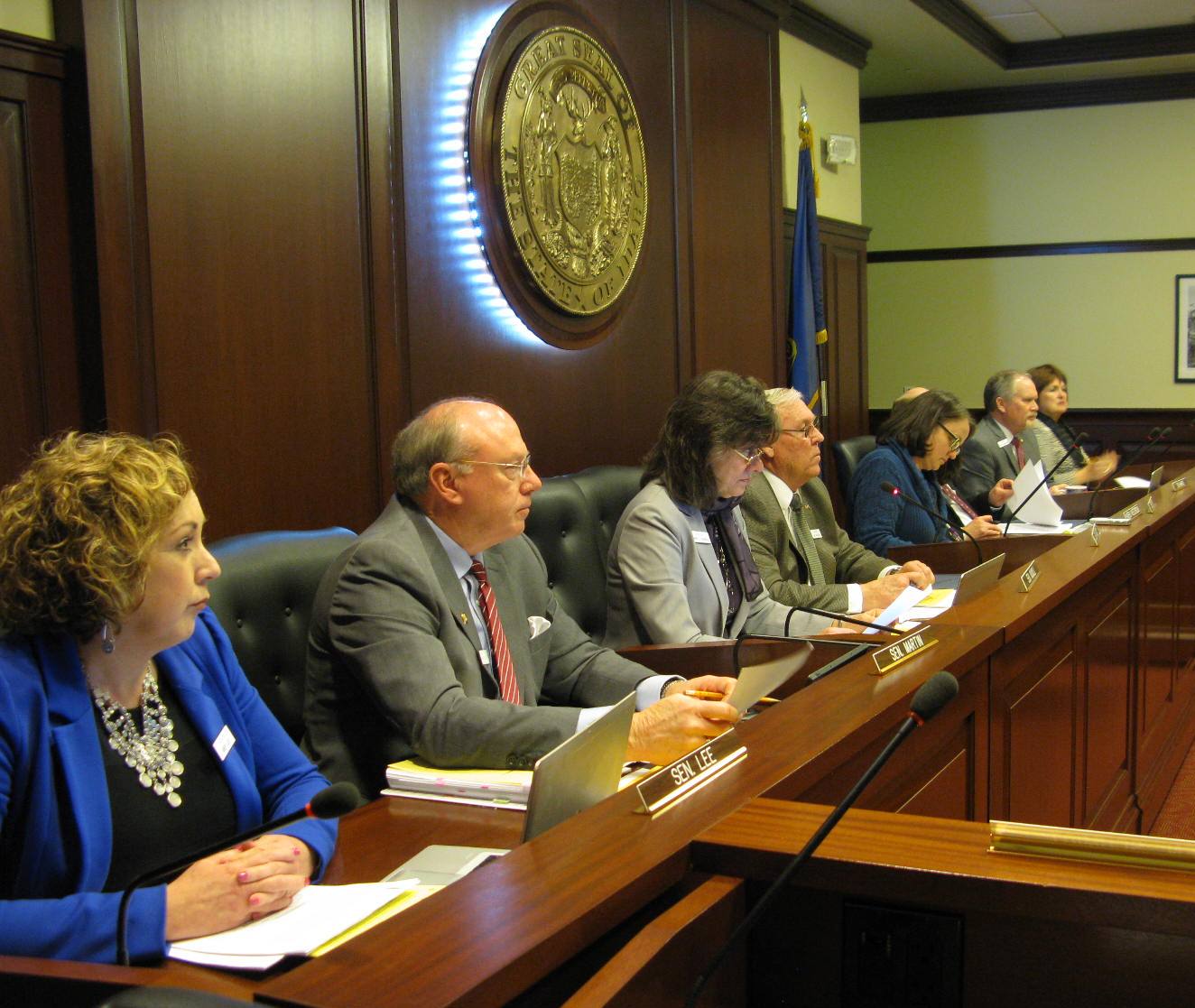
“We did hear the legislation, but we did not intend to make a decision,” Senate Health & Welfare Chairman Lee Heider, R-Twin Falls, said after this afternoon’s Medicaid expansion hearing; my full story is below. “What we haven’t heard is the governor’s proposal, really the details of that. We don’t want to get the cart before the horse.”
Heider said he scheduled today’s hearing “out of deference to Sen. (Dan) Schmidt,” the bills’ sponsor. “I felt it was very important that we hear this,” Heider said. “It was not necessarily the will of leadership – it was my will.” Asked if he got in trouble with the Senate GOP leadership for scheduling the hearing, Heider said he wouldn’t comment.
“I feel good inside that we did this,” he said. “This to me was the right thing to do – I’m solely responsible.”
Here’s my full story from spokesman.com :
BOISE – Idaho lawmakers are responsible for the deaths of close to 1,000 Idahoans in the past three years because they’ve refused to expand Medicaid, the doctor who treated 36-year-old Jenny Steinke of Idaho Falls, who died of complications from asthma, told a panel of senators Tuesday.
“Jenny’s case for me really crystallized what’s wrong here,” Dr. Kenneth Krell, director of critical care at Eastern Idaho Regional Medical Center, told the Senate Health and Welfare Committee, as it held its first-ever hearing on legislation to expand Medicaid in Idaho. “And I kept asking myself, how could this be? How could, in a state like Idaho where we care about each other, could I be seeing deaths and really damaging illness on a nearly daily basis as a result of failure to expand Medicaid that cost tangible lives? It’s difficult to understand.”
The Senate panel took an hour of testimony, then wrapped up its hearing without a vote either way on two bills proposed by Sen. Dan Schmidt, D-Moscow, to expand Medicaid to cover the 78,000 Idahoans who now fall into a coverage gap – they make too much to qualify for Medicaid, but too little to qualify for subsidized health insurance plans through the state’s insurance exchange.
“You heard of tragedies today,” Schmidt, an emergency room physician, told his fellow senators. “I’m not sure you should be making public policy choices based on tragedy. You should be making public policy choices based on good policy. Tragedies do happen. And if we can make good policy to prevent them, that’s our job.”
Asked about the outcome, after the hearing ended without any action, Schmidt said, “It’s a start.”
Idaho lawmakers have refused to consider expanding Medicaid, which the Affordable Care Act made optional for states, for the past three years out of distaste for Obamacare and reluctance to accept the federal money that would cover nearly all the costs.
“It’s been said that perhaps it’s an ideological difference, that we just don’t want to accept federal dollars,” Krell told the senators. “But if that were true, I don’t see that we would see many in the Legislature accepting federal dollars for federal farm subsidies.” He said, “I could only come to one inescapable conclusion: That the Idaho Legislature is unfortunately responsible for those deaths. Our intransigence in failing to pass Medicaid expansion for the last three years has probably resulted in over 1,000 deaths in this state. Please help us. I would ask you to please stop the killing.”
Senate Health and Welfare Chairman Lee Heider, R-Twin Falls, cautioned those testifying not to make accusations against senators. Fewer than a dozen people were called up to speak, though 60 had signed up to testify and hundreds filled Capitol hallways and overflow rooms. All but one of those who spoke favored expanding Medicaid.
The lone exception was Fred Birnbaum of the Idaho Freedom Foundation, who disputed that the move would save Idaho money; each of the two bills was estimated to save Idaho taxpayers tens of millions of dollars a year, in part because they include eliminating the state’s Catastrophic Health Care program, which covers catastrophic medical bills for those who can’t pay.
“The savings that are projected are based on thin air in my opinion,” Birnbaum said, “because we simply don’t know what future congresses are going to do.”
Boise Mayor Dave Bieter told the committee, “I think every Idahoan believes that when we see suffering, we have a moral obligation to do what we can to eliminate that. …This is something you can do now. I really urge you to pass this bill.”
Bruce Belzer, a family physician from Boise and president-elect of the Idaho Medical Association, said, “Every physician in this state … could give you story after story of patient after patient who falls into the gap, who has critical care needs, chronic care needs, and they are not being met. … We need to do something here.”
Heider said he didn’t want a vote on the bill yet because the panel hasn’t yet heard Gov. Butch Otter’s proposal for a new “Primary Care Access Program,” which is targeted at the same gap population. That program would spend about $30 million a year, entirely at state expense, to provide some limited primary and preventive care to the 78,000 Idahoans through community health centers.
Heider said the committee could decide to vote on the bills later. “I don’t want to get the cart before the horse,” he said.
Dr. Ted Epperly, president and CEO of the Family Medicine Residency of Idaho, said two things drive better outcomes for patients: A “usual source of care,” and “some source of insurance coverage.” Both Medicaid expansion bills would provide both those things, he said, while the PCAP program would provide just the first, and not the second.
SB 1204 calls for full expansion of Medicaid to cover Idahoans who earn up to 138 percent of the federal poverty level; its estimated savings to state and county taxpayers is $47 million a year.
SB 1205, the “Healthy Idaho” plan, would expand Idaho’s Medicaid program to cover non-disabled adults who earn up to 100 percent of the poverty level, and accept federal Medicaid expansion funds to cover those between 100 and 138 percent of poverty by subsidizing their premiums for private insurance plans. Its estimated savings to state and county taxpayers is $28.4 million a year.
Idaho’s current Medicaid program largely covers only children and the disabled.
Krell said, “Nearly one patient per day dies in this state as a result of not having Medicaid expansion. And that’s a direct result of that failure to obtain care at a stage when the disease process could be treated effectively and not only death, but hospitalization and illness prevented.”
* This story was originally published as a post from the blog "Eye On Boise." Read all stories from this blog