Clearwater anglers get another shot at chinook
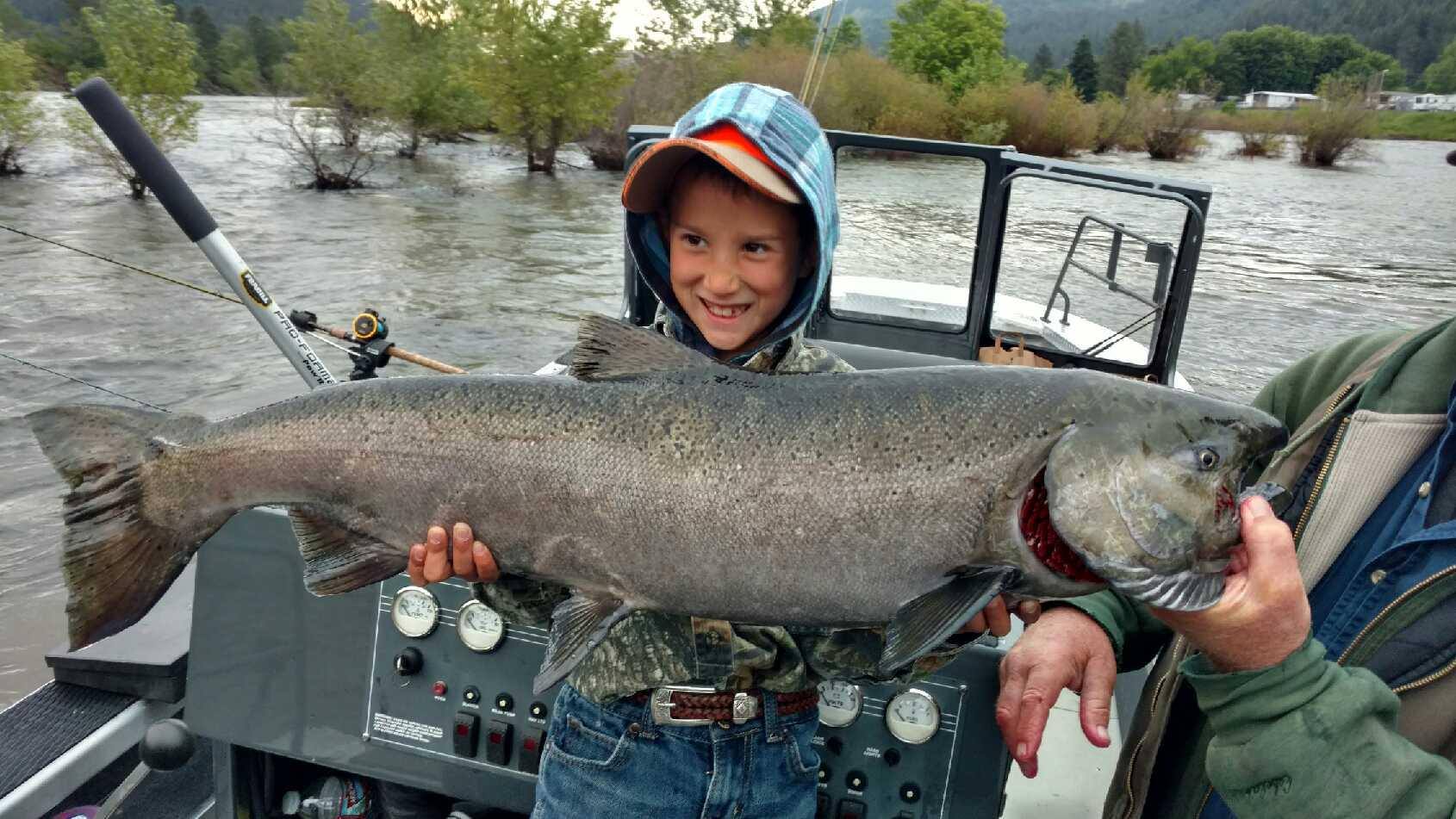
FISHING — A joint effort between the Idaho Department of Fish and Game and the Nez Perce Tribe will produce a second wave of chinook salmon fishing on parts of the Clearwater River beginning this week.
The news comes as Washington announced another two days of salmon fishing — coming up Sunday and Monday — on the Snake River below Little Goose Dam.
Eric Barker of the Lewiston Tribune rounds up the details for the Clearwater:
Starting Friday, a four-day season will open for summer chinook between the Camas Prairie Railroad Bridge at Lewiston and the Cherrylane Bridge, 21 miles upstream. The fishery will target summer chinook on their way to the state’s hatchery on Walton Creek near Powell. Since none of the chinook have been marked by having their adipose fins removed, anglers will be allowed to keep one clipped or unclipped fish per day.
Starting June 18, any other section of the Clearwater River that remains open to fin-clipped hatchery spring chinook fishing, will also be open to unclipped summer chinook seven days a week, with a total bag limit of one chinook per day. However, since the summer chinook are not bound for the South Fork of the Clearwater, anglers there won’t be allowed to keep unclipped fish. The fishery will not include the North Fork of the Clearwater or the main Clearwater River between Cherrylane and Orofino, which have already closed to spring chinook fishing. Nor would it include any sections that may close between now and June 18.
Both the tribe and the state are in the midst of an effort to restore summer chinook to the Clearwater Basin. It started in 2011, with the release of 200,000 summer chinook smolts from the South Fork of the Salmon River in the South Fork of the Clearwater River. The release location has since been moved to the state’s satellite hatchery on the Lochsa River at Powell.
The run forecast calls for about 2,000 of the Clearwater-bound summer chinook to return at least as far as Bonneville Dam, enough for a small fishery. By the time the fish reach Idaho and the number needed for hatchery breeding is accounted for, state and tribal fisheries biologists expect a surplus of about 1,000 fish that will produce a harvest share of 500 for both tribal and sport anglers.
“We both thought it would provide a benefit to both our fisheries,” said Joe DuPont, regional fisheries manager for the Idaho Department of Fish and Game.
“We are excited about putting back a fish with a run timing and a spawn timing that was here before the Lewiston Dam,” said Becky Johnson, production manager for Nez Perce Tribal Fisheries.
DuPont said adding summer chinook can diversify the fishery and increase the chance of good fishing even if one of the runs isn’t doing well in a particular year.
“It’s nice to have multiple runs coming in because sometimes one can provide a lot of benefit when the other doesn’t,” he said.
But the new fishery will come with complications. For example, DuPont said the section between Lewiston and Cherrylane can reopen because nearly all the spring chinook will have passed through by the opener on June 10. The same is not true for the section between Cherrylane and the Orofino Bridge. Spring chinook bound for Dworshak and Clearwater hatcheries stack up in that section and wait to enter the hatchery. If it were to reopen, anglers would likely catch many more spring chinook than summer chinook.
* This story was originally published as a post from the blog "Outdoors Blog." Read all stories from this blog