Otter responds to legislative session; full story
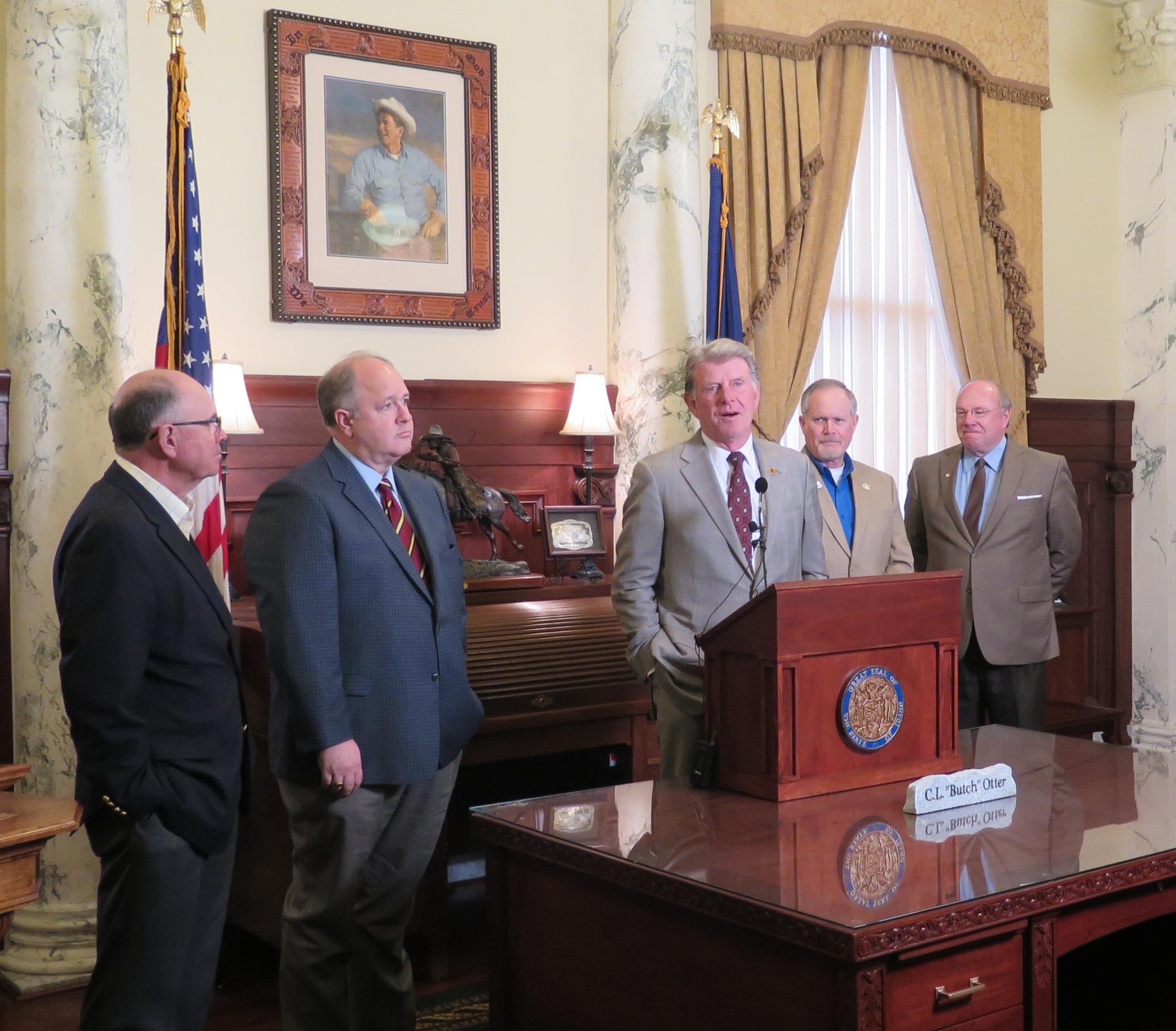
Here’s my full story from spokesman.com :
By Betsy Z. Russell
BOISE – Idaho Gov. Butch Otter said Monday that he gives lawmakers high marks for their just-completed legislative session – but also some “incompletes” – and he wouldn’t say whether he’d sign or veto key pieces of legislation, including the bill to repeal Idaho’s 6 percent sales tax on groceries.
Instead Otter, who was still hoarse and coughing after canceling his initial response to the session last week due to laryngitis, focused mostly on his concerns about the state budget and how Idaho will be able to afford to deal with significant infrastructure damage from a tough winter and still fund education improvements for which it’s committed in the future.
Otter said he has “stacks” of bills awaiting his signature or veto. “You’ll find out when I sign ‘em or when I don’t sign ‘em. I just need you to know and have in mind that there are a lot of other things that I have to consider relative to the general fund budget,” he said.
At the top of the governor’s mind was a newly received rejection letter from the federal government for his request for federal disaster aid for five counties hard-hit by historic snowfall in December and January. Since then, the number of Idaho counties with state disaster declarations due to weather and flooding has swelled to 32.
Otter’s office received the rejection letter from FEMA on March 28. “We are appealing that, but we have obviously, with a lot of other things that are going on in Washington, D.C., we don’t have an idea of how that appeal is going to go,” he said. That means Idaho could end up footing the full bill for disaster mitigation this year statewide, he said, when “we believe some are yet to come.”
“If this weather turns warm, which it is likely to do, and we have additional rain, and it is in the forecast, then that flooding could get much worse,” Otter said. “And I’m going to be very mindful of that in the next few days when we’re considering other legislation that I have yet to sign.”
Repealing Idaho’s sales tax on groceries would cost the state general fund more than $70 million a year. The cost would be much higher, but most of it is offset by also repealing the state’s current grocery tax credit, which Idahoans claim each year on their state income tax returns.
Idaho’s sales tax on groceries brings in nearly $194 million a year, while payouts for the grocery credit come to $147 million. That’s a difference of just over $47 million. But the change also would impact the share of state sales taxes that go to cities and counties through revenue-sharing, so the bill to repeal the grocery tax shifts more than $26 million from the state general fund into those payments, increasing the impact on the state budget but keeping local governments from taking a big budget hit.
While Otter was speaking, Lt. Gov. Brad Little issued a news release calling on Otter to sign the grocery tax repeal bill into law. “HB 67 will lower the tax burden for all Idahoans while greatly improving border community businesses,” Little said.
Otter has until April 12 to either sign or veto the bill, or it would become law without his signature.
The governor also stayed mum on a $320 million-plus transportation funding package, including $300 million in bonding, that lawmakers passed; it includes a $15 million a year diversion from the state general fund, something Otter has long been against. He’s instead advocated for sticking with user fees like the gas tax and vehicle registration fees to pay for roads.
“I still believe those things,” he said Monday.
Otter did indicate he’ll sign a $52 million emergency road funding bill that lawmakers passed, saying the first $2 million of that essentially already has been spent and will reimburse the state’s emergency fund.
On other issues:
- Otter said he has no plans to call a special session on his proposed unemployment insurance tax rate cut for employers, which failed late in the session amid squabbling between the House and Senate – even though he termed his proposal a “no-brainer.” Asked what he’d say to Idaho employers who will pay 30 percent more in unemployment insurance taxes next year without the bill, Otter said, “They’ll have to talk to their legislators. A clean bill would’ve sailed through here like you can’t believe.”
- The governor praised the budget that lawmakers set for public schools, which reflects a 6.3 percent increase and fully funds the next step in Idaho’s five-year plan to improve teacher pay, but said he was disappointed that the Legislature didn’t pass some of his other education proposals, including a new $3 million annual scholarship program for adults to go back and finish their college degrees. Otter called that the “lowest-hanging fruit” to raise Idaho’s rate of college education among its working-age population.
- Otter said he’ll stick by his promise to lawmakers not to unilaterally expand Medicaid to cover the 78,000 Idahoans who fall into a coverage gap, earning too much to qualify for Medicaid but not enough to be eligible for subsidized health insurance through the state insurance exchange. “We still don’t know what is going to happen to Obamacare,” he said. “We’ll see where we fit in.”
- The governor said he believes the No. 1 factor that businesses considering a move to Idaho take into account is education, followed by ease of doing business, regulatory policy, and quality of life, “and usually somewhere on down the line, maybe 5th or 6th, is taxes. And our tax policy in the state of Idaho, relative to other states, is still pretty friendly.”
* This story was originally published as a post from the blog "Eye On Boise." Read all stories from this blog