This column reflects the opinion of the writer. Learn about the differences between a news story and an opinion column.
Front Porch: Another troubled bird happily recovered
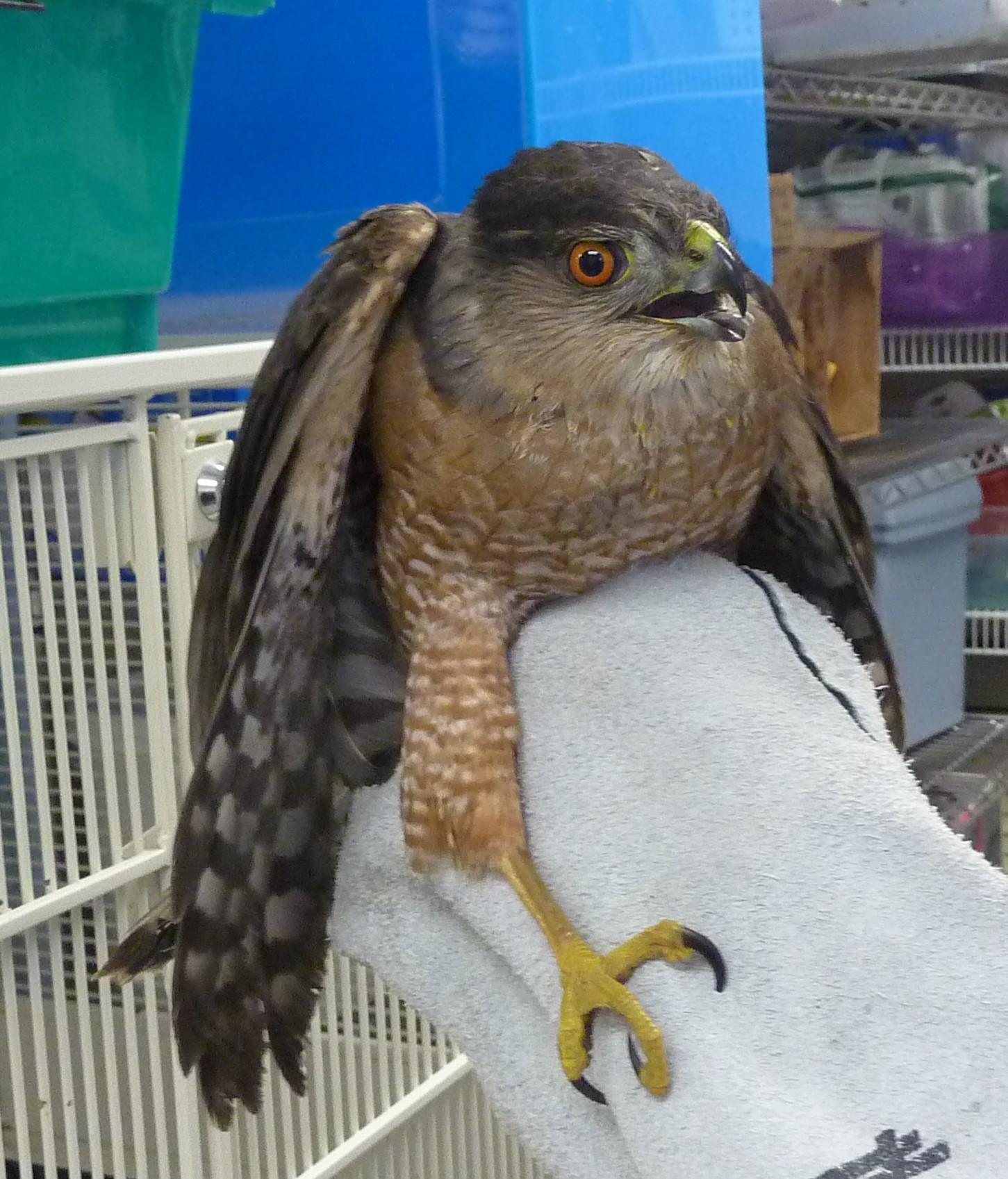

It seems that birds in trouble find a way to put themselves in my line of sight.
It began several years ago with a chicken, who arrived in my driveway one cold winter day, and who I was able to find a good home for. There have been baby birds dropping from nests in trees in my yard – and then came the hawk.
I don’t know how to rescue a bird precisely, but I do know how to get one to places where they can be saved. I am happy to provide transport.
This latest opportunity came two weeks ago when I was having lunch with friends at Morty’s Tap and Grille on South Regal Street. Out on the patio was a hawk standing on one of the tables. It hopped out of sight for a while and then back again, sort of hop-flying into a tall shrub. It looked awfully scruffy and was clearly not doing well.
One of my friends called Fish and Wildlife and was given the name of a vet who took in wild birds, the Ponti Veterinary Hospital in Otis Orchards. My friend called and, yes, they’d care for the hawk. Transportation was up to us.
Well, there we were, three lunching ladies not quite geared-up to capture an injured hawk. Happily, restaurant general manager Tammy Van Sweringer and bartender Andy Oliver joined the rescue effort. In the lost-and-found box they found an old coat that Andy threw over the bird, which was placed in the large cardboard box Tammy provided.
With the box in the back of my car, off I went to Ponti’s. I hadn’t gone but a few blocks before the tape across the top of the box popped off. I had a flashback to an experience I had many years ago trying to take some abandoned kittens to the Humane Society. Not knowing anything about cats (I’m a dog person), I had placed the kittens in a deep open box, thinking they couldn’t climb out. Ha. By the time I got them delivered, one had gotten up into the springs under my seat and the others were all over the car. As the hawk was scratching around in the box, clearly not happy there, I had visions of a wild hawk trying to flap around inside my car as I drove.
I pulled over immediately and weighted down the folded-in box top with a small gym bag I had in my car to be sure the bird remained put. The hawk was delivered safely, and I was told that the goal of treatment was to be able to release the bird into the wild. When I called the next day (a Saturday), I learned that the adult male Cooper’s hawk had been X-rayed and no broken bones were found. They would rehab him and test-fly him in a few days, and if he checked out, he’d be set free.
I arranged to be there early that Tuesday morning. He looked great when I got there, smooth feathers, alert and … well, fiercely hawklike. Veterinarian Ruth Reiha said he came in not at all malnourished. They had fed him some quail meat, which he ate enthusiastically, and they thought he had probably just flown into something at high speed and had had his bell rung when my friends and I found him.
The test flight consisted of letting him try to fly down a hallway, a task which he managed quite well. Release was imminent.
I asked why they took in wildlife, for which they receive no payment other than donations from the public, and Reiha said that when Dr. Jerry Ponti began his practice many decades ago, this was something he cared deeply about. They are all committed to it and take in a variety of wildlife (though not skunks, bats, raccoons or adult porcupines). Some animals sustain injuries that prevent them from being able to survive in the wild, and after treatment those are sent to teaching hospitals or sanctuaries or, when injuries are too severe or no other viable options remain, they are humanely euthanized.
The day I was on site, there were two magnificent great horned owls at Ponti’s, one having had surgery for a midshaft fracture on one of its wings and the other with an eye injury and being rehabbed out in the donkey barn.
I was able to participate in the release of the hawk, once again in my designated role of providing transportation, by driving the wildlife assistant down to the Spokane River, she holding our hawk tightly by his legs with her heavy gloves. And on that cold January morning, she raised her hand up into the air and let go. Off he went, dipping for a moment and then disappearing into the gray sky above.
She told me she loves moments like that. She recalled for me some of her most cherished experiences with wildlife, such as helping nurse a river otter back to health and bonding with one special baby mule deer.
Knowing that I would write about this experience, I asked for her name so I could include it in the telling. It’s Stacy Sparrow. It really is.