This column reflects the opinion of the writer. Learn about the differences between a news story and an opinion column.
Huckleberries: When Coeur d’Alene was the toast of the Big Apple
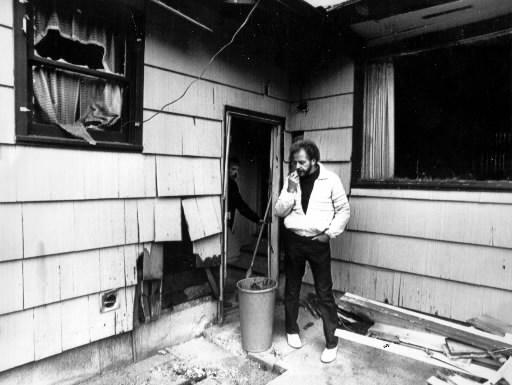

Thirty years ago, Coeur d’Alene was the toast of New York City.
At New York’s historic City Hall, on Jan. 14, 1987, six New York notables, including council President Andrew Stein and civil rights leader Bayard Rustin, mispronounced “Coeur d’Alene” while hailing the Lake City’s fight against bigotry. Only months before, domestic terrorists associated with the Aryan Nations had bombed various places around Coeur d’Alene – and the home of the Rev. Bill Wassmuth of St. Pius X Catholic Church. Wassmuth was also leader of the Kootenai County Task Force on Human Relations.
He was one of three representatives from Coeur d’Alene who traveled to New York City to accept the Raoul Wallenberg Civic Award for Coeur d’Alene’s human rights battle. Mayor Ray Stone and Undersheriff Larry Broadbent were the other two. This columnist tagged along to report on the event.
The Wallenberg Civic Award was presented by the Raoul Wallenberg Committee of the United States for the first time that day. Wallenberg was a Swedish diplomat who is credited with saving more than 100,000 Jews while assigned to the Budapest, Hungary, foreign mission in 1944. He was captured by the advancing Russians in January 1945. And disappeared into the Soviet gulag.
New Yorkers were soul-searching when we visited. A month earlier, in Queens, a mob of white youths had attacked three blacks, one of whom was killed by a car trying to get away.
During the 75-minute ceremony, only steps from the place where Abraham Lincoln’s body had once lain in state, Stein challenged New Yorkers to follow Coeur d’Alene’s “profile in courage.” Said Stein: “It’s ironic we are looking to you for leadership in our time of trouble,” noting that Coeur d’Alene was an all-white city in an all-white state. Rustin compared Coeur d’Alene to Wallenberg and Martin Luther King. Hyman Bookbinder of the President’s Commission of the Holocaust linked Coeur d’Alene with the “story of humanity’s struggle for freedom.”
Stein did slip at one point and refer to our area as “Coeur d’Alene County, Iowa.” But it was still heady stuff.
What the award meant
A month before the award presentation, some Coeur d’Alene business leaders were pressing the human rights task force to tone things down. They believed that the organization, led by Wassmuth, Tony Stewart, Norm Gissel and Marshall Mend, was attracting unwanted publicity for the city. In a private meeting with the nervous business leaders, Mend asked Broadbent how many Aryans would be in Kootenai County if the task force had failed to respond. Instead of 35, Broadbent replied, there would be 3,500. That comment and the Wallenberg Civic Award cemented the standing of the human rights task force and its work in the community.
Parting shot
Of the four from Coeur d’Alene who made the trip to New York, I’m the only one left. Wassmuth quit the priesthood to marry, continuing his human rights fight even as Lou Gehrig’s disease killed him. Stone, a jazz combo leader who helped liberate a concentration camp during World War II, served two terms before losing his bid for a third one. The loss almost broke his heart. Broadbent, the big cop with a big heart who smoked too much, later ran unsuccessfully for county commission. All three were Idaho natives. All three left their marks on Coeur d’Alene – and were instrumental in the eventual fall of the Aryan Nations.