This column reflects the opinion of the writer. Learn about the differences between a news story and an opinion column.
Shawn Vestal: Plaza project helps erase the boundary between river and city
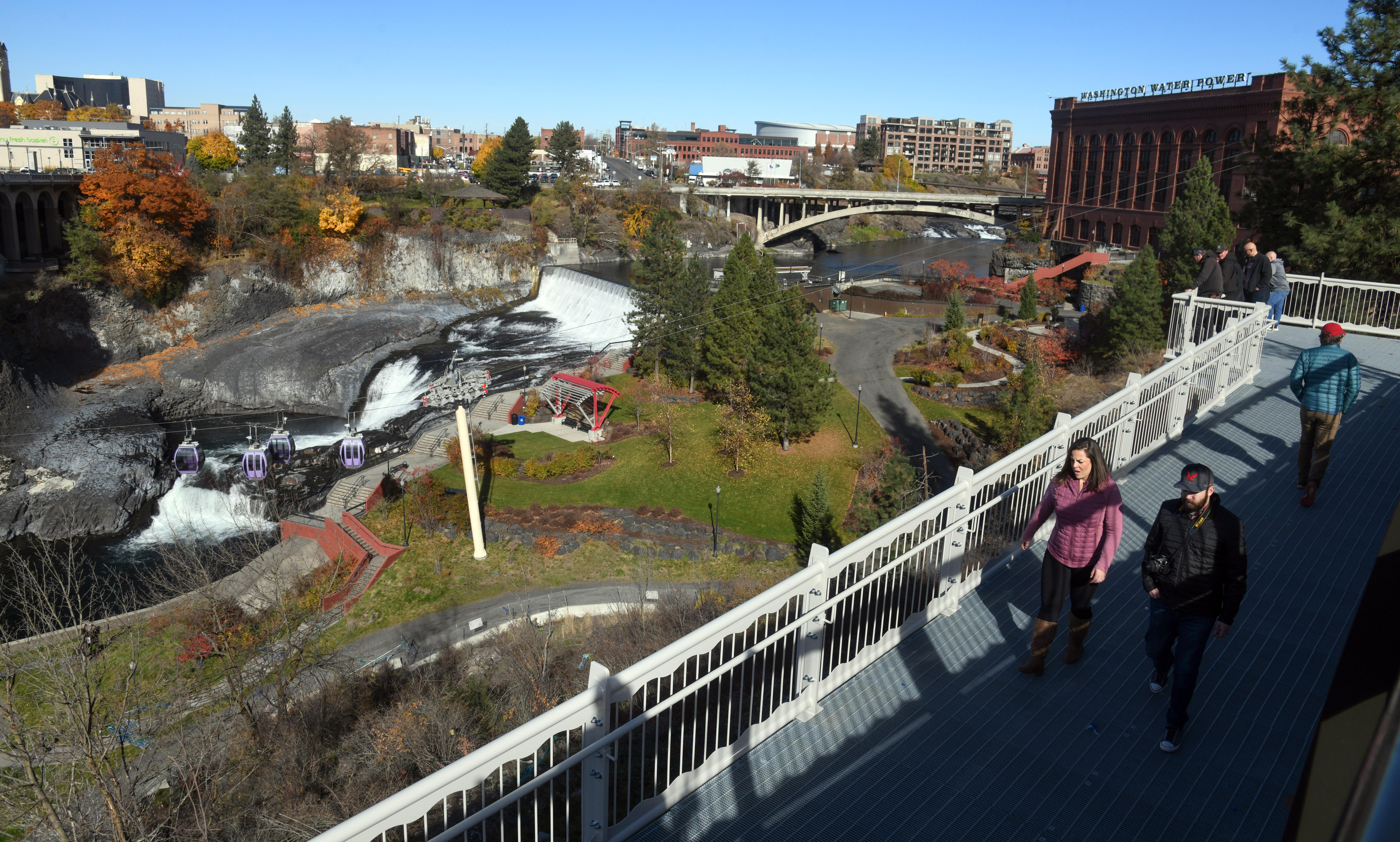

It was early evening. The sun had set, but a warm, blond glow lingered in the west, anchoring the silver sky and shimmering metallically off the Spokane River as it curled through Peaceful Valley.
From our vantage – at the new river overlook and plaza in front of the downtown library – we had a wide, unimpeded view of the river as it swept through the city’s heart, a view that was not unfamiliar but had somehow become grander, wider, more vivid. Your eye could follow the river backward all the way from that shimmery western light to the darkening ripples under the Monroe Street Bridge, to the whitened froth of the falls as they dropped below the Post Street Bridge, to the nearly still black water before the upper falls hidden behind the Washington Water Power building.
All so familiar. And all so bracingly new.
Outlined against the opposite horizon were Kendall Yards, the health district building, the courthouse tower. The gondola cables caught a thin thread of light. Below us lay Huntington Park, utility lights like a constellation fallen to the riverbank. People walked the overlook, down where not so long ago there was no approach to the river, no easy way to feel the spray of the falls on your face, no statuary honoring the region’s indigenous origins, nothing but brush and weeds and gravel.
Five years ago, when Avista opened that park and The Gathering Place plaza above it, there was a similar shock of recognition: So familiar, yet so thrillingly new.
That project brought the river – the very reason that people ever lived here to begin with – more forcefully into the daily life of the city. It was not unlike the change that had occurred a couple of years earlier, when the old YMCA building was torn down in Riverfront Park and replaced with walkways and overlooks that erased what had been essentially a boundary between river and city.
I remember the first time I laid eyes on that site after the Y building was demolished.
It was like the sun had risen. Like a wall had come down.
A similar jolt of recognition accompanied the opening last week of the new plaza in front of the library, named A Place of Truths. There used to be little but a sidewalk and a couple of plaques above a hillside thicket, before the two-year infrastructure project that includes the plaza broke ground.
Now, a ramped walkway, with tiers and benches and statues honoring the region’s Native heritage sit in that spot – like a rebuke to all that we had failed to see there before.
The plaza and these other projects are part of a thoroughgoing revitalization of the relationship between the city center and the river. This is great-city stuff – public investment in shared spaces, a recognition that the aesthetics of the public square contribute to our quality of life, a focus on bringing the natural beauty of the river gorge more powerfully into the visual landscape of Spokane.
This includes the major work in Riverfront Park – the new Carrousel, the ice ribbon, the central promenade, the new Pavilion. It includes the new miles on the Great Gorge Trail, so close to completing a loop. It includes Kendall Yards, which has bounced into vibrant life in just a decade. It includes what’s about to happen with the library renovation.
There is now an entirely new relationship of city to river. It’s one of the best things, among many good ones, that’s happened to civic life here lately.
A Place for Truths came from the city’s creative, integrated approach to solving a huge, expensive problem: a looming federal requirement that the city reduce river pollution and stormwater runoff. The Condon administration is rightly proud of this $340 million effort, and it’s important stuff – but the truth is that almost all of it is underground, out of sight, unconsidered by most of us as we live our daily lives.
No one’s taking the family downtown to check out a new Combined Sewer Overflow tank.
On the other hand, the landscaping and public spaces that have accompanied these projects – the above-ground stuff – has been simply fantastic, from stormwater gardens on Monroe to the new park that sits atop a tank at the entrance to Interstate 90. A Place for Truths is among the best of them.
We live on a river here, but we haven’t always lived on a river. The people of the Spokane Tribe did, of course, but when white folks arrived we busied ourselves with toiletizing the river, dumping the dregs of industry and walling off the water for rail yards.
That started to change in the Expo ’74 era, when we replaced the rail yards with Riverfront Park. That was a revolutionary time in Spokane, of course, an awakening to the need to protect and appreciate the live, wild world around us, which coincided with a time of prosperity and optimism about the city.
That was an important evolution. And yet what’s clear now is that we weren’t seeing it as clearly as we might.
Last Sunday, at the plaza with my family, I felt as if I was seeing that stretch of river – which I’ve seen, at least in passing, most every day for nearly 20 years – for the very first time.
That’s the true triumph of these riverside projects. It’s not what’s underneath them, and it’s not who cut which ribbon to open them. It’s not the benches or railings, not the signage, not even all the wonderful artwork and cool features.
It’s what they let you see anew about the place you already know.