This column reflects the opinion of the writer. Learn about the differences between a news story and an opinion column.
100 years ago in Spokane: Reality got in the way of the South Hill’s oil dreams, but some residents didn’t want to face it
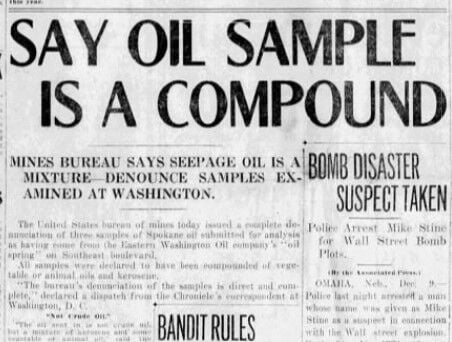
The U.S. Bureau of Mines declared that the “oil spring” on the South Hill was not the right kind of oil, not even close.
It was a mix of kerosene, vegetable oil and animal oil. Or as one skeptic had already noted, the kind of oil you could buy at the grocery store.
This announcement effectively dashed Spokane’s dreams of an oil boom. Ever since seepages of “oil” had been found in a Rockwood area basement, oil rigs had been erected and homeowners on the South Hill had been walking around with dollar signs in their eyes.
A few skeptical oil experts had already scoffed at the idea that Spokane was sitting atop an oil deposit. But the U.S. Bureau of Mines had now made it official.
“The outcome of the bureau’s analysis, eagerly expected for the last 10 days by hundreds of stockholders and promoters of Spokane oil companies, is expected to be followed by several rapid developments,” the Spokane Daily Chronicle wrote.
For one thing, the Better Business Bureau was looking into the situation for signs of fraud.
But the promoters of Spokane’s oil fever were taking action as well in an attempt to discredit the Bureau of Mines’ findings. They claimed that the samples had somehow been switched and the government did not analyze the “true seepage oil.” One driller said he would take another sample to Washington, D.C., himself to get a “true analysis.”
However, the Bureau said it had analyzed four separate samples. All were nearly the same, and none even remotely resembled crude petroleum.