This column reflects the opinion of the writer. Learn about the differences between a news story and an opinion column.
100 years ago in Spokane: The city was still divided over the South Hill fake oil boom as the suspects appeared in court
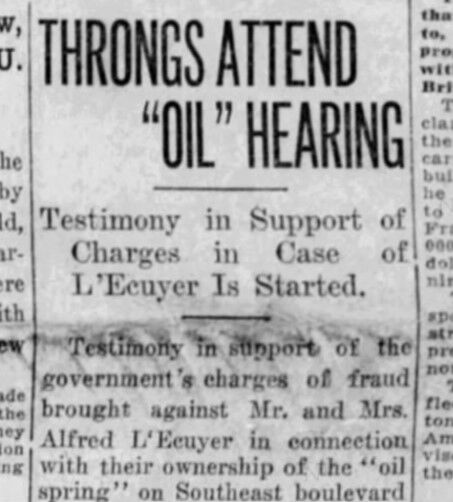
Hundreds of people thronged a federal courtroom in Spokane to hear testimony in the oil fraud case involving Mr. and Mrs. Alfred L’Ecuyer.
Most of them appeared to be on L’Ecuyer’s side.
“Mr. L’Ecuyer was greeted with applause when he entered the room,” the Spokane Daily Chronicle wrote. “Halting in the center of the courtroom, he bowed right and left, smiling slightly.”
The U.S. commissioner presiding over the hearing admonished the crowd and said he would clear the courtroom if it happened again.
Then the hearing commenced.
It consisted mainly of testimony about how samples had been obtained from the basement of the L’Ecuyer home. Those samples were later found by the U.S. Bureau of Mines to contain kerosene and vegetable oil, not petroleum. The hearing was set to continue the next day.
Other news had been made outside the courtroom.
A half-hour before the hearing, L’Ecuyer had told a gathering of oil men that workmen had confirmed a new flow of oil from the same well that morning.
“I defy any man to say that this is not a genuine flow of natural oil,” he said. “God Almighty is my judge.”
Meanwhile, another geologist said he analyzed the seepage from the well and concluded that it was 70% wood naphtha oil, which looks and smells like kerosene, but is a naturally occurring oil. The other 30% consisted of other naturally occurring oils, such as acetone and creosote. This lent credence to L’Ecuyer’s claim that it was a natural flow and not some kind of fraudulent “plant.”
It did not, however, lend credence to the notion that Spokane was sitting atop some vast petroleum deposit.