Bee Gees documentary shows they were more than disco
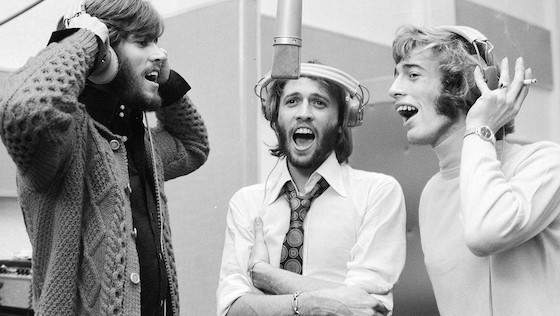
Above : Barry, Maurice and Robin Gibb perform in a scene from the HBO Max documentary “The Bee Gees: How Can You Mend a Broken Heart.” (Photo: HBO)
Movie review : “The Bee Gees: How Can You Mend a Broken Heart,” directed by Frank Marshall, featuring Barry, Robin and Maurice Gibb. Streaming on HBO Max.
One of the most energetic beginnings of any move made in the 1970s was directed by John Badham . You may be familiar with it. It’s titled “Saturday Night Fever.”
Much of the power of its opening sequence comes via the soundtrack. Badham cuts from an aerial shot of Manhattan, past the Verrazano-Narrows bridge to capture John Travolta’s character, Tony Manero, strutting down Brooklyn’s 86th Stree t. And his every step is matched by the infectious beat of the Bee Gees’ song “Stayin’ Alive.”
Truth is, Badham’s movie is inextricably linked with the music of The Bee Gees , to the point where it’s nigh impossible to separate one from the next. After all, the year “Saturday Night Fever” was released, 1977, marked the peak of the disco craze, which had been going on for much of the past decade. And “Stayin’ Alive” – one of six Bee Gees songs that were incorporated into the movie – captures that disco feeling as well as any movie ever has.
The resulting soundtrack became the second-biggest-selling soundtrack album of all time, sitting atop the charts for 24 straight weeks. It came to represent not just the height of the disco era but the height of the Bee Gees’ popularity as well.
Of course, that popularity didn’t, couldn’t, last. By the early 1980s, musical tastes had changed, and pretty soon the term disco was followed in many quarters by the verb “sucks.” And by then, the Bee Gees themselves – who at that point had been performing as a trio for the better part of two decades – found themselves at what looked like a career dead end.
Yet as director Frank Marshall makes clear in his documentary film “The Bee Gees: How Can You Mend a Broken Heart,” the Gibb brothers were far more than simply a disco band. Over the course of their career, they wrote more than a thousand songs, in a variety of styles – from soul to rock to, yes, disco – 20 of which gained the status of No. 1 hits in the U.S. and U.K.
To this day, they rank only behind The Beatles and The Supremes as the most successful band in Billboard charts history.
Born on the Isle of Man, raised first in Manchester, England, and then in Australia, the brothers – elder brother Barry (born in 1946) and twins Robin and Maurice (born three years later) – began performing while still in their teens (pre-teens for the twins). Over the next few years, the trio not only began perfecting the three-part harmony that would serve them so well, but they began writing their own songs.
By the late ‘50s, the band – at one point performing under the name Wee Johnny Hayes and the Blue Cats – was playing regular gigs. When the family immigrated to Australia in 1958, they began performing in hotels and clubs, scored the occasional television spot and even began recording, by then as the Bee Gees.
It wasn’t until they returned to England in the late 1960s, and partnered with producer Robert Stigwood , that the band began to find real success. There was a brief time when Barry and Robin squabbled, causing Robin to break away. As Maurice explains in one archival interview, he typically acted as go-between for his two older brothers (Robin by a half hour). But, they reunited, and the hits followed, the first U.S. No. 1 – “How Can You Mend a Broken Heart” – coming in 1970.
And while they worked steadily throughout the decade, it was when they moved to Miami, began evolving their sound – discovering Barry’s famous falsetto – that led to “Saturday Night Fever,” to their being enshrined in history and to a career later as hit songwriters for the likes of Barbra Streisand, Dolly Parton and Kenny Rogers.
Marshall shows all this, combining never-before-seen archival footage, including interviews with the twins – Maurice who died in 2003, Robin who died in 2012 – and other musicians such as Eric Clapton, Noel Gallagher (of Oasis), Nick Jonas (of the Jonas Brothers) and Lulu (who, besides having her own singing career, was married for six years to Maurice). While showcasing much of the band’s music, Marshall also documents how fame, ego and the trappings of rock success were as much a part of the Bee Gees’ story as their various ups and downs in popularity.
If “The Bee Gees: How Can You Mend a Broken Heart” does anything, though, it conveys how much regret Barry feels about being the sole surviving brother. At one point, he says, he’d give back all the success just to have his brothers back.
Doubt him if you will (and who could blame you), you can’t deny this: that the Bee Gees were far more than three guys who dressed up in sequins and danced to a disco beat. As Oasis guitarist Gallagher says, “When you’ve got brothers singing, it’s like an instrument that nobody else can buy.” Or, in the case of the Brothers Gibb, can even remotely emulate.
* This story was originally published as a post from the blog "Movies & More." Read all stories from this blog