This column reflects the opinion of the writer. Learn about the differences between a news story and an opinion column.
Shawn Vestal: Another deep freeze, and a paltry response from the city administration
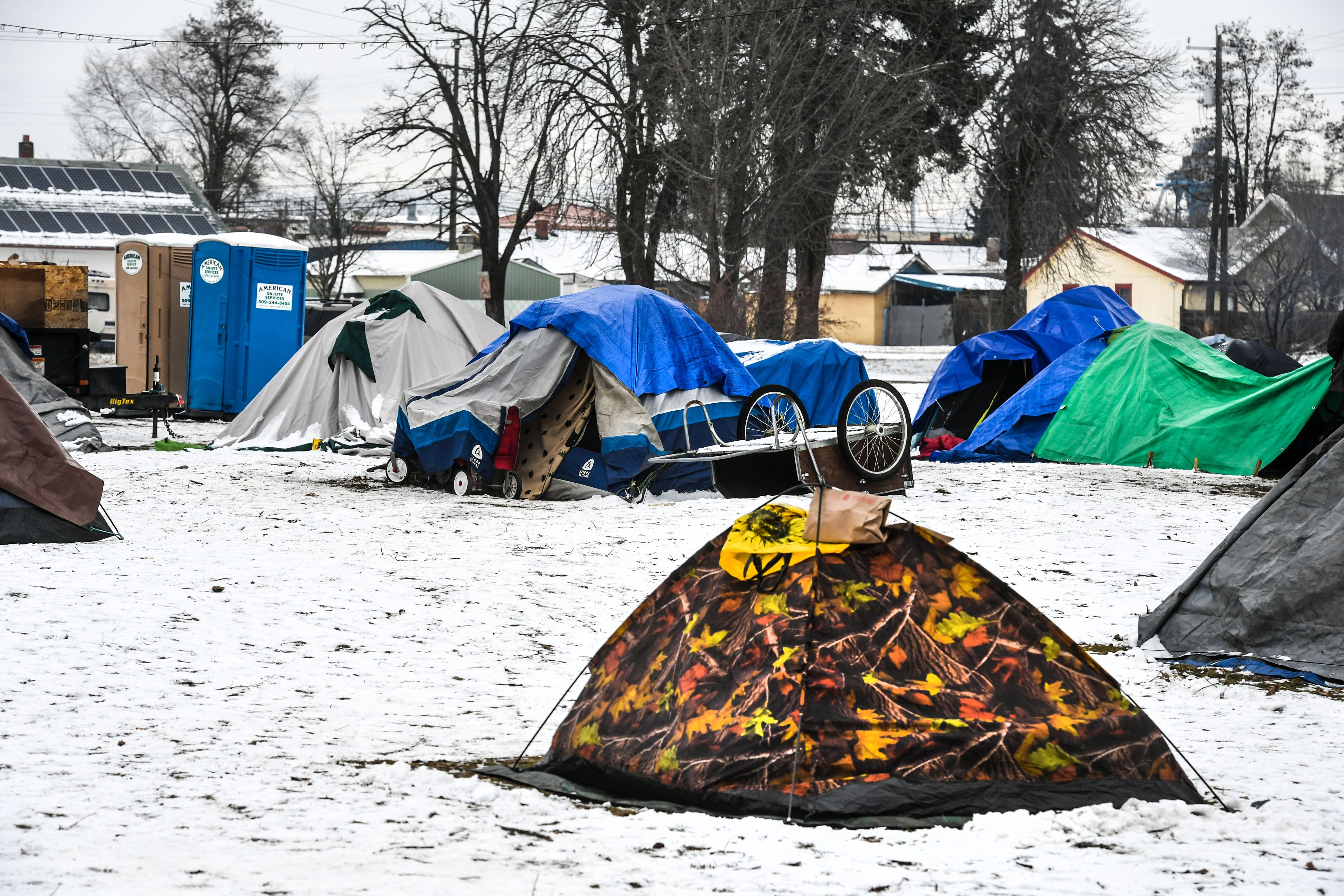

The mayor made it clear last summer that she opposed the law passed by the City Council that requires her to do something for which she has shown no ability or inclination: setting up shelter for the homeless in a weather emergency.
Now she’s figured out a seeming workaround for this law: ignoring it.
With a week of sub-freezing temperatures underway, Mayor Nadine Woodward this week deepened her record of futility on homelessness – particularly in terms of her responses to weather emergencies.
This time, the snow was glistening on the ground and the temperatures had sunk into the 20s on Monday afternoon when Woodward’s administration announced its “plan” for an emergency shelter. The plan provides far fewer beds than were used during the last deep freeze – covering 16% of the number who sought emergency shelter then.
In the news release, she said she “shares everyone’s sense of urgency to meet the needs in our community.”
Woodward’s plan adds 54 spots to the shelter system. Forty of these beds will be in hotels, and 14 will be repurposed beds at Union Gospel Mission. Additional announcements are expected this week, presumably expanding this number.
During the last weather emergency, some 343 people used the warming shelter at the Convention Center on its busiest night. That effort was a mess in many ways, with the key exception being that it kept people indoors in life-threatening temperatures.
But it was costly and poorly planned, resulted in damage to a facility that was not prepared for it, and the staffing and security level was insufficient. With the hundreds of thousands of dollars spent, the administration could have pursued a permanent shelter.
To hear the administration tell it afterward, the destruction caused to Convention Center bathrooms by some of the people sheltered there was the great tragedy of the whole affair, but those problems were administrative failures, born chiefly of a refusal to plan and a desire to avoid tackling the difficult, long-term solutions head-on.
Brian Coddington, the mayor’s chief spokesman, says this analysis is selling the mayor’s efforts short, as well as the efforts of City Hall staffers working to find solutions. Several attempts to form partnerships with other organizations – for both long-term low-barrier housing and emergency shelter options – have been very difficult to push over the finish line, he says.
Just this week, a proposal to use city property in Hillyard was greeted, predictably, by intense opposition from neighbors, which has now sidelined that idea.
“Everybody’s frustrated,” he said. “We are extremely frustrated.”
When I tell Coddington, as I did Tuesday, that I find it difficult to believe that a serious effort to produce an emergency shelter plan would result in what we saw this week, he said I was overlooking the many efforts to bring about a solution that the mayor has undertaken with community partners.
“It’s an uphill fight,” he said, “but it’s something we’re still working on and are very committed to.”
The City Council expanded and amended city laws on homeless services last summer, in an effort to pressure the mayor to do better at this very task. Woodward resisted these laws vigorously, orchestrating a public meeting in which the usual suspects in the no-services-for-homeless-people camp showed up.
Of course, a lot of other people spoke as well, urging passage of the laws. What seemed like an attempt to orchestrate a scene of widespread opposition to the proposals fell flat. The City Council passed these new laws, which are meant to prevent the city from de-funding low-barrier shelters in favor of high-barrier ones, as Woodward has done, and force the city to provide sufficient emergency shelter when it’s very hot, very cold or very smoky.
This law requires the city to provide “warming shelters sufficient to meet the needs of currently unsheltered homeless individuals and other vulnerable individuals” when the shelters are 90% full and the temperatures are at or below 32 degrees.
Coddington said that he believes the city is meeting that law based on the shelter availability target – that shelter capacity has not exceeded 90%.
“It meets what the law says,” he said. “But I don’t want anyone to think in any way that means the discussion stops.”
Others, such as Council President Breean Beggs, don’t believe the administration has followed that law – not this week and not during the weeks of merely typical winter weather that preceded it. The average overnight temperature in January was 27 degrees.
Whatever the shelter numbers show, there is strong evidence – in the numbers of people that showed up at the Convention Center and in the tent city in east Spokane – that there is an unmet need for “sufficient” emergency shelter as we enter a five-day period of below-freezing nights.
The law was meant to put pressure on the administration, and the council should continue to exert that pressure. Short of that, though, what is the consequence if someone believes the mayor is ignoring a law? The council doesn’t have the authority to sue, but a citizen could.
Rest assured, if the homeless population had the political and legal clout of, say, the downtown property owners’ anti-homeless coalition, a claim would have already been filed.
The mayor’s frustrations over the difficulties of this problem have become apparent, but these difficulties are not new. They were known, knowable facts back when she was telling jokes about homeless dudes getting fat on all our free meals. Two years later, she seems taken aback that neighbors in residential areas aren’t putting out the welcome mat for shelters.
But making a sufficient plan for predictable emergencies has fallen by the wayside again and again. With this week’s forecast of harsh cold – just like the forecasts at the end of December – it was obvious that doing nothing wouldn’t work.
So the mayor chose instead to do very little.
Can you sense the urgency?