This column reflects the opinion of the writer. Learn about the differences between a news story and an opinion column.
Shawn Vestal: To help kids emerge from the pandemic, rewrite the ‘generational contract’

The pandemic’s toll on children has been undeniable.
Setbacks in learning and socialization from last year’s school closures and other disruptions are real. Mental health problems among adolescents – a rising crisis before the pandemic – worsened. And many children suffered as their parents lost jobs and as family members died.
But among those who have shed gushers of crocodile tears in their politicized displays of concern for kids – such as Rep. Cathy McMorris Rodgers, who seems to think schools are now closed – the good news is that there are concrete measures they can take to help America’s suffering kids emerge from the pandemic, beyond opposing masks.
There’s a huge catch, though. It would require completely “rewriting the generational contract” in Congress and statehouses to put children first and wealthy donors last. Lawmakers whose legislative zeal has been focused on cutting taxes for rich people and snipping holes in the safety net would have to radically adjust their priorities.
That is the takeaway from the AEI-Brookings Working Group on Childhood in the United States, a broad-based group of academics and experts who have been studying child welfare in American for two years.
“Investments in today’s children will make tomorrow’s adults more economically self-sufficient,” the working group wrote in its report, “Rebalancing: Children First,” released Feb. 8.
“Rebalancing federal spending toward children and away from financially secure elderly adults, the well-off, and special interests, advances the values of promoting economic opportunity, encourages self-sufficiency, and focuses scarce resources where they will do the most good.”
The group believes this could happen without adding to the national deficit. But it would require goring different oxen.
“In 2019, the share of the federal budget spent on children was 9.2 percent and the share spent on the adult portions of Social Security, Medicare, and Medicaid was 45 percent,” the report says. “In 2020, the share of the federal budget spent on children fell to 7.4 percent even as total expenditures on children rose. … This allocation is a statement of national priorities – priorities that the working group agrees need to change.”
The report calls for investments in several areas to help offset child poverty and the generational consequences that follow. One in seven children lives in poverty in America, and the consequences – from educational achievement to health – are significant.
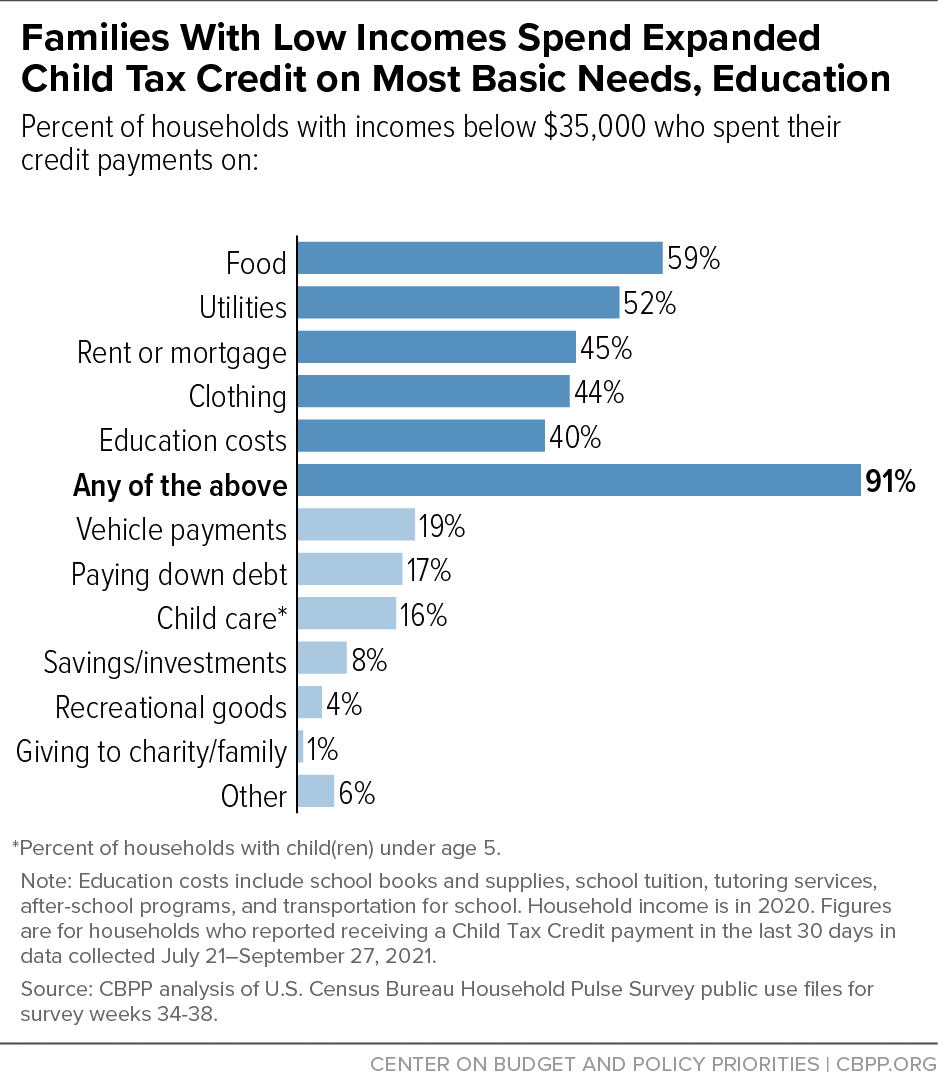
(It’s worth noting that government programs can make major gains in offsetting child poverty: the recently expired monthly Child Tax Credit payments made a historic impact on child poverty, lifting 3.7 million children out of poverty. When the credits expired, child poverty rose from 12% in December to 17% in January.)
Among the key recommendations of the Brookings group:
• Expand the Child Tax Credit to include more low-income families, and increase the Supplemental Nutrition Assistance Program by 20% for families with children age 5 and younger.
• Develop programs to help teach young people parenting skills and provide community support for parents, as well as developing policies to strengthen and encourage marriage. Though the decline in the marriage rate has slowed, the correlation between children in single-parent households and poverty is strong.
• Help parents find rewarding employment through skills training, apprenticeships and career education, and degree-completion assistance; expand the Earned Income Tax Credit as a proven pro-work and antipoverty program.
• Improve safety net to protect kids from economic instability; greater support for out-of-work parents and protecting school budgets from economic downturns.
• Maintain high rates of public health insurance for kids.
• Provide access to high quality and affordable early children education and expand school choice options, while improving efforts to develop excellent teachers.
“The report concludes that there is a strong case for investing more in schools,” the report says. “It recommends support for programs that provide targeted instruction to struggling students.”
How would we pay for this? By directing federal resources away from well-off seniors, who received a large share of Medicare and Social Security spending and whose average net worth has increased by more than 50% since 1995. The report says this could be done while protecting the percentage of older adults living in poverty.
The report also recommends cutting corporate welfare and particularly agricultural subsidies, which go disproportionately to large corporations and wealthy households, as well as eliminating deductions and exemptions in the tax code – more than $1.4 trillion a year – almost 60% of which go to the top 20% of earners.
Finally, the report focuses on ways to help children recover from the effects of the pandemic – the real effects, not the supposed tragedy of wearing a mask.
It notes that more than 167,000 kids lost a caregiver during the pandemic, and 40% of those were parents. The mental health of children has been stressed by changes in routine, missed life events, isolation, anxiety and parental anxiety.
These problem come in the context of rising rates of depression and suicide before the pandemic; for many kids, the mental health challenges resulting from school closures could last for decades and affect their lifetime earnings.
“For low-income children especially, it will be difficult, if not impossible, to make up this lost time,” the report says.
All of which, the authors say, makes it more important than ever that we rewrite our flawed generational contract.