This column reflects the opinion of the writer. Learn about the differences between a news story and an opinion column.
Spin Control: Debate on Inslee’s power may be missing key metric
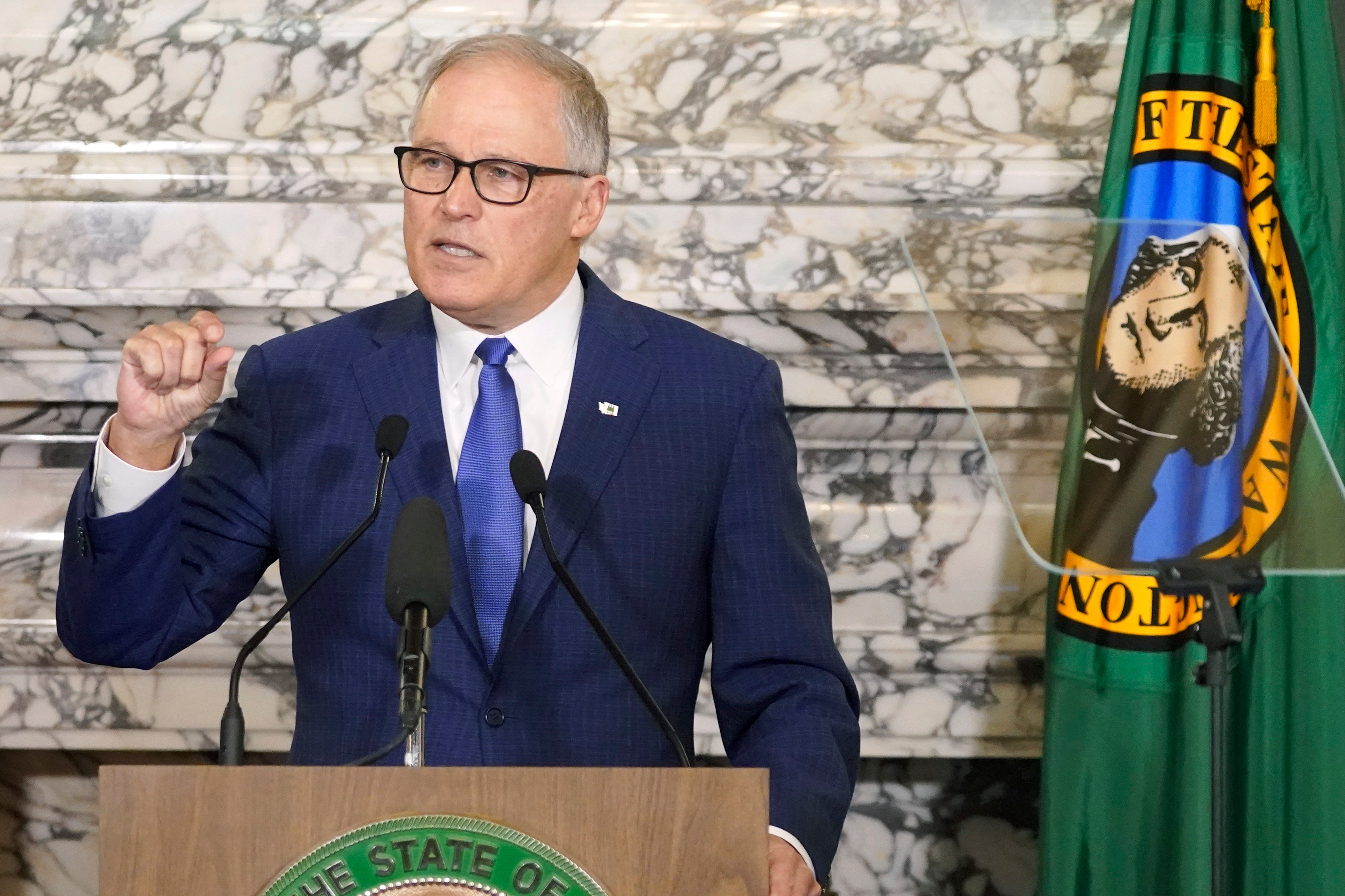
As Washington nears its 750th day of being under emergency rules for COVID-19, the debate over possible changes to the state’s emergency powers law is consuming considerable time and energy this legislative session.
Legislators have argued separation of powers and the Federalist Papers, and even made it to “Star Wars.” But each side seems to have ignored a key metric for judging the length and breadth of powers an executive should have in an emergency.
Gov. Jay Inslee declared an emergency in March 2020 as the virus seemed to single out the state for its U.S. beachhead. Schools and businesses closed, people were told to “Stay Safe, Stay Home” and those who ventured out to the supermarket were dousing their hands in sanitizer and disinfecting their groceries upon return.
Republicans have had quite enough of Washington as a state of emergency and have proposed legislation to rein in the governor’s power by requiring legislative approval of emergency after a few weeks or months. They believe they are being separated from the powers bestowed upon the Legislature by the constitution and want a way to take some of those powers back.
Democrats are more willing to give Inslee the benefit of the doubt on most of his decisions and have a much less ambitious bill that would require more legislative approval of things the governor prohibits during an emergency, a category of directives that right now is pretty wide open.
The Democratic proposal has made it through the Senate and a necessary House committee, but faces more votes in the final two weeks of the session. A tougher Republican version did not survive, although GOP legislators are trying – so far unsuccessfully – to amend the Democratic version as it moves along.
Republicans are apt to point out they are an equal branch of the government, with expected references to the Founding Fathers and the Federalist Papers.
“We’re becoming a second-class branch of government,” Sen. Mike Padden, R-Spokane Valley, complained during the recent Senate debate over the Democratic bill. Other states with Democratic governors, like Oregon, Nevada and California, have had special sessions during the pandemic emergency, he added, but not Washington.
Sen. John Braun, R-Centralia, allowed the state has done well fighting the pandemic but contended that was probably due to its citizens taking care of themselves and their families, not Inslee’s orders.
“In the big picture, compare our numbers to Sweden, as an example, who has almost no restrictions during this entire emergency,” Braun said. “Our numbers are virtually identical.”
(Fact check: This does not actually jibe with the most recent statistics. Sweden has reported about 255,000 cases and 1,650 deaths per million people, the best metric for comparing places of different size and population. Washington has had 1.4 million cases and 11,811 deaths, or nearly 186,000 cases and 1,551 deaths per million. The United States as a whole has 238,900 cases and 2,863 deaths per million people, and Washington is among the lowest of the 50 states, District of Columbia and Puerto Rico in both categories.)
In arguing for the second of two possible amendments to the bill while it was in the House State Government Committee, Rep. Mike Volz, R-Spokane, said the first amendment may have been too strong, but the bill is too weak, and his proposed changes to the time limits might be just the thing to hit “the sweet spot.” It failed, too.
Sen. Jeff Sefzik, R-Ferndale, ran into a bit of pushback when he tried to compare the governor’s emergency powers to Darth Vader of “Star Wars,” and “a question of villains going too far with the power they are given.”
That brought an objection from Senate Majority Leader Andy Billig, D-Spokane, arguing that a rule prohibiting one member from impugning the motives of another member should apply as well to impugning the motives of the governor.
Lt. Gov. Denny Heck, who was presiding over the debate, huddled with parliamentarians before saying his 14 months in the job has been a delight compared to his previous stint in Congress. But still …
“As generationally entertaining as I think it is to invoke a ‘Star Wars’ analogy … the president finds it’s not in good taste,” Heck said.
Democrats have generally argued that the voters did weigh in Inslee’s handling of the pandemic, re-electing him by a large margin in 2020 after more than six months of emergency rule. Legislative leaders have some power on whether to extend certain orders between sessions, and while it hasn’t come back into special session during the pandemic, it did have a regular session last year and is in the middle of another this year, when they could make changes.
All this, however, seems to be the wrong way for both sides to judge the adequacy of the emergency powers law, which isn’t just about COVID-19 but all emergencies and disasters from now on. The right way is to put themselves in each other’s shoes.
Republicans aren’t fond of Inslee, but the question they should ask themselves is what would they like the law to say if a member of their party, one whom they support, were in the governor’s office. Admittedly, it’s been a long time since that happened, and the last Republican, Gov. John Spellman, argued with members of his party almost as much as with Democrats. But what would they be comfortable with if former Attorney General Rob McKenna or former Sen. Dino Rossi, two of their more recent candidates, had won the job?
For Democrats, the question is what would they want the law to be if they were in the minority and a Republican they not only didn’t like but didn’t trust was governor. They might consider what restrictions they would like if Loren Culp, the pro-Trump firebrand, had won in 2020 and they disagreed with how he was running the show during a disaster.
The sweet spot is where those two lines of thought intersect.