This column reflects the opinion of the writer. Learn about the differences between a news story and an opinion column.
100 years ago in Spokane: Attorneys for the man accused of throwing a soldier to his death tried to flip the script, but they couldn’t do it alone
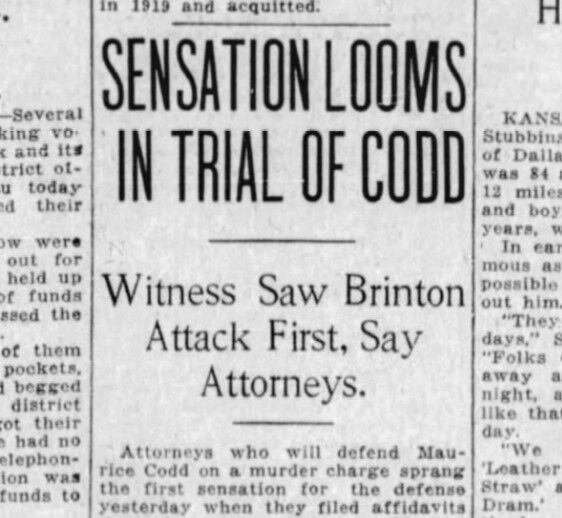
Maurice Codd’s murder trial had not begun, but his attorneys already sprang a sensational surprise.
They filed an affidavit claiming to have a witness who would refute the notion that Codd, in a drunken rage, threw Frank Brinton over a railing at the Granite Building. Brinton, a Fort Wright soldier, plunged several stories to his death.
The affidavit claimed that a witness, B.W. McGaw, saw the entire fight and claimed that Brinton was the one who was in a rage.
He alleged that Brinton attacked Codd and then Brinton backed up and fell over the railing during the fight.
The only problem: This alleged witness was nowhere to be found.
One of Codd’s attorneys said that McGaw had come to his office soon after the arrest and told him that story, but the attorneys had been unable to find him since. They believed that McGaw might be in a logging camp somewhere in the region.
In the affidavit, the attorneys said they should not be forced to trial until they could find McGaw.
From the high school beat: “All modern girls are not flappers.” That was the consensus from a survey of North Central High School girls, who wrote essays on the subject of “The Ideal Girl.”
Most of the papers cited “sensible, modest dress, moderation in use of cosmetics, speaking correct English, neatness and cleanliness, and truthfulness and honesty.”
One girl wrote that the ideal girl “must have lots of pep and be always ready to enjoy good fun.”
Others said she must enjoy sports and be ready to “run, hike, play basketball and other games.”