This column reflects the opinion of the writer. Learn about the differences between a news story and an opinion column.
100 years ago in Spokane: When property was too expensive downtown, the city’s civic auditorium committee came up with a backup plan that didn’t require a new neighborhood
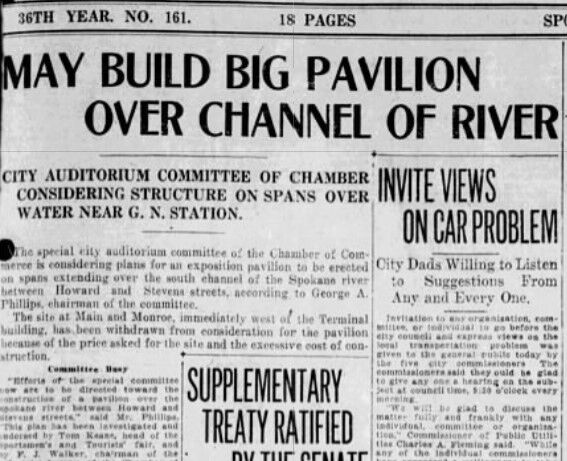
Spokane’s civic auditorium committee had been stymied because buying suitable land downtown was too expensive.
So they came up with a creative solution: build the new auditorium directly over the Spokane River.
They proposed placing large piers into the south channel of the river and building the entire gigantic structure on spans between Howard and Stevens streets.
“It is contemplated that the site would cost nothing, thus greatly reducing the necessary investment,” the committee said.
They envisioned a new civic auditorium with 50,000 square feet of floor space and a seating capacity of 8,000 – and a river flowing serenely beneath it all.
From the school beat: Spokane school superintendent Orville Pratt flatly rejected Judge R.M. Webster’s call for segregation of the sexes in Spokane high schools.
Pratt said that “merely shifting all of the girls to Lewis and Clark and all of the boys to North Central” would hardly solve the problem of juvenile delinquency.
In fact, Pratt said the whole issue of teen “immorality” had been blown out of proportion. The examples cited by Webster had little or nothing to do with the schools. In one case, Pratt said “some boys and girls met at a Sunday school picnic and got into trouble.” In another case, “a girl went to a dance with her parents and got into trouble.”
Pratt said such cases were “a flimsy foundation” for building “a superstructure of sex segregation.”