This column reflects the opinion of the writer. Learn about the differences between a news story and an opinion column.
Spin Control: Mid-term election ballots to be mailed this week
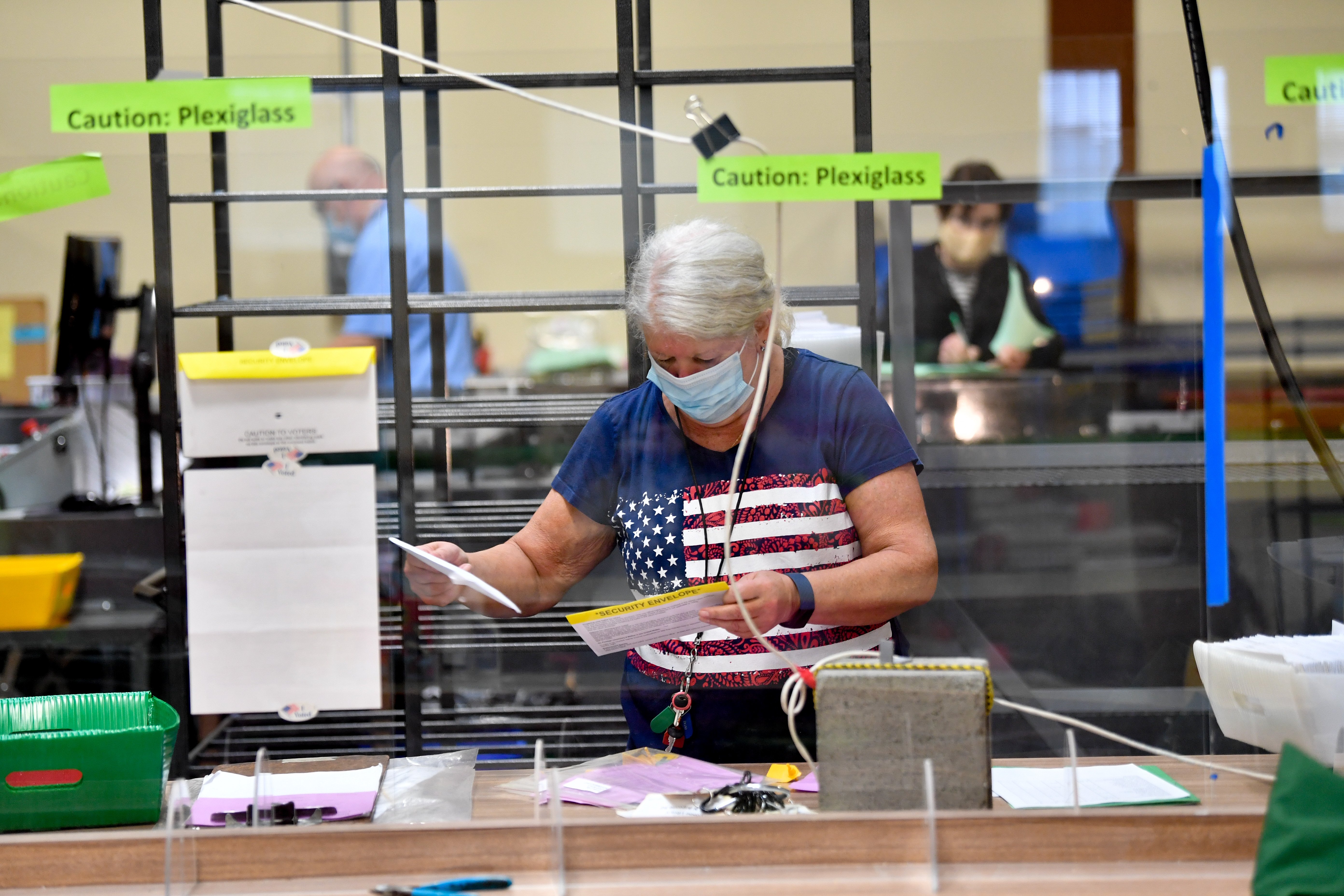
Washington general election ballots will be dropped in the mail this week, and should be arriving at homes of registered voters by next week at the latest.
If the usual pattern holds, about a third will be marked and returned in the first few days. About another third won’t be returned until just before or on “Election Day,” which this year is Nov. 8.
The quotes are necessary because Washington has about six weeks from the time the ballots are mailed out until the last ones are counted, so the nominal Election Day is really just a deadline for getting your ballot in the mail or a drop box by 8 p.m. State law allows any ballot postmarked on or before that day to be counted up until the election results are certified, which this year is three weeks after the deadline. If you are a voter who procrastinates, Washington is your kind of place.
Unfortunately, English does not have a good word for a six-week period that starts in the middle of one month and ends late in the next month.
The mailing of some 4.7 million ballots almost always brings calls and emails from readers who pine for the good old days when only the sick and infirm, overseas military personnel or well-organized travelers voted by absentee ballots. All other voters went to a polling place, stood in line to get a ballot, marked it and dropped it in a box.
The passage of time has added a halcyon glow to that activity, making the recollection for some resemble a Norman Rockwell painting in which people in a wide range of attire, some holding brief cases or tool boxes and others clutching the hand of a toddler, stand patiently in a queue or chat amiably while waiting for a turn in the voting booth. Some remember it as an exercise in democracy overlain with a patina of neighborliness.
Like most things, poll site voting may be better in memory than in practice. I admit to being fond of going to St. Mark’s Lutheran Church on Grand Boulevard shortly after my polling place opened on most Election Days over some two decades when I lived in the nearby precinct. As a political reporter, I had to be in the newsroom early and showing up shortly after 7 a.m. meant the kindly poll workers – who apparently had passed out ballots since Eisenhower’s first election, or maybe Roosevelt’s – usually had homemade treats for us early birds.
But that meant I never stood in a long line or waited for a table where I could punch my ballot with the funny little metal poker known as a stylus. The wait for people who stopped on the way home from work or had to rush in after dinner because they suddenly remembered it was Election Day was often long – which I know because I spent many election evenings interviewing voters as they came out of the polling station.
Mail-in voting may never evoke the same gilded memories, but it is unarguably more convenient. Some people will argue that it is less secure, although they have yet to come up with a scenario in which large numbers of ballots could be stolen and mailed back in with a signature that matches that of the voter from whom it was stolen, or counterfeited and mailed to the elections office in a phony envelope with counterfeit coding and accepted with a signature of a nonexistent voter who wouldn’t be on the rolls.
Poll site voting was not the electoral equivalent of Fort Knox, by the way. Some of the greatest election finagling in history, like Lyndon Johnson’s “landslide” win for the Senate in 1948 and John Kennedy’s winning some Chicago precincts – and with it the 1960 presidential election – happened with poll site voting. The process isn’t the key thing in such matters, it’s who is in charge of the process and who is watching them.
Washington elections aren’t absolutely perfect, because nothing is. But whether we’re talking about poll site voting or mail-in voting, the people in charge have been and are diligent about keeping them secure and accurate.
Some people argue that making elections more convenient means increased turnout. But on that count, the results are mixed. Based on Secretary of State records, in all but one of the presidential elections in Washington since 1928, more votes were cast than in the presidential four years earlier.
That’s not too surprising, because in the years for which there are records, there are also more registered voters than the previous four years.
It’s the mid-term elections, like this year, where turnout is mixed. It’s always lower than the previous presidential election, off by anywhere from as little as 7 percentage points to as much as 27 percentage points. All-mail voting seems to have little connection to that.
The biggest gaps in the 21st century were in mid-terms elections which had no statewide race for a U.S. Senate seat, such as 2014 and 2002, where 54.2% and 56.6% of the people voted, respectively. Mid-terms are also years in which the only statewide offices on the ballot are for state Supreme Court, as all the state executive offices are up in the presidential year.
The highest mid-term turnout in the century was in 2010 and 2018, topping 71%, and in both cases there was a U.S. Senate race. Most elections analysts will tell you that turnout is driven by candidates. Ballot measures don’t necessarily boost turnout in mid-terms, the records suggest. There were nine on the ballot in 2010 and four in 2018, but there were also four in 2004 and three relatively controversial ones – two on gun control and one on smaller classroom sizes – in 2014.
This year is a bit of a unicorn as far as mid-terms go. There is a U.S. Senate race, but no statewide initiatives or referenda. But there is a statewide executive race to fill the final two years of the secretary of state position vacated by Kim Wyman. Anyone who tells you they know how all that will shape up might also offer to hook you up with a Nigerian prince who has some oil leases he’s willing to sell if you can just cover some transfer costs.