This column reflects the opinion of the writer. Learn about the differences between a news story and an opinion column.
100 years ago in Spokane: A stopped watch was the only clue in a man’s apparent falling death from the Monroe Street Bridge
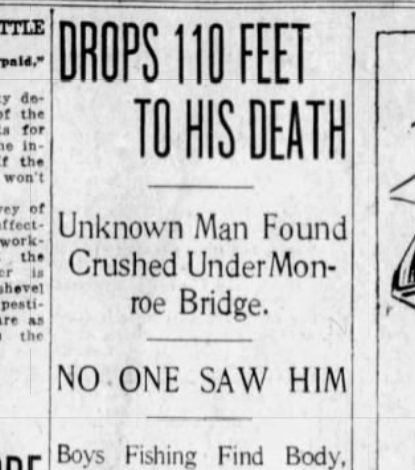
Two boys were fishing the Spokane River when they made a macabre discovery while scrambling over some rocks.
“What’s that?” called Henry Akkers, 17, pointing to a crumpled heap.
At first, they thought it was a man asleep. But on further investigation, they discovered it was a crushed body, still warm.
It turned out to be an unidentified man who had apparently plunged from the railing of the Monroe Street Bridge, 110 feet above.
They rushed up the riverbank and notified police. The man had been wearing a watch, which stopped at 5:08 p.m., apparently the time he fell to his death.
Police found nobody who saw the man fall or jump, and they were still trying to identify the body.
From the court beat: Beatrice Sant, charged with first-degree perjury while testifying in the murder trial of Maurice Codd, was ordered to appear in court for arraignment on “new information.” which had come to light in the case.
Sant had testified that Frank Brinton “fell” over the railing during a fight with Codd, as opposed to being tossed over the railing by Codd. The “new information” was not specified, but it involved whether she even witnessed the events she testified about.
A trial was scheduled for later for Sant and others accused of giving false testimony leading to Codd’s acquittal.
From the booze beat: Of the 34 people arrested in a series of bootlegging raids during the week, 17 had already been arrested at least once before on liquor charges.
This lent some credence to the arguments from Prohibition agents that the prosecutors and courts routinely let bootleggers off too lightly. They returned immediately to their legal, yet lucrative, trade.
A number of them were accused of being “jointists” – that is, operators of illicit booze joints.