This column reflects the opinion of the writer. Learn about the differences between a news story and an opinion column.
Spin Control: Speaker not elected on the first vote? Didn’t seem possible before Tuesday
If you live long enough, you are likely to see things that you once were sure could never happen.
It happens in sports. For decades, Lou Gehrig’s streak of 2,130 consecutive games seemed insurmountable. Would never be broken, sports writers said: teams platoon their players based on pitching; players get hurt or sick; they take time off. And then came Cal Ripken, who played 2,632 consecutive games. Now they say Ripken’s streak won’t be broken because, well, teams platoon their players, who can get hurt or sick or take time off. Time will tell but one should never say never.
Closer to home, Frank Burgess’s record of 2,196 points scored for Gonzaga University seemed insurmountable until this year with Drew Timme averaging more than 20 points per game. Maybe that record will fall, too.
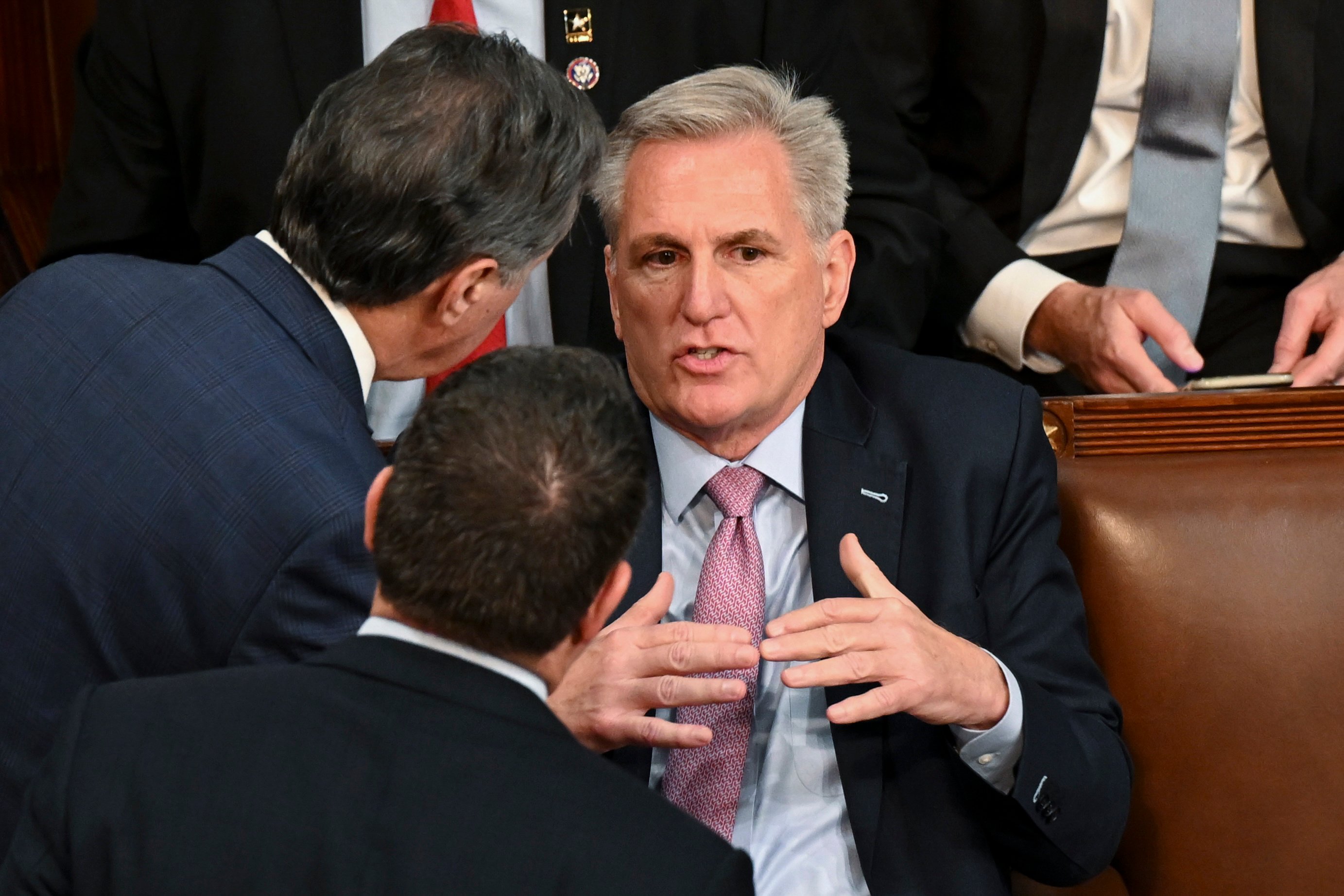
Last week it happened in politics, when Rep. Kevin McCarthy ran for speaker and lost.
He actually lost 13 times by Friday afternoon, but it’s the first losing that I thought I’d never see, after covering Tom Foley become speaker in 1989.
The reason this seemed impossible prior to last week is simple math, and the way Foley explained the process in the weeks leading up to it.
The speakership is decided by a simple majority and Republicans hold a majority in the new Congress. It’s a slim majority, but for 100 years, any majority was enough to do the trick when Congress convenes because by then the vote is a done deal.
The respective parties pick a leader before the vote starts and any challenges are ironed out then. In 1989, Foley was a shoo-in to be speaker after Jim Wright resigned under fire. He was the majority leader and no one else was begging for the job.
That’s not always the case, Foley said. In late 1968, Morris Udall had challenged long-time Speaker John McCormack for the job prior to the start of Congress the following year. Udall called all the Democratic members to ask for their support and thought he had about 85 votes – Foley was among them – but McCormack called all his members, too. When the voting happened Udall only got 57 because some people who had promised to support him defected. It prompted Udall, an Arizonan, to quip that the difference between a cactus and a caucus was that with the former, “the pricks are on the outside” and thus easier to recognize.
Foley explained all this between calls he was making to every House Democrat to ask them for their support, even though he didn’t have a challenger for the office. It was a lesson he said he learned from former Speaker Tip O’Neill, who once lost a close election in Boston and when he asked a longtime friend why she hadn’t voted for him, she replied because he hadn’t asked.
Udall’s challenge was mainly symbolic, a challenge of the old guard by a young reformer. If he had managed to get more votes in the caucus, McCormack would have stepped aside.
When the voting in the House happened a few days later at the start of the new Congress, McCormack got all 241 Democrats, and Gerald Ford, the minority leader, got all 187 Republican votes. That’s because every member knows that their first vote is for their party.
This was true in 1989, and it prompted Republican Rep. Sid Morrison, who represented Central Washington’s 4th District at the time, to do some ‘splaining to his constituents back home.
Despite being from different parties, Morrison and Foley were friends. Foley looked out for Morrison’s district on important projects, like when U.S. 395 needed money for more lanes between I-90 and the Tri-Cities. There was a time, Morrison said, when Foley was scheduled to speak to a group in Spokane but had to stay in Washington, D.C., on congressional business. He asked Morrison to take his place and Morrison said he was glad to do it.
But when the time came to vote for speaker, even though having a friend as well as someone from his home state in the speaker’s chair would be a definite plus, Morrison voted for Rep. Bob Michel of Illinois, who was the Republican leader and was going to lose because there were 77 more Democrats than Republicans in the House at the time.
Morrison explained that in a statement to his constituents.
Most votes for speaker, which happen on the day the House convenes, are a pro-forma, first order of business that take only as long as the time to call the names of the 435 representatives and have them voice their choice. There are occasional protest votes, usually from members of the minority party although occasionally from one or two disgruntled members of the majority.
But no successful speaker candidate in 100 years had gone to the House vote without the support needed to win that election on the first ballot.
In recent elections when that support was in question in the weeks leading up to a new Congress convening, pundits who have exhausted their speculation on who might be elected speaker have focused on a curious wording in the U.S. Constitution regarding the office at the end of Article 1, Section 2: “The House of Representatives shall chuse their Speaker and other Officers…” wrote the Framers, who apparently didn’t have quill pen and parchment with Spell-check.
It doesn’t say to “chuse” from among their members, so in theory it could be someone not elected to the House. That’s never happened before, as far as a quick check of the records suggests.
But that wording allowed Rep. Matt Gaetz, R-Florida, to nominate former President Donald Trump for the speakership on two rounds Wednesday. He got one vote each time, from Gaetz.