This column reflects the opinion of the writer. Learn about the differences between a news story and an opinion column.
Spin Control: With the Legislature a month away, talk predictably turns to taxes
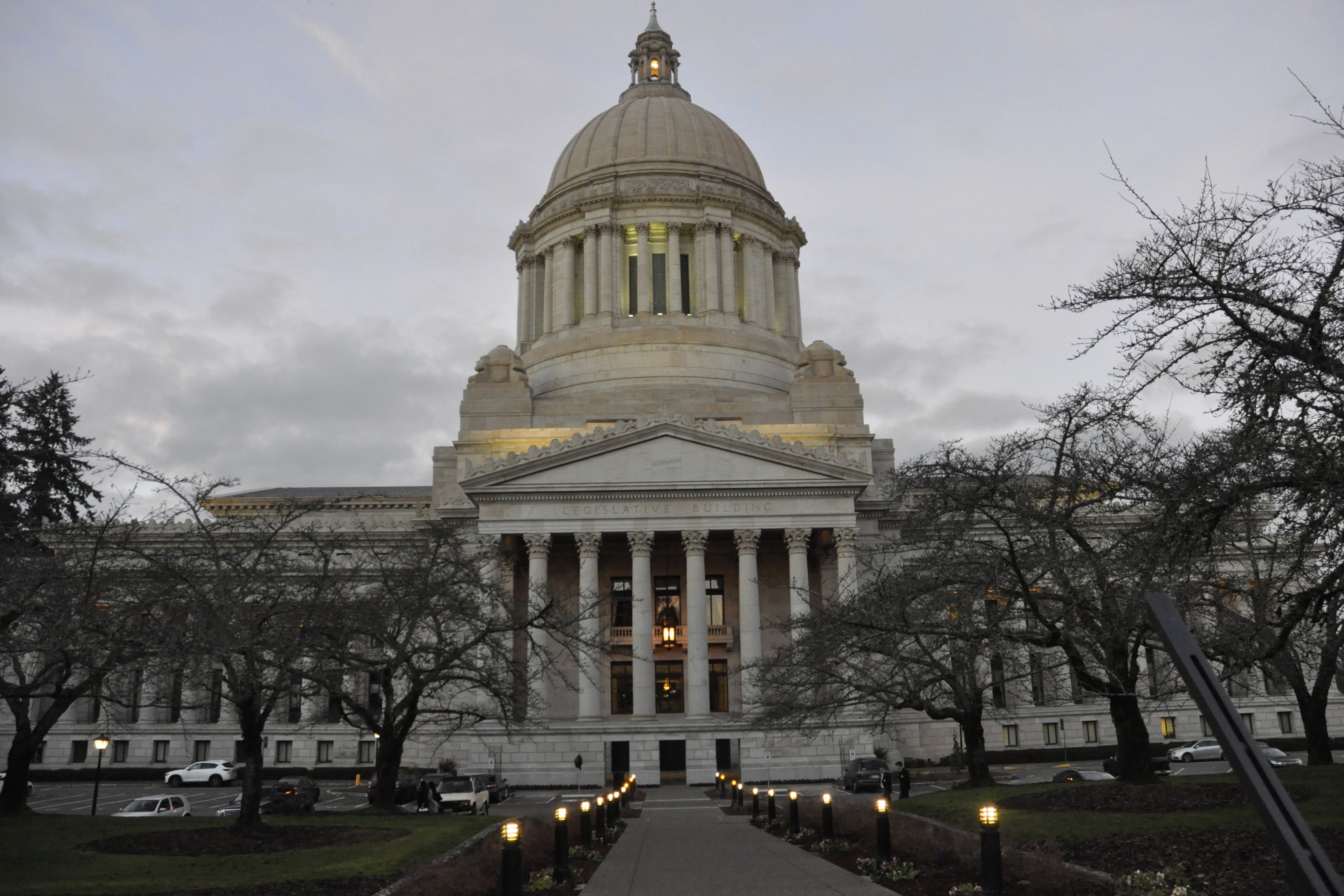
Benjamin Franklin may have been right that nothing in life is certain except death and taxes, but a Washington state corollary might be that nothing is certain before a Legislative session starts than a lot of energy will be expended arguing about income taxes.
As they do in the lead-up to most sessions, Republicans are warning of a state income tax being foisted upon unwitting Washingtonians by perfidious spend-happy Democrats. For decades this has been a very effective tactic for energizing their base despite the fact that an income tax is not something that can just tiptoe quietly through the Legislature when the public isn’t looking.
It requires a constitutional amendment, which means a super-majority vote in both chambers AND a majority vote of the public in the November election. While Democrats have healthy majorities in both chambers, both are shy of two-thirds, and not all of their members are of a mind to commit political suicide by backing something the voters have turned down multiple times since the state Supreme Court said that was required in 1933.
It is true that if the 2026 session is like most sessions, someone will propose a state income tax. Since that’s likely to be a Democrat, and Democrats control both chambers, the sponsor could get a hearing on it if he or she is high up in either the party’s leadership or a committee that has jurisdiction over taxes.
But it would be all for show. It will draw lots of impassioned testimony, but to borrow from Shakespeare and Faulkner, mostly sound and fury, signifying nothing except allowing the very passionate to vent.
A group of Democrats are looking to boost state revenue, and among the ideas is something they call a “payroll excise tax,” which sounds like an income tax with a few wrinkles to keep many people from not having to pay it. It would be a levy on employers who have workers making more than $125,000 a year, at companies that have more than 20 employees and have gross receipts above $5 million.
Whether those wrinkles are enough for it to avoid the requirement of a constitutional requirement is debatable. So is the fairness of the program, when one considers it wouldn’t apply to one of largest employers in Washington. Not Microsoft, Boeing or Amazon, but the state itself, which has thousands of employees with salaries above $125,000, when one considers all of its universities, agencies and executives.
There’s also a proposal, still kicking around from last session, for a “wealth tax.” It’s not a pure income tax because it would fall not on the income you get but on that which you may have got at some point but didn’t spend, instead investing it so it grew to a point where you might have more than you’d ever be able to spend, unless you went shopping for a yacht, a desert island or a rocket ship. It would be designed to tax only one’s “wealth” after a set amount, perhaps as high as $250 million, so it would fall on a limited number of folks.
And possibly, if it were to become law, on a declining number of folks each year as those who have to pay it decided they didn’t want to keep doing that and voted with their feet.
While supporters of these ideas can probably score rhetorical points with their calls to make the state’s tax system less regressive by “taxing the rich,” both ideas suffer from a series of challenges that are less like speed bumps in a parking lot than like flashing railroad crossing arms with a train on the tracks.
The first is the state Constitution requirement that taxes be “uniform among the same class of property.” Attempts to restrict the taxes to businesses of a certain size or gross receipts can fail in the inevitable court challenge, while levying the tax on everyone can mean it will get support from almost no one.
The second is that Gov. Bob Ferguson has said he won’t sign a tax increase. Gubernatorial statements on non-support of taxes have been subject to what might charitably be called elastic, although Republicans might use terms like duplicitous or unbelievable. They will point out that Jay Inslee first ran for governor in 2012 saying he would not sign any new taxes, by which many voters may have inferred to mean tax increases. Inslee later signed some increases in existing tax rates, arguing they were not new taxes but adjustments to existing ones.
At this point, however, Ferguson’s statement seems pretty definitive and two other calendar-based factors would make a major new tax seem unlikely.
The first is the 60-day session, which is designed for budget tweaks, not wholesale revisions. The second is the November election, in which the entire House and half the Senate must run. A new tax might improve some state programs and keep others from being cut. But voters who are paying more taxes might not connect the two, or, if they do, feel they are not getting their money’s worth.
That means Ferguson and the Legislature face the serious but unpleasant task of cutting the budget, which is difficult for members of both parties because they all have constituents who rely on state programs and services.
There will no doubt be some people who will suggest any deficit can be covered by simply cutting “waste, fraud and abuse”. That might be a solution, if each department, agency and program would only include a line item in its budget dedicated to those uses.