This column reflects the opinion of the writer. Learn about the differences between a news story and an opinion column.
Faith and Values: Chaplains are there when we need them, even for our beloved animals
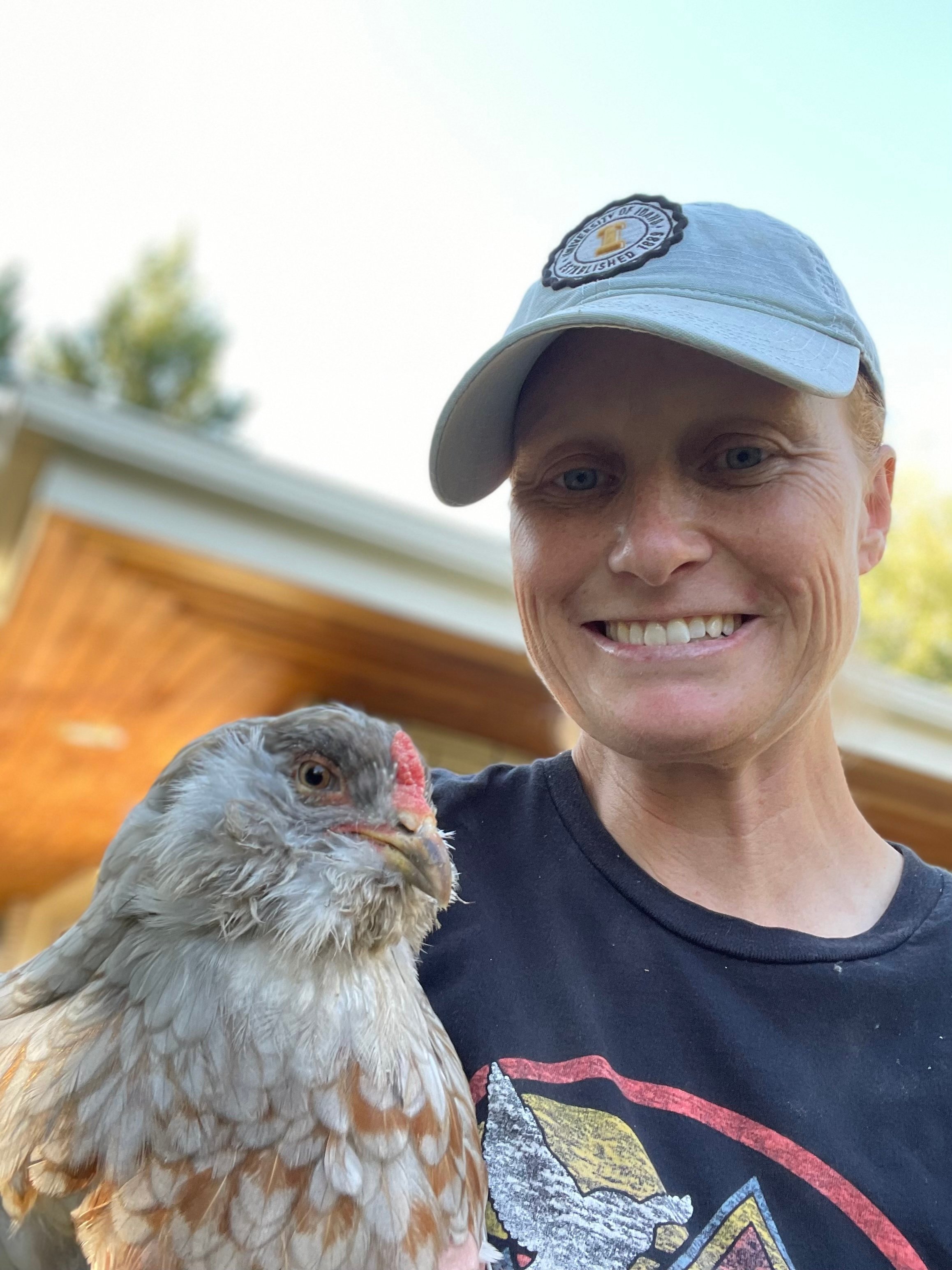
I felt ridiculous reaching out to a chaplain over a chicken.
But this wasn’t a simple loss. I had to cull Agnes myself – or thought I had to. The gruesome details don’t matter now, but the weight of it does.
I’d taken a Bodhisattva vow not to kill. And I broke it.
Agnes had been with me for almost 11 years. As a chick, she’d jump up on my shoulder like a parakeet – a habit she never outgrew. Even as a full-grown hen, when the other girls bullied her, she’d find her way back to her perch on me.
I’d made the difficult decision about her end of life. But afterward, I couldn’t find peace with it. So I contacted Scott Campbell, the animal chaplain at Washington State University, whom I’d interviewed earlier for Faith and Leadership. I didn’t know where else to turn with my guilt and grief. A Buddhist nun with whom I’m friends offered comfort. I half expected them to tell me I was overreacting since it was just a chicken.
They showed no judgment.
Campbell told me to sit where Agnes is buried in our backyard and let me remember how she died – the images and memories I’d been trying to push away. He told me my intentions were sincere when it came to the decision about the end of her life, and that’s what matters most. He helped me find grace for myself.
The conversations opened my eyes to something I’d discovered while reporting the Faith and Leadership story but hadn’t fully absorbed: Chaplaincy has expanded far beyond what most of us imagine.
We’re familiar with hospital and military chaplains. Maybe prison chaplains. But today, chaplains serve in airports and seaports, with disaster relief teams and activist movements. There are corporate chaplains, sports chaplains, first responder chaplains, environmental chaplains and, yes, animal chaplains. They work with the homeless, in video games, with entertainment industry professionals. They show up wherever people are grappling with life’s biggest questions and most painful moments.
In times like these – when war rages across continents, when climate change threatens our future, when political division fractures families and communities – the role of chaplains feels more vital than ever. They meet people where they are, with no conversion agenda, no institutional requirements, no guilt. Just presence.
That’s what drew me to the idea of chaplaincy myself after writing about Campbell’s work. I liked the thought of helping people, listening to them, offering comfort in their darkest moments. In some ways, I realized, I already do this work as a religion writer and professor. I create space for people to explore difficult questions about faith, meaning and loss.
But chaplaincy itself? That’s not my calling.
Still, I’m grateful it’s someone’s. Because chaplains are doing the sacred work of holding space for grief in all its forms – even grief over an 11-year-old hen who liked to ride on shoulders. Chaplains are building bridges in a fragmented world, reminding us that our losses matter, our questions are valid, and we’re not alone.
Agnes is buried under a maple tree in our backyard. Idah, one of my original girls, is still with us – she’ll make it to 11, I think. She’s found her place now with three younger hens.
Sometimes I go to Agnes’ maple tree, like Campbell suggested, and let myself remember. And I’m thankful that when I needed someone to help me find grace, a chaplain was there – judgment-free – to show me the way.
Tracy Simmons, a longtime religion reporter, is a Washington State University scholarly assistant professor and the editor of FāVS News, a website dedicated to covering faith, ethics and values in the Spokane region.