This column reflects the opinion of the writer. Learn about the differences between a news story and an opinion column.
Gardening: ’Tis the season for poinsettias
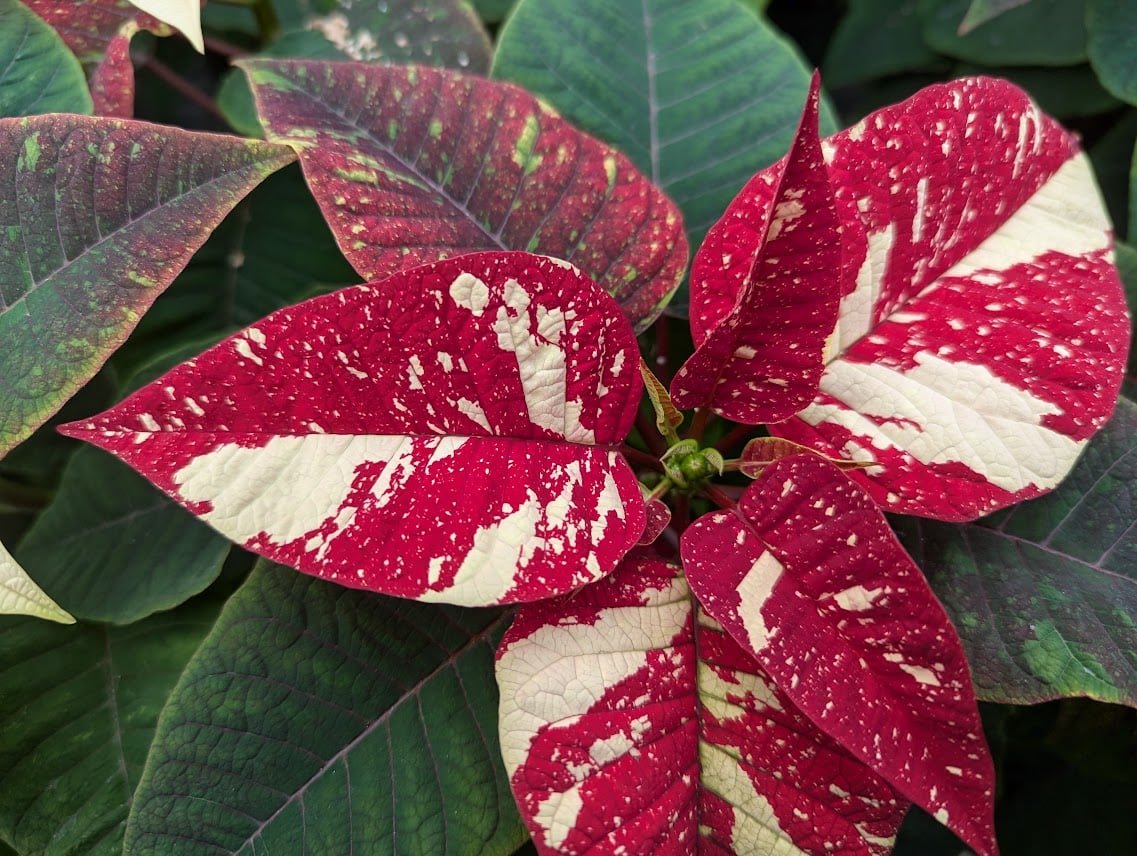
Ever heard of euphorbia plants? Of course you have, if you’ve ever purchased a poinsettia this time of year to brighten the house. Euphorbias (pronounced yew-for-bee-a), commonly called spurge, are a genus of plants that one writer described as shape shifters in the garden meaning that they come in many different forms and unique colors. As a genus of over 2,000 species found on every continent except Antarctica, they have adapted to a wide range of habitats and add unusual shapes and colors to garden plantings.
The poinsettia (Euphorbia pulcherrima) happens to be the showiest member of the genius. Native to Mexico, it became a popular holiday plant after John Poinsett, then-U.S. ambassador to Mexico sent some plants home where their popularity grew quickly. This time of year, greenhouses, including those at Spokane Community College, are full of bright red, pink, white, cream and orange plants waiting to brighten homes for the holidays. The SCC second-year greenhouse students are growing 27 different varieties as part of their course work and will offer them for sale at their annual Poinsettia Open House Thursday and Friday at the SCC Greenery.
One of the more interesting characteristics of euphorbias is that the flowers are tiny and surrounded by colorful specialized leaves called bracts. These bracts can come in unusual colors like chartreuse, neon yellow, reds and of course the multiple colors of the poinsettia. Beyond the colors, euphorbias grow as other-worldly plants with pencil thin stems, tall stems of green baseball shaped bracts and thick geometrically shaped spirals.
Most euphorbias prefer a more tropical climate than our area’s USDA Zones 5-6 gardens can provide, but there are a few that do well here. They prefer full sun, well-drained soils, varying amounts of water, are pest free and deer resistant. Their milky sap can irritate skin so wear gloves when you work with them. Here are a few that are hardy in our region.
Euphorbia polychrome or cushion spurge is a mounding plant that grows about a foot tall and slowly spreads. Its bracts bloom a neon green-yellow color in late spring that often steals attention away from other plants. It’s hardy to USDA Zone 4.
Euphorbia griffithii or fireglow spurge produces fiery, burnt-orange bracts held up by brick-red stems. Its colors offer a sharp contrast to more muted spring flowers. It spreads by rhizomes to form a dense, 3-foot wide clump. In the fall, its foliage adds intense crimson and gold hues to the garden. It’s hardy to Zone 4.
Euphorbia mellifera or honey spurge is larger than most spurges growing to 3 to 7 feet tall and 2 to 6 feet wide. In the spring its narrow green foliage is topped with clusters of honey-scented flowers in soft shades of creamy yellow to pale terracotta. It’s hardy to Zone 5.
Lastly, Euphorbia paulustris, or marsh spurge, thrives in wet areas around ponds and streams. Its upright habit and lime-green bracts add highlights to often-muted pond borders. It’s hardy to Zone 5.