This column reflects the opinion of the writer. Learn about the differences between a news story and an opinion column.
Shann Ray: Gratitude is the unforeseen gift of people and nations
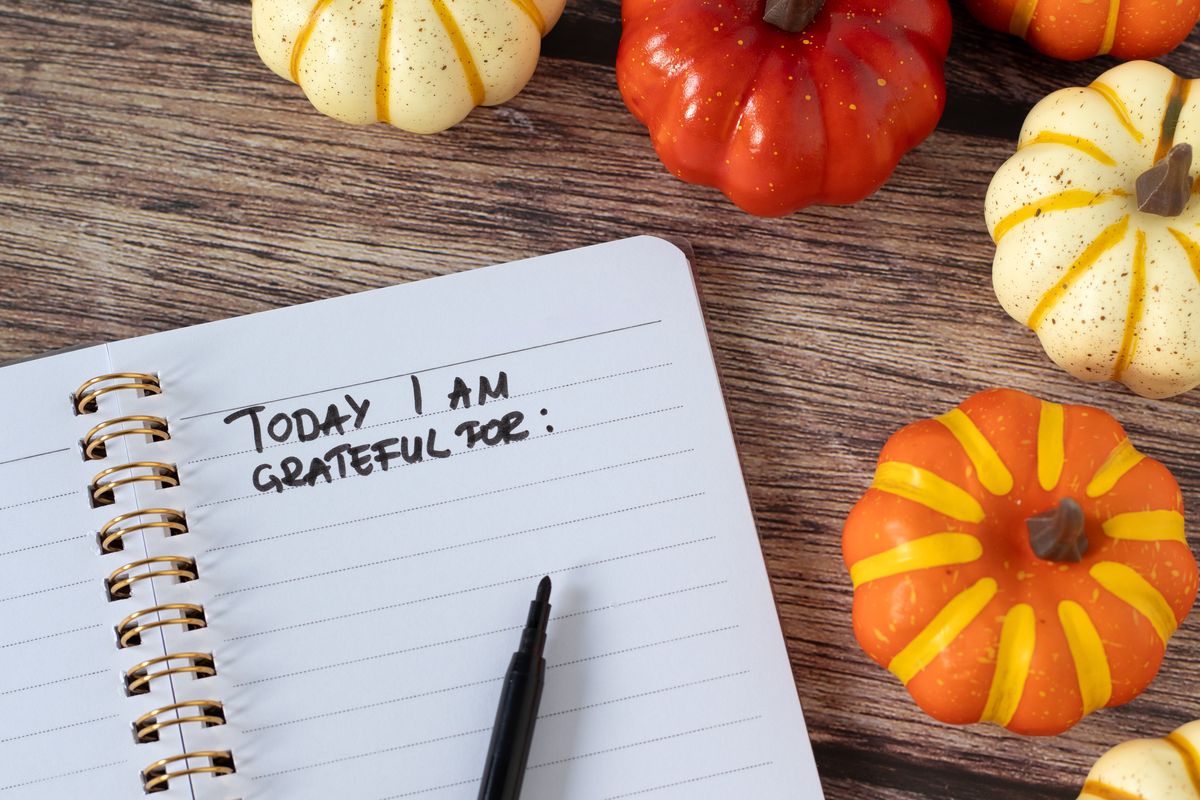
In a fraught world, there is something refreshing about the simple reminder that thankfulness is not only a good and a beautiful way of living, but a source of peace, a life-giving force and a means of extending good will to loved ones, strangers and even enemies.
As a clinical psychologist specializing in healing work with families and research on genocide and forgiveness between nation states, I have found no one can avoid the shadow of national and international discontent, warlike tendencies and the inherent propagation of ideologies that harm the heart of the world, the heart of families and our own hearts. Thanksgiving or giving thanks for what is given, despite the recurrent fractures of our families and communities, underlies every culture and every nation.
There are times throughout history in which giving thanks becomes an offering of sanctuary in the midst of unforeseen and often uncontrollable storms. Whether people give thanks over a shared meal in a relatively peaceful place or under the devastations of war-torn landscapes, giving thanks bears its own infinite imprint, restoring not only one’s own soul but the souls of others.
I remember the initial moment when I first felt the power of giving and receiving thanks. My wife, Jenn, and I were newly married, living in Germany as she studied music and I played basketball in the Bundesliga. She received letters from her father two or three days a week, and as I watched her read these letters, I watched light meet the edge of the world. Her face filled with joy. Her shoulders were illumined!
He wrote me too, and suddenly I felt uncommon grace at the core of who I was becoming. Some people carry the beauty of life as a gift to others. Her father was that kind of person. At the end of one of his letters, he wrote these words:
I receive you with gratitude.
I have held this as a cherished message for 35 years now. Why did his words meet me in such a profound way? First, he was a good man, so his words could be well-received. Second, I think it was the sincerity, generosity and belief so personally and purposefully conveyed. After decades of ever-deepening friendship, I was there at his bedside four years ago, holding his hand when he died. Because he lived well, he died well. My heart filled with completeness, a quiet recognition of all the years of shared kindness.
John Milton, the great poet of Paradise Lost, said:
Gratitude bestows reverence, allowing us to encounter everyday epiphanies, those transcendent moments of awe that change forever how we experience life and the world.
Not surprisingly, the science of gratitude confirms the reverence and transcendence of Milton. A couple of years ago, the topic of gratitude came up with colleagues at Gonzaga University in the leadership school. Later when I mentioned it to Jenn, she said she had been doing some research on gratitude and the research had been changing her. She sent me an email detailing what she had found. Somewhat like a comet through the night sky, what she sent me created a glorious pathway in our family as well as the organizations, families and communities around us. Consider these lovely findings:
1. Gratitude is the healthiest of all human emotions. Gratitude counteracts the four most toxic emotions: envy, bitterness, regret and depression.
2. People with higher gratitude have been found to have higher reasoning, problem-solving skills and more innovative ideas. Happily, we might say gratitude makes us smarter.
3. Listening to complaining or complaining for 30 minutes reduces the part of the brain connected to intellect. Humorously, we might say complaining makes us dumber!
4. Gratitude boosts serotonin and actuates the production of dopamine. Gratitude also boosts the release of oxytocin which is important for bonding and relational connection.
5. In various social science studies, keeping a daily gratitude diary for two weeks resulted in a 28% reduction in perceived stress and improved sleep for insomnia in 76% of participants. Writing a letter of gratitude reduced feelings of hopelessness in 88% of suicidal patients and increased optimism in 94% of suicidal patients.
6. Ways to elevate gratitude: Daily, count your blessings. Keep a gratitude journal and write five to 25 things you are thankful for each day. Write a gratitude letter to yourself, a loved one, or someone you think would benefit from receiving your gratitude.
7. Forty years of longitudinal research conducted by the Gottman Institute found experts at relating give eight to 10 positive relational exchanges to every one negative or neutral exchange. A relational exchange includes words, thoughts, touch, eye contact, overall tonality, body language and voice tone. These exchanges occur about 30 times every three to five minutes when we are with others, whether we are talking or not. Notably, mediocre relaters exhibit six to eight negative or neutral exchanges to every one positive exchange, while disastrous relaters exhibit eight to 10 negative exchanges to every one positive exchange.
Gratitude comes to life by showing itself as the foundation of relational goodness and revealing itself in the one-to-one relationship, face to face, person to person. Not only in the research but in our personal experiences, gratitude forms the backbone of healthy living and healthy loving. Gratitude demands something of us as people and nations, and a life devoted to the wholeness gratitude entails demands even more.
I spent part of my childhood on the Northern Cheyenne reservation, and what I remember most about that time was the love my family received. Love, wholehearted and fierce, despite America’s genocidal history and the entrenched inequities of the present day. Personally, I received love not just from my dearest friend, Lafe Haugen, but also other dear friends Russell Tall Whiteman, Blake Walks Nice and Cleveland Bement. Basketball was brotherhood to us, and life was filled with laughter and friendship.
Cheyenne families took care of my family, welcoming us with such generosity it shocked us and left us unsure of how to act or be. I recognize their openness now as a central essence of the gift culture, an exquisite counterpoint to the dominant culture so tied to transaction and capital. In a quantum world, echoing Milton’s call toward reverence for one another, mercy triumphs over justice perhaps because on a cellular level individuals and cultures contain multitudes and generate people who work selflessly to bring about seasons of peace. Justice then is renewed through authentic moral and cultural authority.
Early on, I recall my mother complimenting Cleveland’s mother, Cecelia, about the turquoise bracelet and ring she wore, set in stunning silver arrangements.
“Your jewelry is gorgeous!”
That Christmas, carrying a velvet box in her hands, Cecelia visited my mother.
“Please open it,” Cecelia said.
Inside was the bracelet and ring.
My mother started to cry. “I can’t take this,” she said.
“I want you to have it,” Cecelia said. “From me to you. From my people to your people.”
I watched them hug each other and felt overwhelming gratitude. Years later, I still see their friendship as a bond that contains something of the eternal, even after my mother’s death from cancer.
Gratitude is a beautiful opportunity, a place of hope we carry with us, and something that forms a uniquely countercultural movement especially when facing some of the most grave harms people and nations inflict on one another. Not unlike Cecelia’s family, my own family, being Czech and German, contains both genocide and forgiveness, both desolation and hope. In these days of giving thanks, I offer the following prayer as a source of illumination in the sorrow of familial and political divisions and the heart of war that plagues people worldwide. The words were found on a crumpled piece of paper among the remains of the Ravensbrück concentration camp where Nazis exterminated nearly 50,000 women.
O Lord, remember not only the men and women of goodwill, but also those of ill will. But do not only remember the suffering they have inflicted upon us. Remember the fruits we bought thanks to this suffering – our comradeship, our loyalty, our humility, the courage, the generosity, the greatness of heart which has grown out of this. And when they come to judgment, let all the fruits that we have borne be their forgiveness.
Shann Ray is an American poet, novelist and scholar of forgiveness at Gonzaga University.