This column reflects the opinion of the writer. Learn about the differences between a news story and an opinion column.
Spin Control: Reducing plastic pollution might not be in the bag
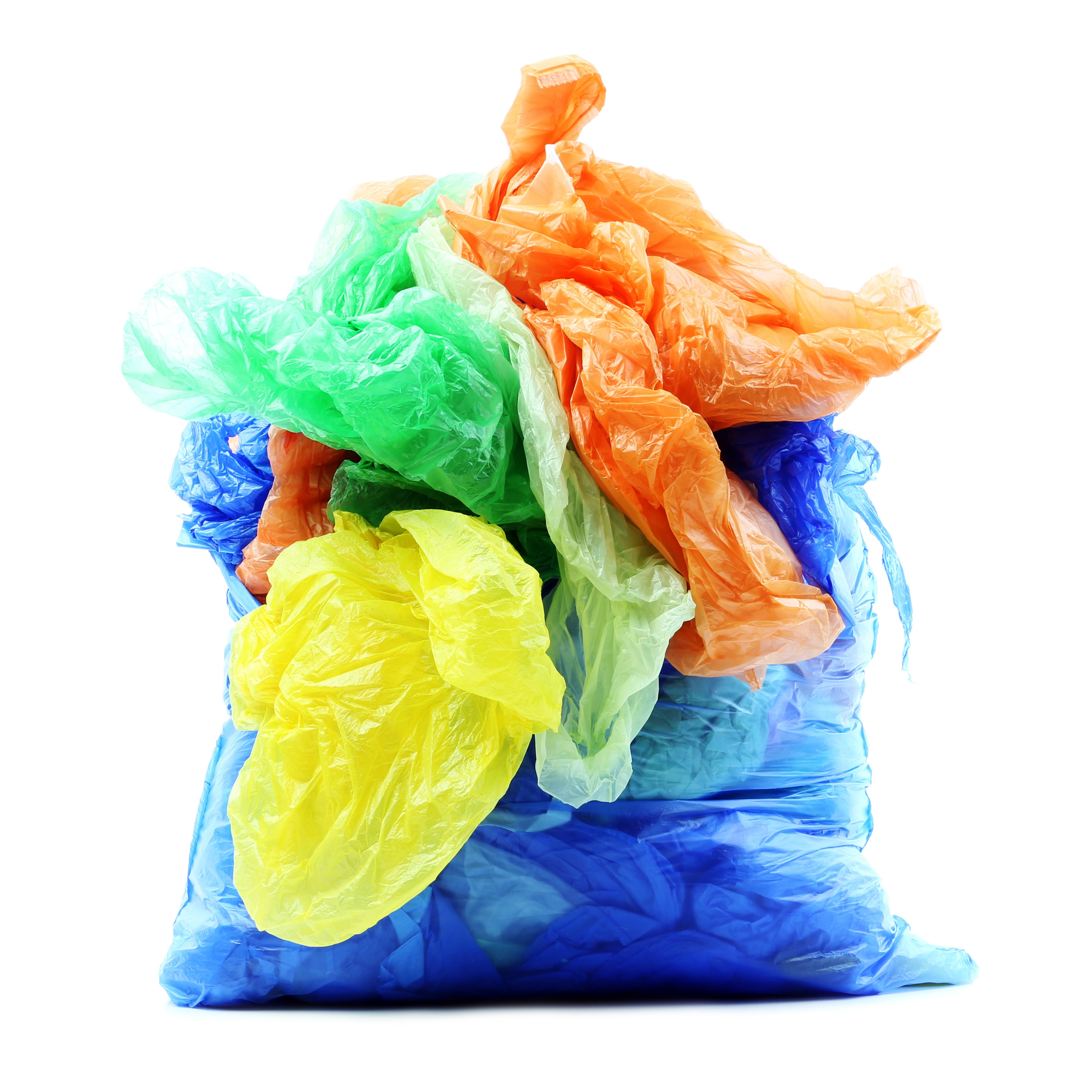
One of Washington’s major recycling efforts – at least in terms of involving the biggest number of people whether they want to or not – is a 2020 law that banned so-called single-use plastic carrying bags at stores and restaurants.
It was a way to cut down on the plastic pollution that was showing up in landfills and waterways from small streams to the Puget Sound.
Some places in the state had enacted similar, and in some cases more stringent, bag bans up to 10 years earlier. But in 2020, the Legislature decided to force out the use of the most common type of thin plastic bags and get people to either carry away their groceries or take-out food in recycled paper or thicker, reusable plastic bags.
And in most cases, they would pay at least part of the costs of those bags.
Shoppers might have noticed when the plastic bags used to hold their groceries seemed a bit thicker than it used to be. That’s because the banned plastic bags were a 0.5 mil in thickness. The new reusable plastic bags are 2.25 mils.
A mil is one-thousandth of an inch, which is thinner than human hair.
That might not mean much to those unfamiliar with the metric system, which is to say almost anyone who went to school in the United States. A helpful illustration from the Quora website notes that a half-millimeter is the size of the point of a well-sharpened pencil; 2.25 millimeters is slightly smaller than the size of the tip of a crayon, presumably before a 5-year-old has started coloring with it.
The new bags use 4½ times more plastic, but they can be used over and over. That assumes, of course, that shoppers remember to bring them when going to the supermarket or stopping at the restaurant for takeout.
Getting a statewide ban on half-mil bags was controversial. Stores and restaurants were worried about the added costs. Some opponents argued the overall environmental cost of the alternatives was higher when one considers everything that goes into making, transporting and washing the reusable cloth bags being championed as a good replacement.
But the thin plastic ban finally worked its way through the Legislature in 2020, with provisions to start phasing in on Jan. 1, 2021. The goal was to replace them with 2.25 mil bags until the start of 2026, when those would be replaced by 4 mil bags, which are the thickness of a heavy-duty construction debris bag. The theory was the thicker the bag, the more times it can be reused.
Shortly after the ban passed, however, COVID hit, and people became worried about the virus being spread by reusable bags being taken back and forth from home to store. Critics of the ban suggested canceling it; then-Gov. Jay Inslee delayed it by executive order until October.
Earlier this year, the Legislature voted to delay the switch to the 4 mil bags until the start of 2028 – and maybe even cancel it before it takes effect.
There are questions about how often, if at all, the current plastic bags are being reused. And if the 4 mil bag isn’t reused about 1½ times more than the 2.25 mil bag – and eight times more than the old 0.5 mil bag – it’s using more petroleum products for the same amount of use
“What is the point and purpose of moving to an even thicker bag if they’re generally single use?” Rep. Davina Duerr, D-Bothell, said last week at a work session for the House Environment and Energy Committee to talk about what to do about bags next year.
Currently, stores are discouraged from using the thicker bags because they have to charge an extra 4 cents for each one, which goes into a fund for waste reduction. In 2028, under the current law, that 4-cent penalty would go away, with stores and restaurants being required to use the thicker bags.
If they don’t get reused, that’s putting almost twice as much plastic per bag into the waste stream.
“Which is why we’re having this conversation. We need to fix the trajectory of this policy path we’re on,” Committee Chairwoman Beth Doglio, D-Olympia, said.
In the meantime, stores and restaurants say the 8 to 12 cents they’re able to charge customers for paper or plastic reusable bags doesn’t come close to covering their costs. Stores sometimes get stiffed at self-checkout stations when customers take bags without reporting it on the register. Restaurants can pay as much as 39 cents for a plastic carryout bag with their logo on it.
Answering “paper” when asked “Paper or plastic?” won’t solve the problem. Things aren’t all rosy on that front, either.
Katie Beeson, of the Washington Food Industry Association, said paper bags cost between 16 and 30 cents, depending on whether they have a logo or handles. That could go up if there are supply shortages, or if tariffs kick in.
Editor’s note: A previous version of this story incorrectly referred to the thickness in bags in millimeters. Plastic is measured in mils.