This column reflects the opinion of the writer. Learn about the differences between a news story and an opinion column.
Spin Control: State may raise Seattle tunnel toll during World Cup ‘26
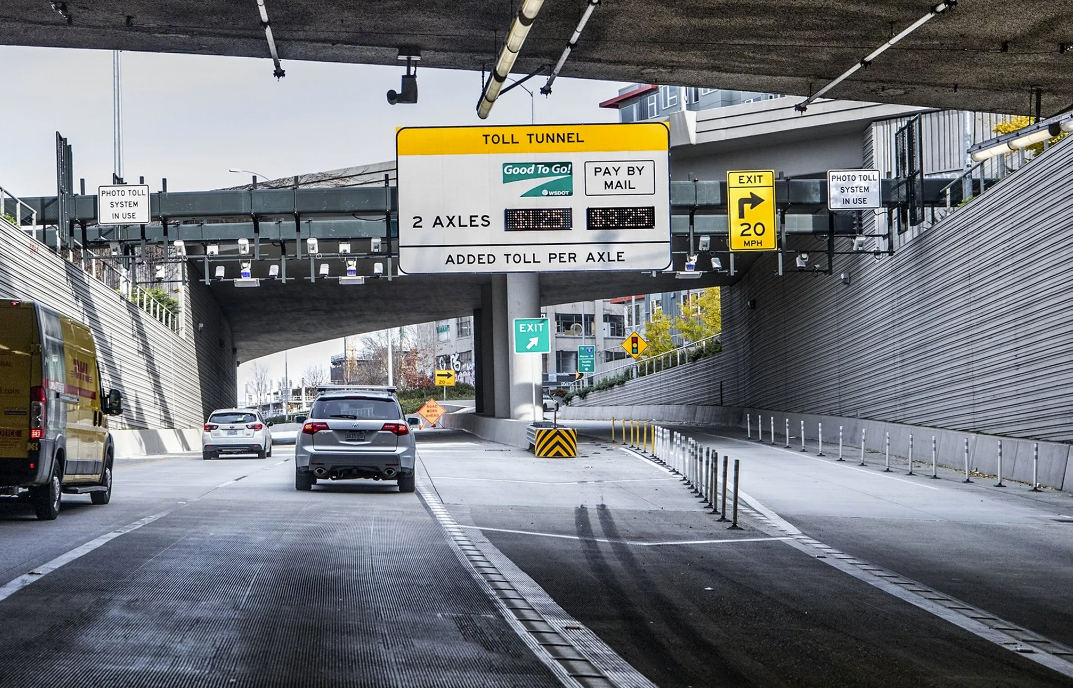
Among those making plans for next year’s World Cup matches in the Pacific Northwest are Washington transportation officials, who are studying how to deal with – and possibly monetize – the influx of visitors and the resulting traffic for games in Seattle.
Providing President Donald Trump doesn’t somehow figure out a way to pressure Cup officials to move six games scheduled for Lumen Field to another venue on the pretext the city is a war zone, state officials estimate the games will bring some 750,000 visitors to the Seattle area.
While many will be booking a hotel for a night or two to catch a game, some of the most rabid soccer fans may be traveling every few days between Seattle and Vancouver, B.C., which will host seven more games. In anticipation of the extra people, and their extra vehicles, the Legislature set aside about $41 million in the current biennial budget to help with transportation, security and field improvements, not just to Lumen Field but also designated practice sites like Gonzaga University.
About $2 million of that went into improvements to the state Route 99 toll tunnel, which connects South Lake Union to the stadium area without having to travel through downtown Seattle. One of the possibilities the Legislature allowed for recouping those costs was a toll increase in the tunnel.
Depending on the time of day and the level of traffic, taking the tunnel costs between $1.25 and $2.80 for cars. Last week, the Washington State Transportation Commission got an update on studies being done on those possibilities.
Right now, the options seem to be raising the toll between June 1 and July 15 by 50 cents or $1, or leaving it as is. Upping the toll would potentially generate more revenue, but could also dissuade local residents from using the tunnel, funneling more traffic through downtown streets or the I-5 corridor. Not to mention, perturbing local commuters who just saw the toll rates go up on July 1.
The Department of Transportation and the state Treasurer’s Office hope to complete the analysis by December so the commission can move forward with an increase, if that’s what it wants to do. It will then have just a few months to go through the public input process necessary to impose a temporary tunnel toll rate by June 1.
While toll roads, tunnels and bridges are simply a fact of life in the central Puget Sound, they may be outside the experience of many longtime residents of Spokane and the rest of the Inland Empire.
Readers of a certain age may recall when Spokane had a toll bridge over the river that connected both sides of Maple Street. Opened in 1958 as a way to take the traffic load off the downtown Spokane River bridges, the Maple Street Bridge cost a dime to cross when it first opened. When the toll went up to 25 cents in 1981 – a 150% increase! – the flow of traffic dropped dramatically as cost-conscious commuters opted for the other routes.
Such parsimony irked city officials, who worried about the wear and tear on Monroe, Division and other bridges and the extra auto exhaust in the city’s core. The 25-cent toll was removed from the bridge in the summer of 1990 when the state raised the gasoline tax and dedicated about $2 million of that money to paying off the bridge bonds.
Those who remember tossing coins into the basket for the Maple Street Bridge might be shocked by several realities of Western Washington tolling. Not only are they much more expensive, the costs can fluctuate based on the time of day and the density of the traffic. The system is also automated, so there’s no basket to toss the money into.
West Siders who use tolls roads even just occasionally have an online Good to Go! account that provides them a bar-coded windshield sticker. That records their trip and toll, which can be paid off by a card on file.
Spokane-area residents coming west for the cup games should consider opening a free account, because the state tacks on a $2 penalty for drivers who have to mail in a toll without an account.